
Living in a compact apartment often feels like a constant negotiation between what you need and the square footage you have. When every surface is already occupied, the challenge becomes finding storage that disappears into the background, allowing the room to breathe. Below are seven thoughtfully designed solutions that blend function with a serene aesthetic, so you can keep your living space organized without sacrificing visual calm.
1. Built‑in window seat with hidden compartments
© 2026 AI Illustrator — Inspiration Only
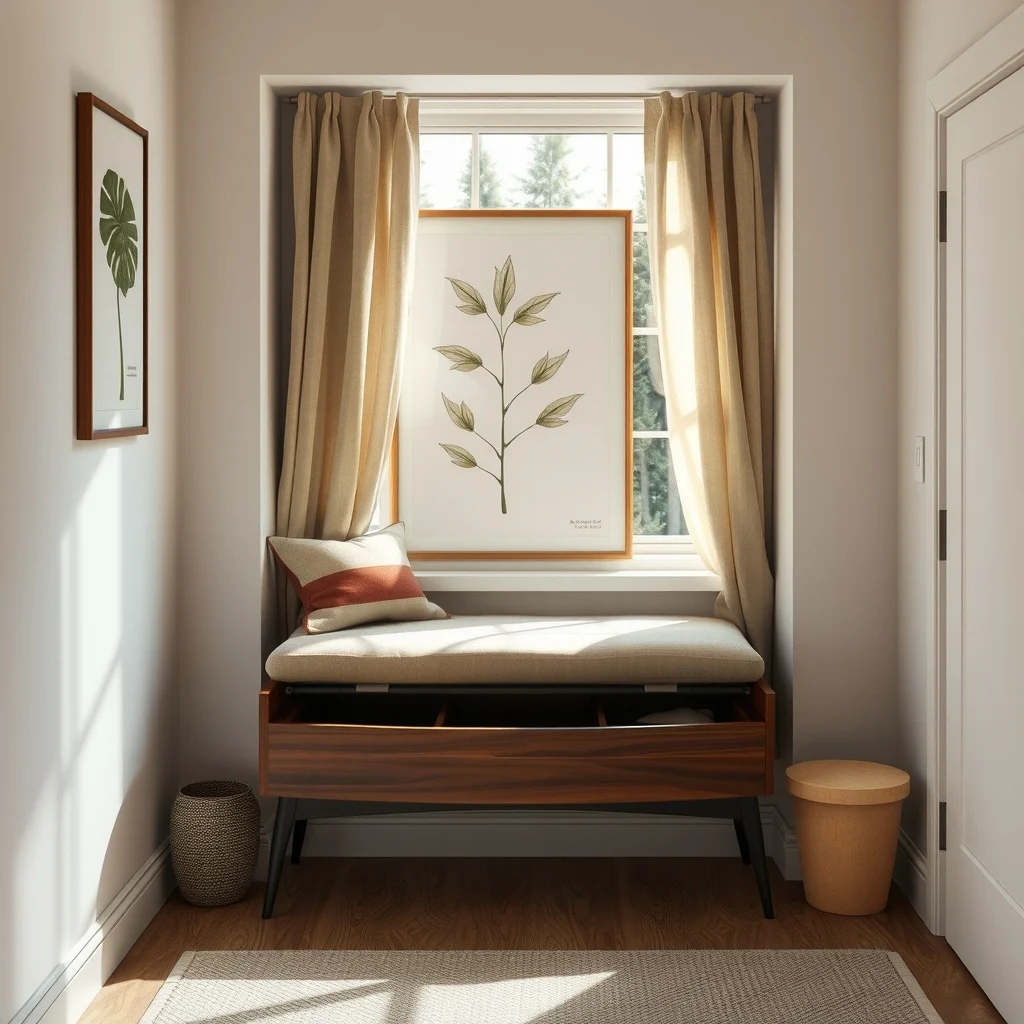
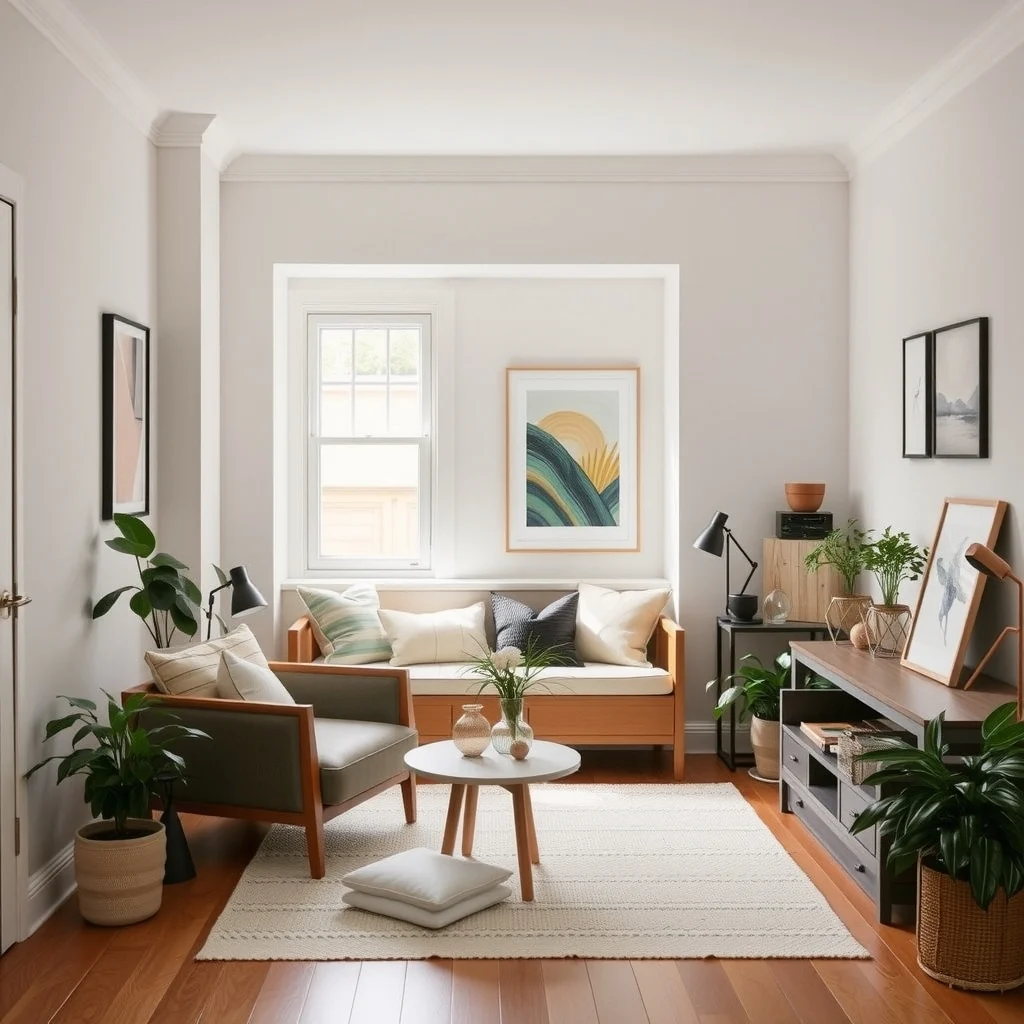
A window seat invites natural light while offering a cozy spot for reading, yet the space beneath can serve a dual purpose. By framing the bench with a low backrest and adding a shallow, hinged lid, you create a concealed drawer that slides open on smooth metal runners. Soft, linen cushions in a muted greige keep the look light, and the hidden compartment is perfect for storing blankets, magazines, or seasonal accessories. The key to success lies in measuring the window opening precisely; the seat should sit flush with the wall to avoid visual interruption. If the window is a focal point, choose a frame in brushed brass or matte black to echo other hardware in the room, ensuring a cohesive feel. The trade‑off is that the seat is fixed, so consider the layout carefully before committing to the built‑in.
What’s Your Apartment Decor Style?
Answer these quick questions to discover your perfect decor vibe.
2. Floating shelves paired with concealed bins
© 2026 AI Illustrator — Inspiration Only
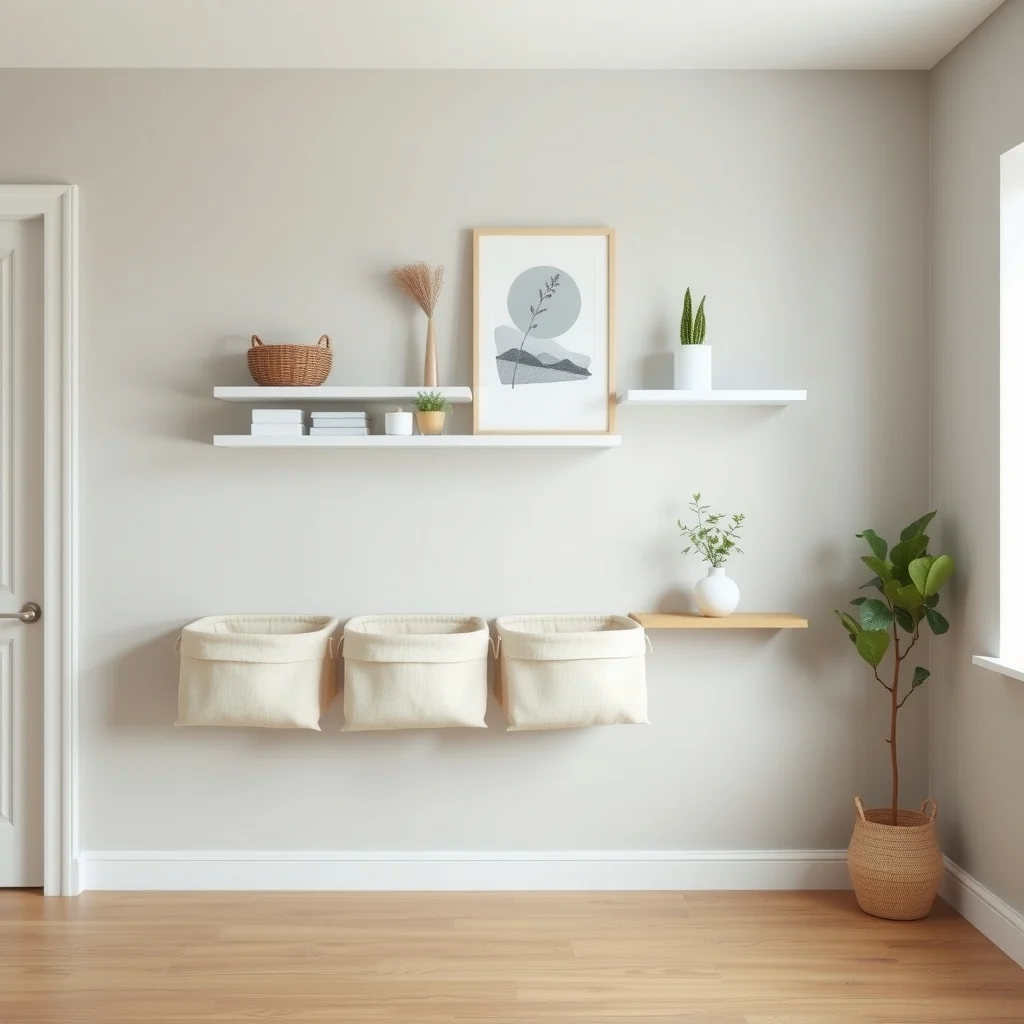
Floating shelves give the illusion of floating objects, which adds a sense of openness to any wall. When you pair them with slim, fabric‑lined bins that tuck behind the shelf lip, you gain a discreet storage layer that remains out of sight. Opt for reclaimed oak shelves that contrast gently with a soft teal wall, and select bins in a natural canvas that blend with the room’s palette. Because the bins sit behind the shelf, they are easy to pull out for access yet invisible when the shelves are not in use. Installing the brackets at eye level helps maintain a balanced visual field, preventing the wall from feeling overcrowded. A potential limitation is weight capacity; avoid overloading the shelves with heavy items, and use anchors suitable for drywall or plaster to keep the installation secure.
3. Multi‑functional ottoman that doubles as a coffee table
© 2026 AI Illustrator — Inspiration Only
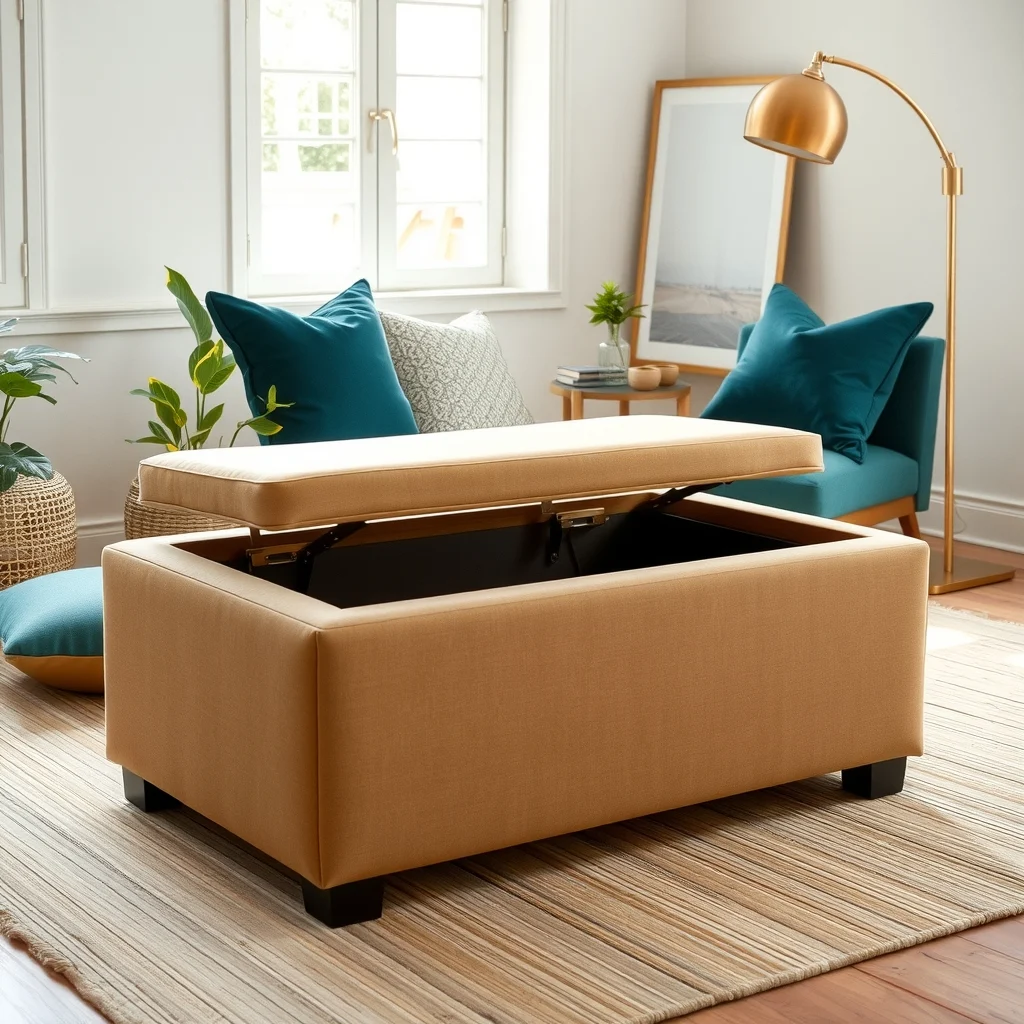
An ottoman with a lift‑top surface offers seating, a footrest, and a hidden storage cavity in one piece. Choose a design with clean lines and upholstery in a muted earth tone, such as warm sand, to keep the space feeling airy. The interior can hold board games, extra throw pillows, or a small stack of books, while the top lifts easily on concealed hinges. Position the ottoman in front of a low‑profile sofa to maintain a clear line of sight across the room; its soft texture adds comfort without visual clutter. The main consideration is the mechanism’s durability—high‑quality hardware will prevent sagging over time. If you prefer a glass‑topped look, a tempered surface can be added, but be aware that it may reveal the storage contents if the lift is slightly ajar.
4. Wall‑mounted folding desk with a hidden drawer
© 2026 AI Illustrator — Inspiration Only
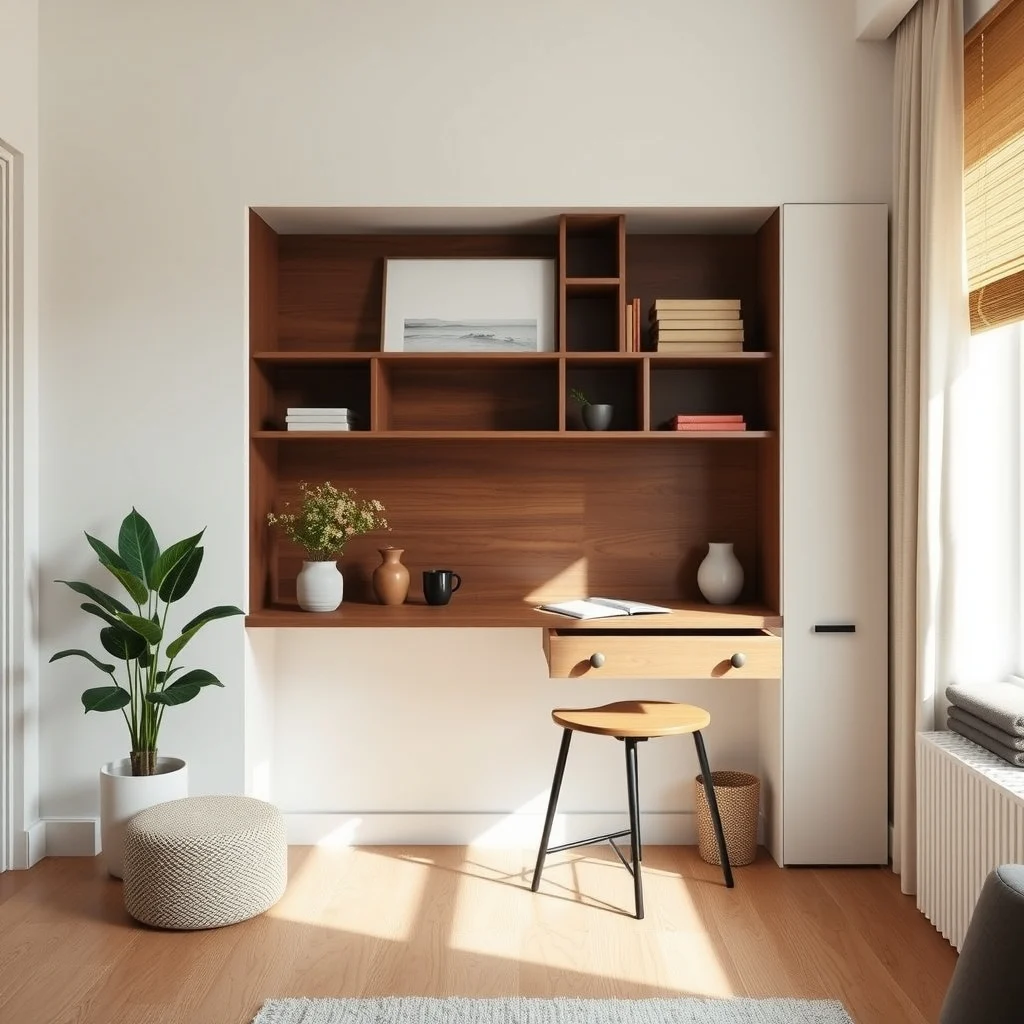
In a studio or one‑bedroom layout, a desk that folds away when not in use frees valuable floor space. A wall‑mounted unit with a slim, walnut veneer top can be hinged to swing down, revealing a narrow drawer that slides out from the side. The drawer is ideal for pens, notebooks, and a laptop charger, keeping the workspace tidy. When the desk is folded up, the top aligns flush with the wall, creating a seamless backdrop that blends with surrounding art or a gallery wall. Install a soft‑close hinge to avoid slamming, and add a discreet pull‑handle that matches the drawer’s finish. The compromise here is that the desk’s depth is limited, so it works best for light tasks rather than extensive drafting. Ensure the wall studs can support the unit, or use a sturdy mounting plate designed for heavier loads.
5. Kitchen backsplash cabinets with pull‑out pantry
© 2026 AI Illustrator — Inspiration Only
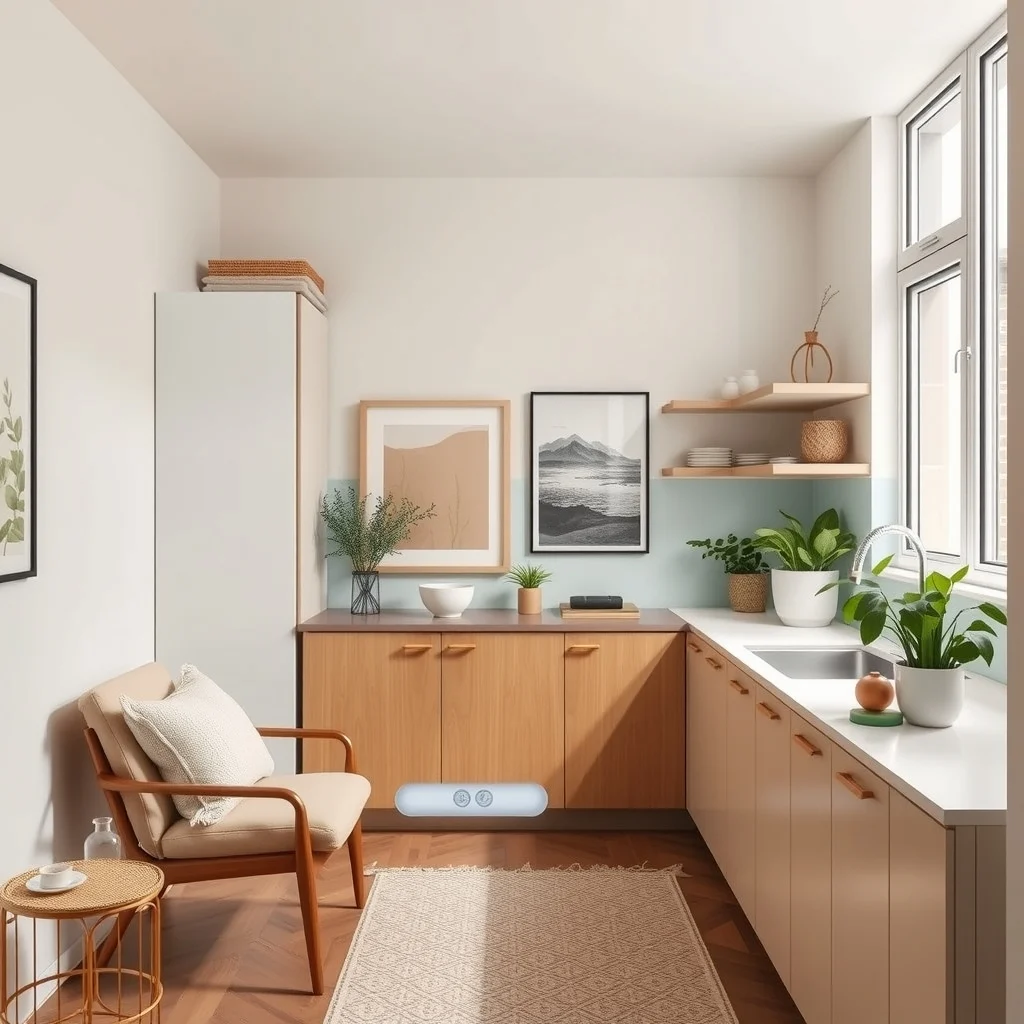
Even a narrow kitchen can benefit from extra storage that doesn’t protrude into the cooking zone. By extending the upper cabinets just above the countertop and integrating a pull‑out pantry behind a seamless backsplash, you gain a slim, hidden pantry that slides out on low‑friction rollers. Choose a high‑gloss white finish for the cabinets and a subtle subway‑tile backsplash; the pull‑out will disappear behind the tiles when closed, preserving a clean line. Inside, install adjustable shelves to accommodate spice jars, canned goods, or a small cutting board. The pull‑out mechanism should be robust enough to handle the weight of pantry items without wobbling. A potential downside is the reduced cabinet depth compared to standard units, so plan for narrower items or use stackable containers to maximize the space.
6. Bathroom vanity with a recessed medicine cabinet
© 2026 AI Illustrator — Inspiration Only
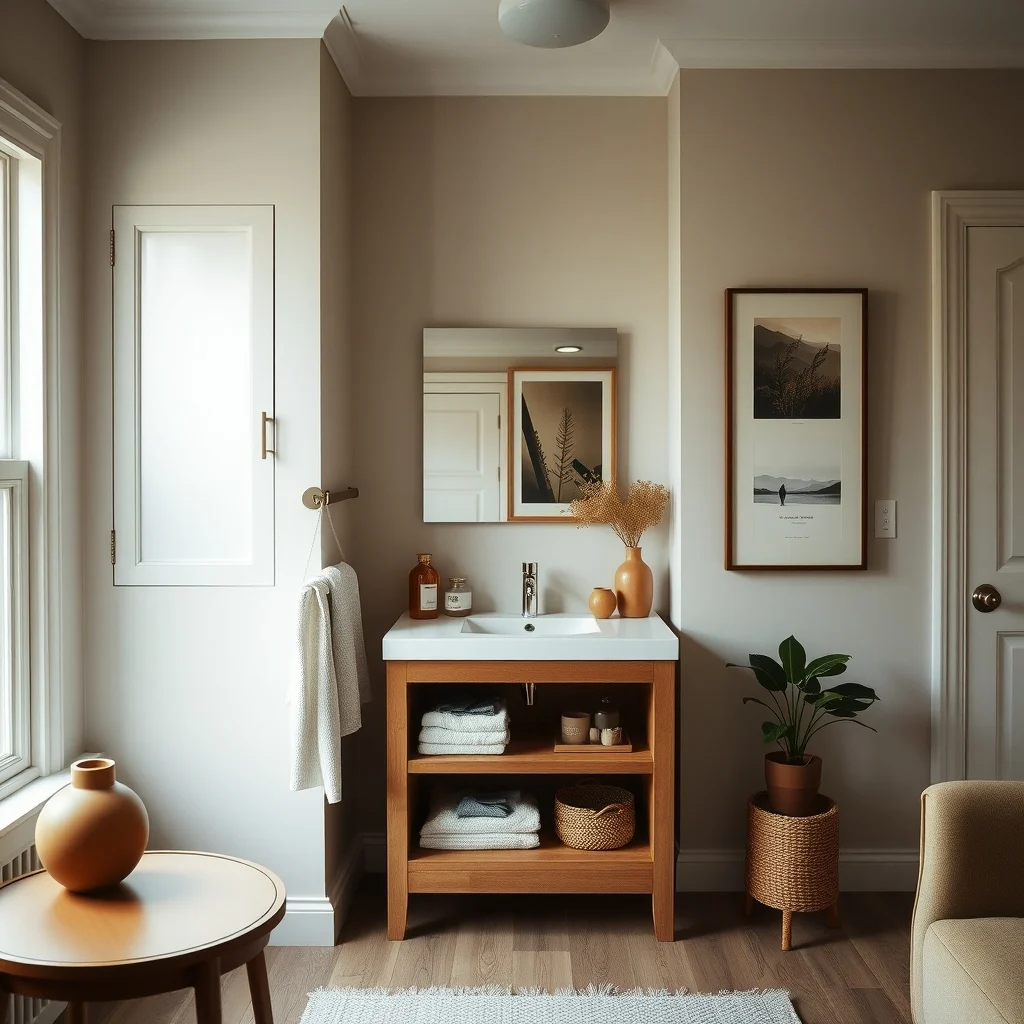
Bathrooms often feel cramped when countertop clutter competes with essential toiletries. A vanity that incorporates a recessed medicine cabinet behind a frosted glass panel eliminates the need for a separate wall‑mounted unit. The cabinet opens inward, providing a shallow cavity for daily essentials such as toothbrushes, shaving cream, and a few skincare products. By keeping the cabinet flush with the vanity surface, the bathroom maintains a sleek silhouette, especially when paired with a countertop in polished concrete or light marble. Lighting around the vanity—soft LED strips under the mirror—adds a gentle glow that highlights the clean lines. The main limitation is the cabinet’s depth; it can store only low‑profile items, so larger bottles should be kept elsewhere.
7. Under‑bed drawers with fabric fronts
© 2026 AI Illustrator — Inspiration Only
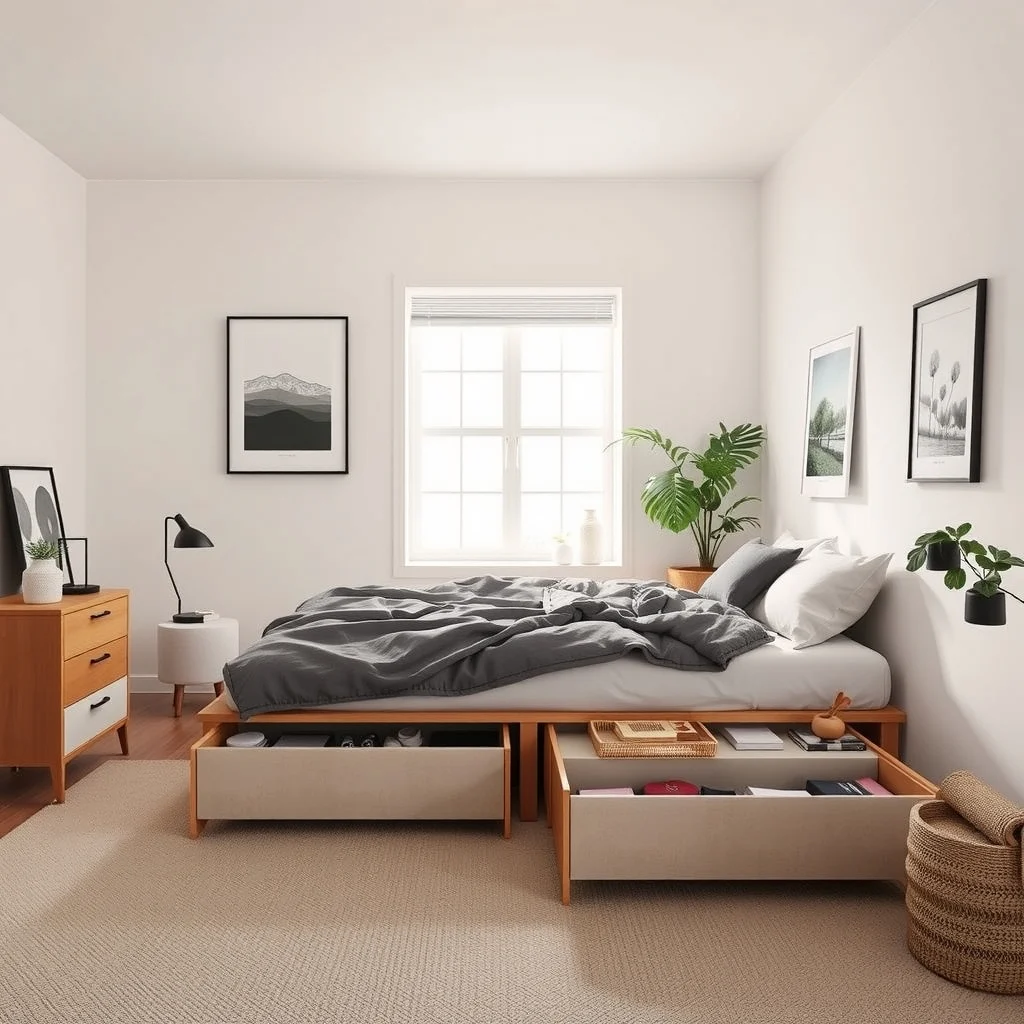
Bedrooms often hide a surprising amount of clutter under the bed, but open space can look messy. Sliding drawers that sit beneath the bed frame and feature fabric fronts in a tone that matches the bedding create a built‑in look while offering ample storage for clothing, linens, or shoes. Opt for a low‑profile wooden runner that glides smoothly, and select a linen or cotton panel in a soft dove gray to blend with the mattress. Because the drawers are concealed, the room retains a minimalist vibe, and the fabric front can be removed for easy cleaning. The design works best with a platform bed that has enough clearance—typically at least eight inches—between the mattress and the floor. If ceiling height is limited, consider using shallow drawers to avoid making the bed feel too high.
FAQ
© 2026 AI Illustrator — Inspiration Only
How can I hide clutter in a studio apartment?
Use furniture that incorporates storage, such as a window seat with hidden drawers, floating shelves with concealed bins, or an ottoman with a lift‑top. These pieces keep everyday items out of sight while maintaining a streamlined aesthetic.
Are wall‑mounted desks sturdy enough for a laptop?
Yes, provided the brackets are anchored into wall studs or a heavy‑duty mounting plate is used. Choose a desk with a solid wood veneer and a reliable hinge to ensure it supports the weight of a laptop and accessories.
What is the best material for hidden storage that is easy to clean?
Materials such as lacquered wood, brushed metal, and smooth laminate resist dust and can be wiped down with a damp cloth. Fabric fronts should be chosen in low‑pile textiles that are machine‑washable or easily spot‑cleaned.
Can I install a pull‑out pantry in a small kitchen without professional help?
Installation is possible for DIYers who are comfortable with basic carpentry and have access to a stud finder. Measure the cabinet space accurately, follow the manufacturer’s instructions for the rollers, and ensure the unit is level before securing it.
What are the trade‑offs of using under‑bed storage?
Under‑bed drawers keep items out of sight but require sufficient clearance beneath the mattress, which may raise the bed’s overall height. Shallow drawers work well for linens, while deeper units may limit legroom when sitting on the edge of the bed.
Final Thoughts
© 2026 AI Illustrator — Inspiration Only
Creating a calm, organized apartment is less about adding more furniture and more about integrating storage that blends with the room’s design language. By selecting pieces that hide away everyday items—whether it’s a window seat, floating shelves, or a recessed vanity—you maintain visual simplicity while keeping essential belongings within reach. Each idea carries its own set of considerations, from weight limits to clearance requirements, but with careful planning they become seamless extensions of your living space. Embrace these hidden solutions, and watch your small apartment transform into a tranquil haven where function and serenity coexist.