
Your living room is doing double-duty as an office, but the only spot for a desk is a narrow wall that already holds a plant and the Wi‑Fi router. You tried a bulky table anyway, and now it blocks the walkway, looks cluttered, and the cords are a mess. You want a clean setup that actually fits, lets you focus, and doesn’t ruin the room. This guide will help you decide which floating desk style to use, what to buy (and skip), how to hide the ugly parts, and how to avoid the small-space mistakes that make work-from-home feel cramped.
| Idea | Best For | Budget Level | Mistake To Avoid |
|---|---|---|---|
| 1. Slim Floating Shelf Desk | Hallways, living rooms, rental walls | $–$$ | Choosing a shelf too narrow for a laptop and mouse |
| 2. Fold-Down Wall Desk (Murphy-Style) | Studios, bedrooms, multi-use dining areas | $$–$$$ | Installing without finding studs or using proper anchors |
| 3. Built-In Niche or Alcove Desk | Recessed walls, awkward corners | $–$$$ (DIY vs. custom) | Skipping task lighting in a shadowy niche |
| 4. Window-Ledge Floating Desk | Bright spots where a desk won’t block traffic | $–$$ | Glare and poor screen placement |
| 5. Wraparound L-Shaped Floating Desk | Small rooms needing storage and zoning | $$–$$$ | Overbuilding depth and crowding the room |
© 2026 AI Illustrator — Inspiration Only
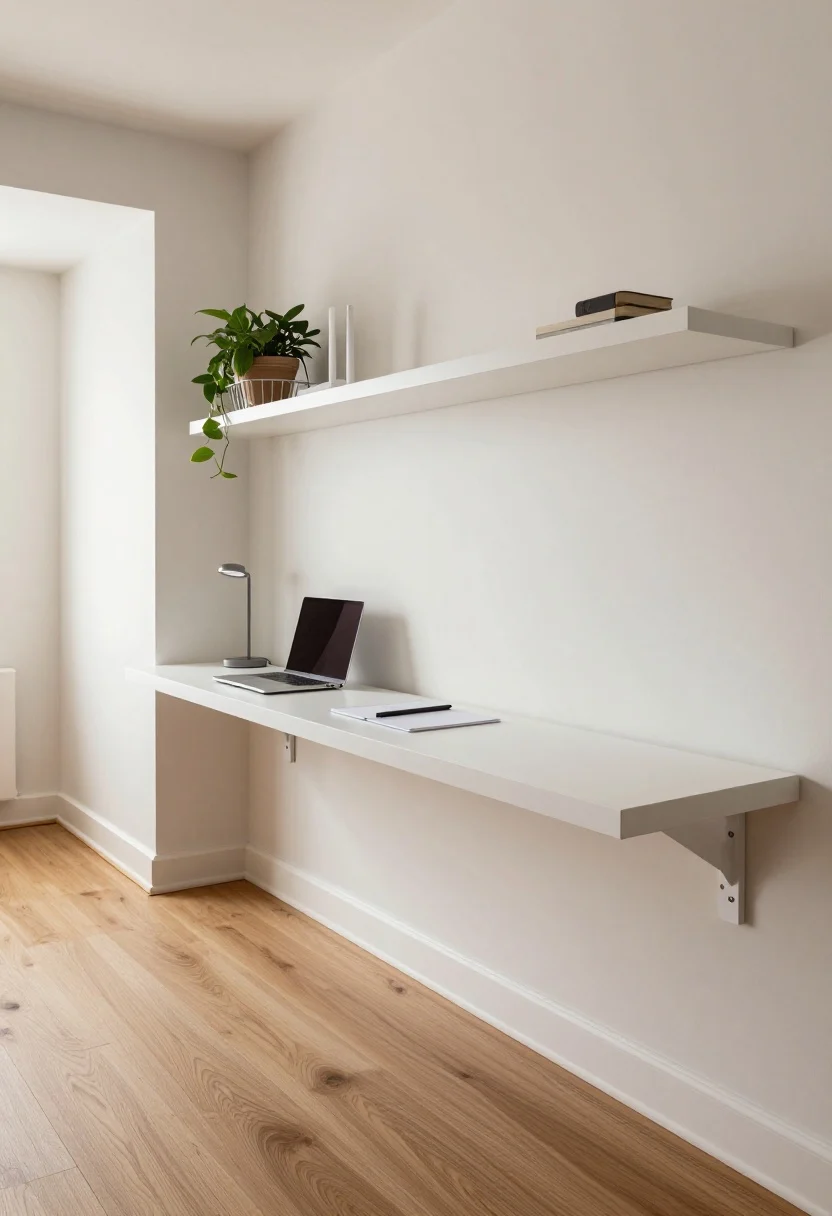
1) Slim Floating Shelf Desk for Tight Walls and Hallways
© 2026 AI Illustrator — Inspiration Only
What’s Your Apartment Decor Style?
Answer these quick questions to discover your perfect decor vibe.
You’ve got 40–52 inches of wall in the living room but zero floor space; a standard desk looks like a parked SUV. You need a work surface that reads like a shelf, not furniture.
Why this works: Scale and traffic flow. A shallow, wall-mounted desk visually disappears, keeps floor area open, and maintains clear walking paths. When matched to the wall color, it recedes into the background so your art or window remains the focal point.
- Measure for comfort: aim for 18–20 inches deep and 28–30 inches high. If you use a separate mouse, avoid anything under 16 inches deep.
- Choose material wisely: pre-made floating shelf desktops, a solid wood board (1.25–1.5 inches thick for rigidity), or a laminate countertop cut to size for a wipeable finish. Semi-matte paint or a high-pressure laminate hides fingerprints better than high gloss.
- Mount to studs using heavy-duty concealed brackets rated 2–3x your expected load. For rentals, ask permission or use brackets with minimal fasteners and fill holes at move-out; peel-and-stick cable raceways keep cords tidy without wall damage.
- Plan cable control: a 2-inch grommet at the back funnels cords downward into a slim basket under the desk. Route the power strip vertically along the wall to keep the floor clear.
Mistake to avoid: A shelf less than 36 inches wide leaves no space for a lamp and notepad; 42–48 inches is the sweet spot. Budget note: a laminate shelf with concealed brackets typically runs $80–$200; solid wood $150–$400 depending on species.
Once your daily setup folds into the wall visually, you can consider a second solution for days you need more storage.
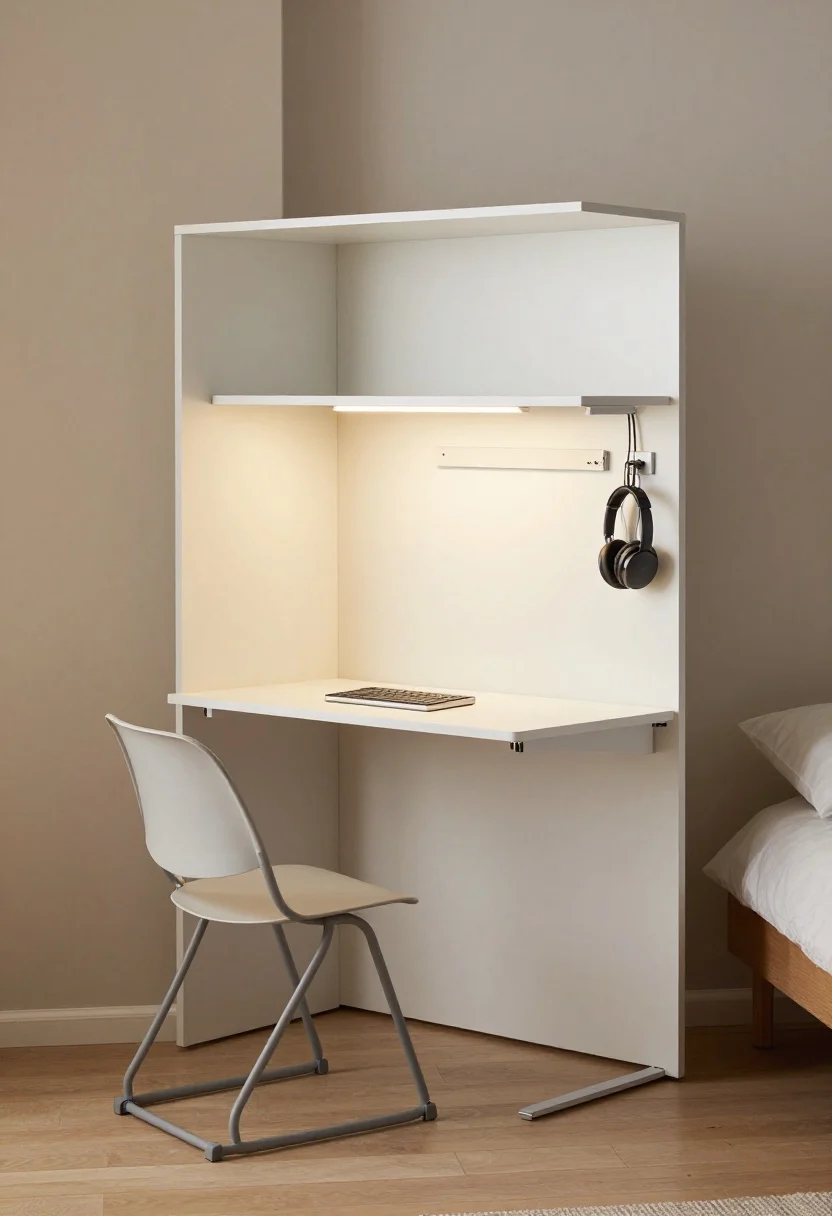
2) Fold-Down Wall Desk That Disappears After 5 PM
© 2026 AI Illustrator — Inspiration Only
Your studio doubles as a bedroom, and the sight of a laptop at bedtime ruins your wind-down. You want the desk to vanish.
Why this works: Layout and focal control. A fold-down desk turns a wall into a workstation only when needed. Closed, its face acts as a simple panel or memo board, reducing visual noise and helping the bed or sofa reclaim attention after work hours.
- Pick the right unit: look for gas-strut or soft-close hinges, an internal shelf for a small keyboard or notebook, and a 60–80 lb weight rating. White or wall-colored fronts blend best in small spaces; wood tones can match existing cabinets.
- Find studs and set the center at about 28–30 inches desk height when open. For plaster or brick, use appropriate anchors (toggle bolts or masonry anchors rated for dynamic loads).
- Add lighting: mount a 3000–3500K LED puck or a plug-in sconce above; warm-neutral light is comfortable for screens. A magnetic strip inside the door can hold cables and a compact headset.
- Hide peripherals: stash a slim folding chair behind a curtain or in a coat closet; choose a 16–18 inch seat depth to fit narrow nooks.
Budget note: Ready-made wall-mounted desks cost $120–$450. DIY with a furniture-grade plywood front and piano hinge can be done for under $150. Mistake to avoid: Mounting too high; if your elbows rise above desktop level, you’ll get shoulder strain.
When you need more permanence or already have a recessed spot begging for a purpose, try a niche solution.
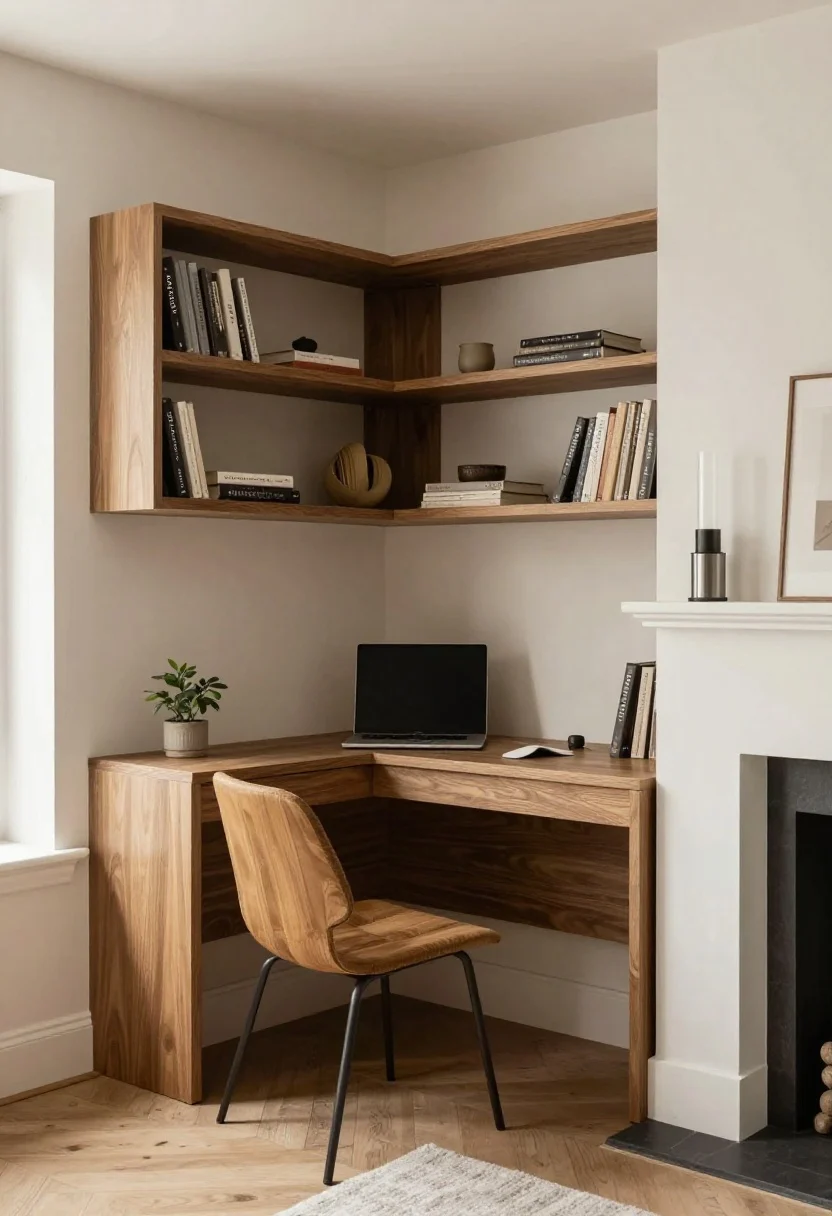
3) Built-In Niche or Alcove Floating Desk That Looks Custom
© 2026 AI Illustrator — Inspiration Only
There’s that weird 50-inch-wide recess by the chimney you don’t know how to use; a freestanding desk never quite fits and leaves awkward gaps.
Why this works: Layout and storage. Spanning wall-to-wall inside a niche creates a custom, integrated look, maximizes every inch, and allows storage to rise vertically. Matching the desk to the trim color simplifies the palette so the whole recess reads as one element.
- Template the space: walls aren’t square. Scribe a cardboard or kraft paper template to get an exact fit. Use a 1.5-inch-thick desktop for widths over 48 inches to reduce flex; add a hidden cleat on three sides for support.
- Build upward: install 10–12 inch-deep shelves above at least 15 inches clear above the desktop to keep monitors from feeling cramped. Aim for two shelves plus a pinboard or cork strip between them.
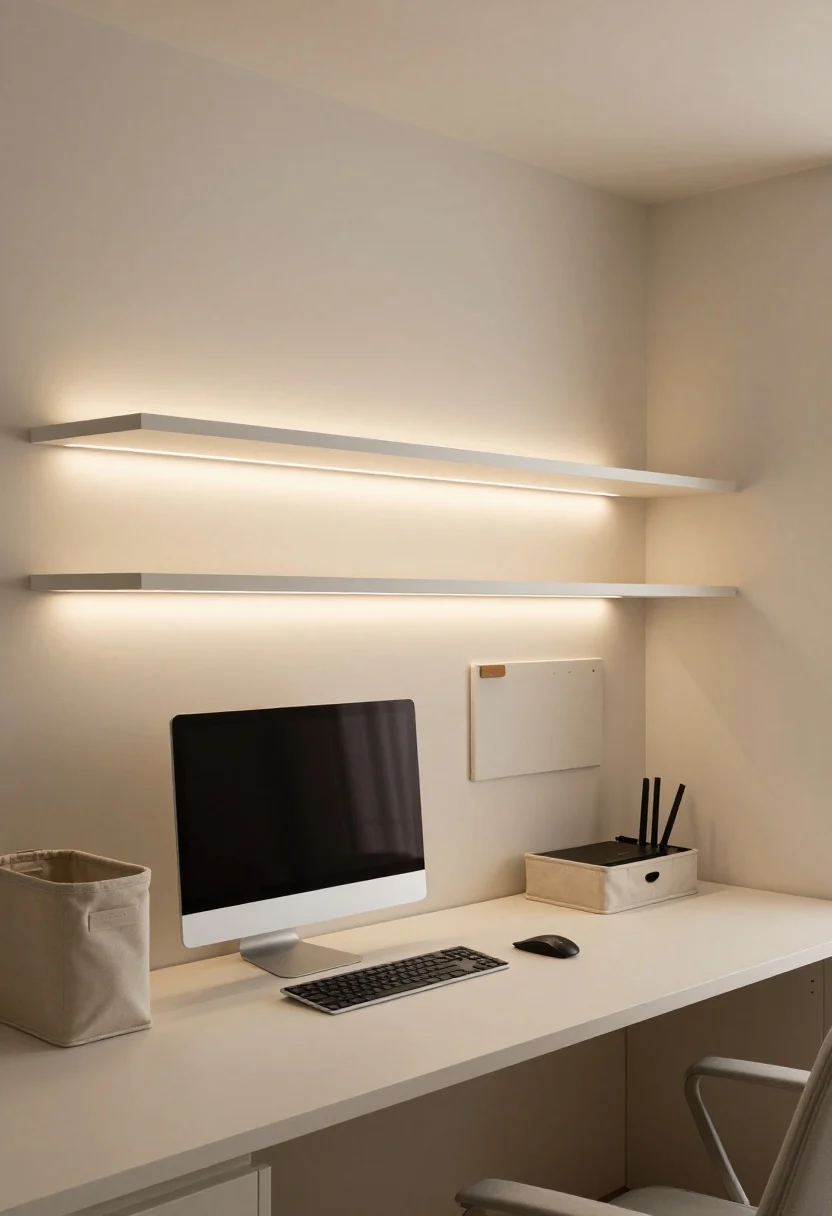
- Light the cavity: add an under-shelf LED strip (CRI 90+, 3000–3500K) with a diffuser channel to prevent glare on screens. Put it on a dimmer so it doubles as ambient lighting when off-duty.
- Contain the mess: a cable trough or raceway at the back keeps chargers off the surface; a fabric box or lidded basket hides routers and backup drives. Choose washable, neutral-texture bins to avoid visual clutter.
Mistake to avoid: Skipping task lighting. Niches are shadow-prone; without a light source, the space feels cave-like. Budget note: A DIY cleat-supported desktop and shelves can be under $250; a carpenter-built face-frame version runs $800–$1,800 depending on finish and hardware.
If your best view is a window and you’re tempted to use the sill, there’s a clean way to do it without glare headaches.
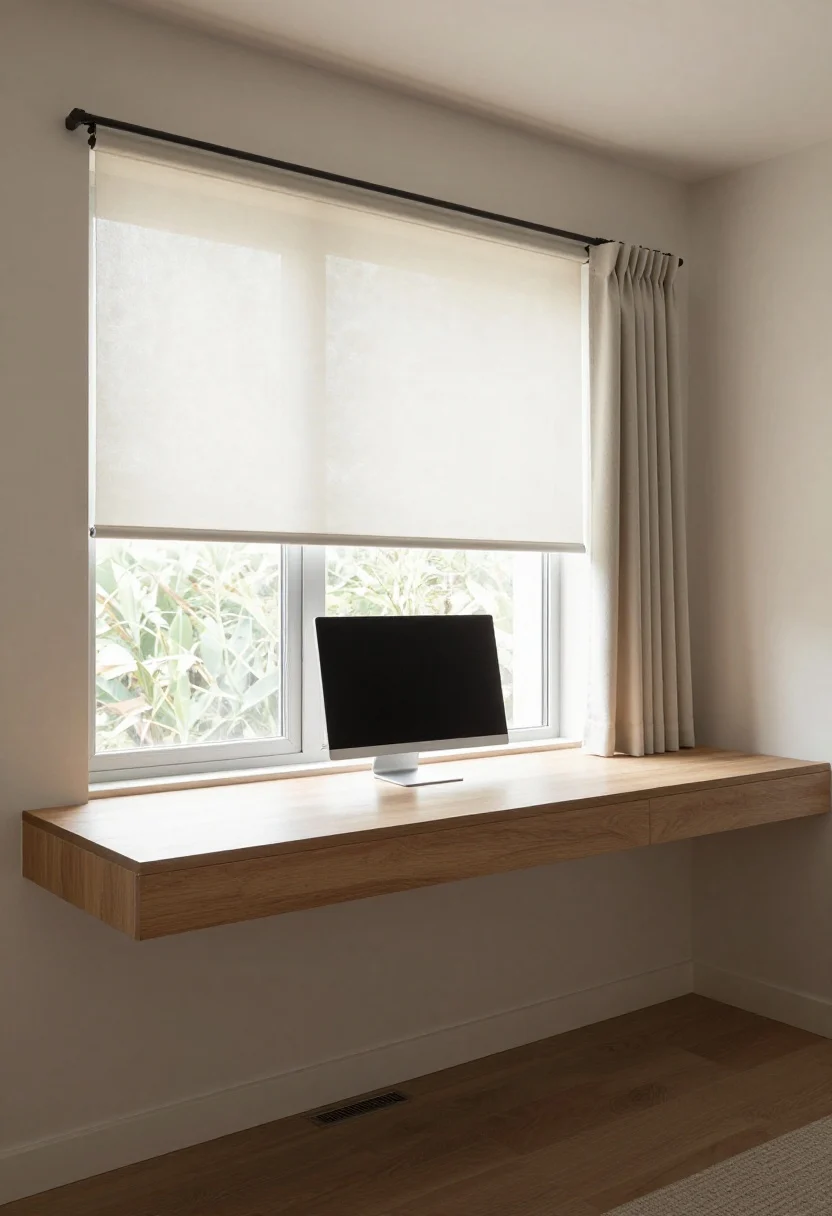
4) Window-Ledge Floating Desk for Light Without the Glare
© 2026 AI Illustrator — Inspiration Only
You have the nicest daylight in front of a window, but every desk you try blocks the curtains and bakes your screen.
Why this works: Lighting and color balance. A slim, wall-to-wall ledge under the sill keeps floor vents and drapery clear while delivering daylight from the sides. The lower profile keeps your sightline open and prevents the window from being visually chopped.
- Set the height: aim to mount 2–4 inches below the existing sill so drapes can still hang full length. Maintain a 18–20 inch depth if space allows; 16 inches works with a compact keyboard.
- Control light: install light-filtering roller shades (not blackout) at the window. Choose 5–10% openness solar shades on sunniest exposures; they cut glare while preserving some view.
- Mind the screen: place your monitor perpendicular to the window when possible; if centered, use a matte screen filter. Keep a 20–28 inch viewing distance and top-of-screen at eye level to reduce neck strain.
- Keep air paths open: if there’s a radiator or vent below, choose a slatted desktop or leave a 2-inch gap at the back for airflow. Use heat-resistant finishes like laminate or sealed hardwood.
Mistake to avoid: Curtains puddling on the desk. Hang drapery high and wide; set the rod 6–10 inches above the window and extend 8–12 inches each side. Budget note: A custom laminate ledge with finished edge is around $120–$300; solar shades are $60–$250 per window depending on size and mechanism.
Once you’ve mastered a single run, you can add capacity by turning the corner—without eating the room.
5) Wraparound L-Shaped Floating Desk That Doubles as Storage
© 2026 AI Illustrator — Inspiration Only
Your small office or guest room needs a desk, printer spot, and some shelves, but standard L-shaped desks feel heavy and pinch the walkway.
Why this works: Layout and furniture scale. A wall-mounted L uses the walls as legs, freeing the floor visually and physically. Keeping depths modest (18–20 inches on the main run, 12–15 inches on the return) preserves movement and prevents that “corner trap” look.
- Plan the runs: mount the primary desk at 28–30 inches high and extend the return no more than 36–48 inches to avoid crowding. If the door swings nearby, leave 30–36 inches of clear floor for traffic.
- Use consistent materials: same wood species or laminate on both sides, with an eased edge profile for comfort. Align grain direction for a cohesive, built-in feeling.
- Add verticals sparingly: float 1–2 shelves above the shorter return for printers and baskets; keep them under 10 inches deep to reduce head bumps. Match cabinet hardware finishes to lighting (black, brass, or brushed nickel) for a calm palette.
- Cable strategy: a shared corner grommet feeds a single surge protector mounted under the return. Label cords with removable tags for quick swaps.
Mistake to avoid: Overbuilding depth. Anything over 20 inches on both legs eats the room and complicates chair movement. Budget note: Two boards plus cleats and corner support run $200–$600 DIY; a pro install with mitered corner and hidden steel bracketry can be $900–$2,200.
With the right depth and cable plan, you’ll gain surface area without feeling boxed in, which makes it easier to work—and to put work away.
FAQ
How do I make a floating desk stable enough for daily work?
Locate studs with a reliable detector and use brackets or cleats rated well above your expected load (monitor + arms + forearms can easily total 40–60 lbs). For wide spans, add a center bracket or use a thicker top (1.5 inches). If you can’t hit studs, use structural anchors rated per bracket and reduce depth to lessen torque.
What chair works best with a shallow floating desk?
Choose an armless task chair with a seat depth of 16–18 inches and a smaller base (22–24 inches). Look for breathable, washable fabric or wipeable vinyl. If space is extremely tight, a folding chair with a seat cushion stored in a basket works for occasional sessions.
How do I keep a floating desk from looking cluttered?
Limit the desktop to three permanent items: monitor or laptop stand, task light, and a catchall. Everything else lives on a shelf or in a lidded box. Use cable grommets, adhesive clips on the underside, and a slim under-desk tray for keyboards when not in use. Matching bins and a restrained color palette reduce visual noise.
Conclusion: If you’re unsure where to start, measure your narrowest usable wall and try the slim floating shelf desk first—it’s affordable, renter-friendly, and fixes traffic flow immediately. If your priority is a cleaner look after hours, the fold-down desk hides your work life in seconds. For those with an awkward recess, build it out like a custom niche with proper lighting. Window ledges suit light lovers with glare control in place, and wraparound L-shapes are best when you need storage without adding bulk. Pick the one that solves your biggest daily annoyance, buy only what supports that layout, and you’ll finally have a small-space office that works as hard as you do.