
When a modest living room feels cramped, the right combination of light can open the space and give it a curated feel. Layered lighting isn’t just about adding more fixtures; it’s about arranging light sources so each serves a purpose while complementing the room’s scale, colors, and furnishings. Below you’ll find seven ideas that walk you through the process, from the ceiling down to the floor, and show how to keep the look cohesive without overwhelming a small footprint.
1. Choose a low‑profile ceiling fixture as a steady base
© 2026 AI Illustrator — Inspiration Only
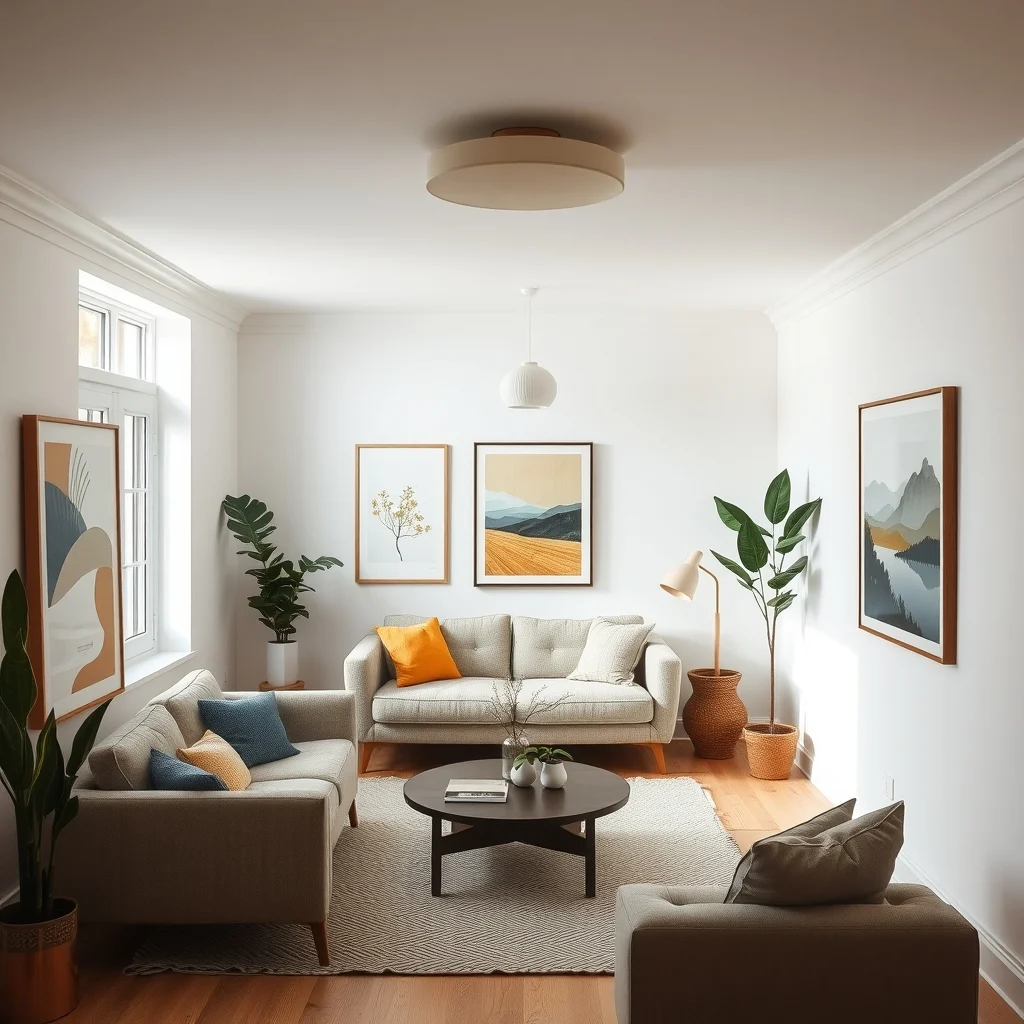
The first layer should provide even illumination across the entire room, and in a compact space a low‑profile fixture works best. A recessed can or a shallow drum with a diffuser spreads light without drawing attention to the ceiling itself, allowing the walls and furniture to remain the visual focus. Selecting a fixture with a warm color temperature—around 2700 K—creates a welcoming ambience while still offering enough brightness for daily activities. If the ceiling height is under eight feet, avoid chandeliers or oversized pendants that can dominate the room; a modest fixture keeps the vertical space feeling open.
What’s Your Apartment Decor Style?
Answer these quick questions to discover your perfect decor vibe.
When installing, position the light roughly at the room’s center or slightly forward of the main seating area. This placement reduces shadows cast by sofas and chairs and ensures the light reaches the corners where darkness tends to linger. A simple trade‑off is that a single ceiling light may not be bright enough for reading, which is why the next layers become essential.
2. Add wall‑mounted sconces for soft ambient glow
© 2026 AI Illustrator — Inspiration Only
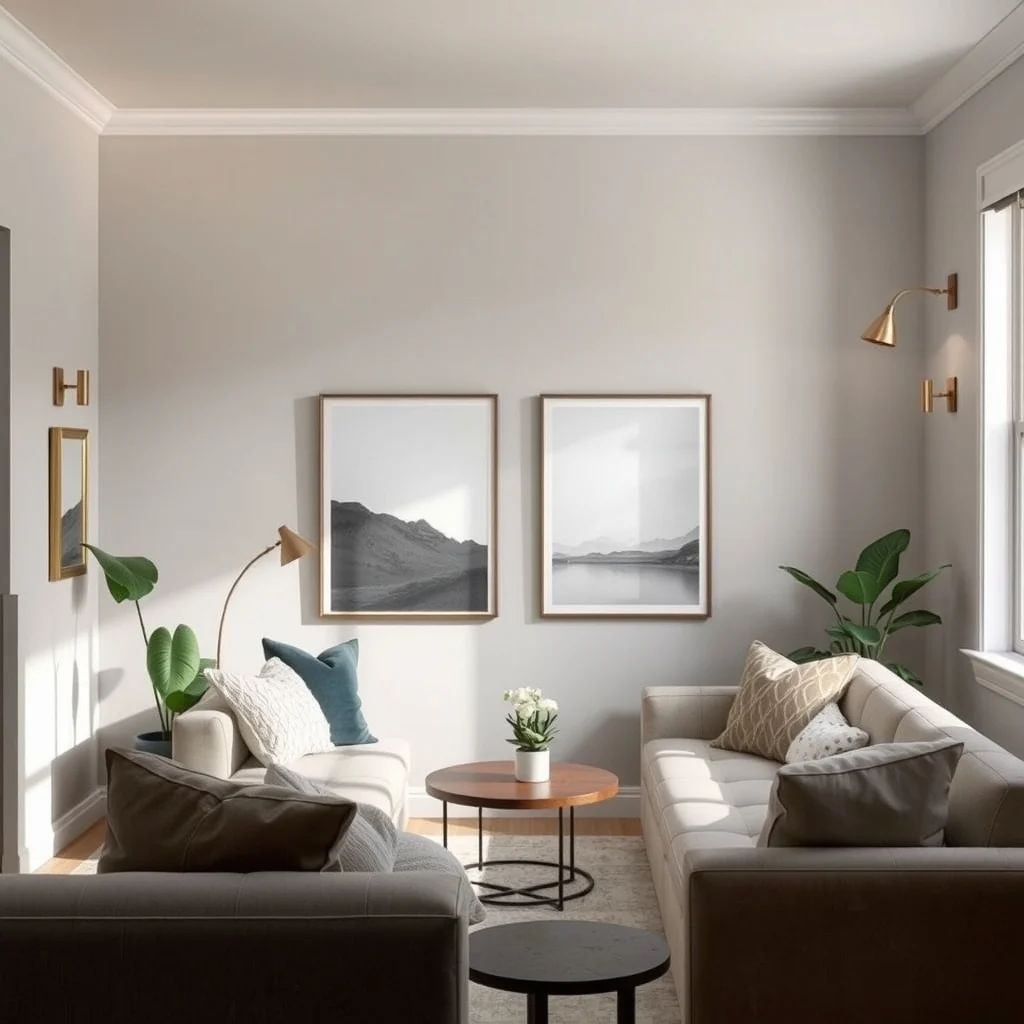
Wall sconces introduce a second plane of illumination that lifts the light off the floor and spreads it horizontally. In a small living room, a pair of brushed‑brass or matte‑black sconces placed at eye level on either side of a focal wall can create a gentle wash that highlights texture without adding bulk. Because the light source is close to the wall, the effect is a subtle halo that expands the perceived width of the room.
Choosing fixtures with adjustable heads lets you direct the beam toward a bookshelf, a decorative rug, or a piece of artwork, adding flexibility as your décor evolves. The downside is that sconces require a hard‑wired connection, so planning the electrical route early on saves the hassle of retrofitting later. If wiring is a concern, battery‑operated LED sconces with a sleek profile can serve as a temporary solution.
3. Position task lighting where the eyes naturally settle
© 2026 AI Illustrator — Inspiration Only
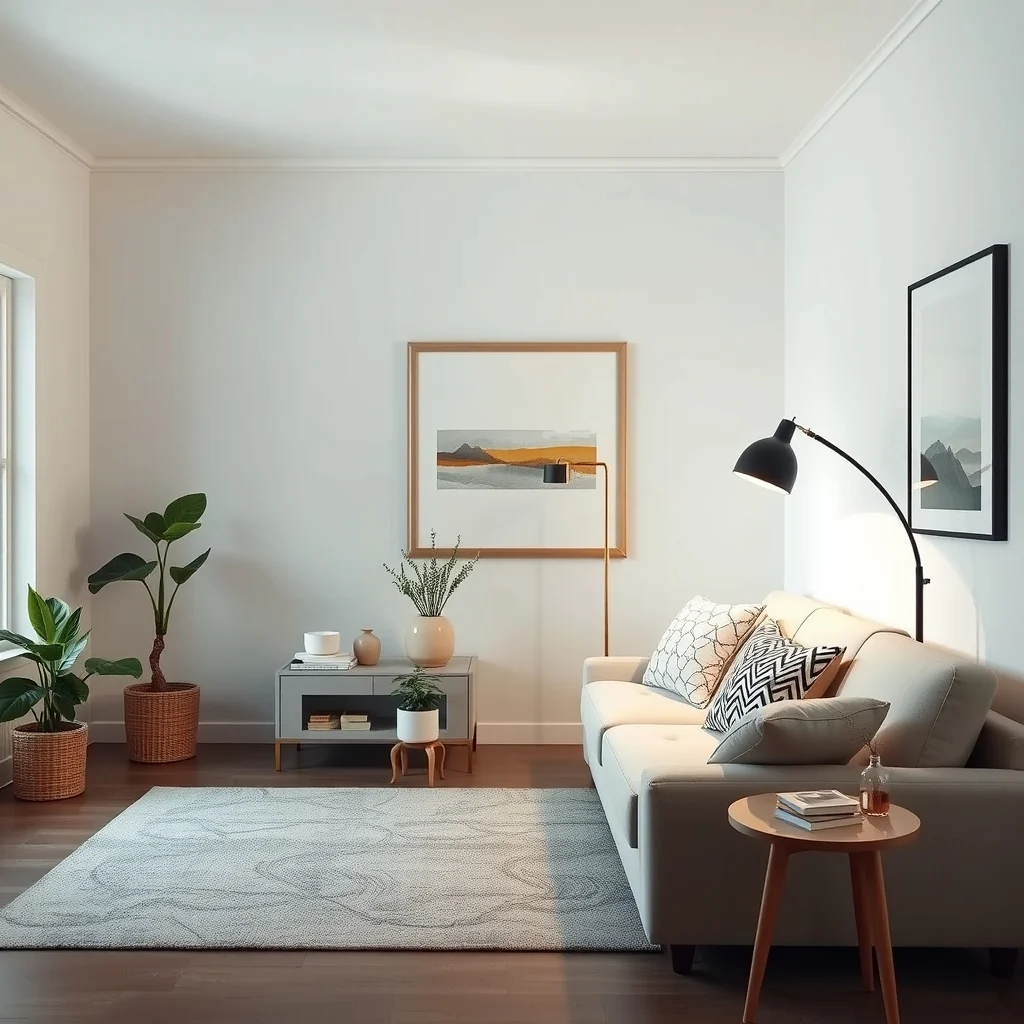
Task lighting targets the areas where you read, work, or enjoy a cup of coffee. A floor lamp with an arced neck placed beside a sofa offers direct light for a side table without cluttering the floor. Selecting a lamp with a dimmable LED bulb lets you raise the intensity for a late‑night page turn and lower it for a relaxed movie night.
The lamp’s shade material influences the quality of light; a linen shade diffuses harsh glare while still delivering enough focus for close‑up activities. Keep the lamp’s height roughly one‑third the distance from floor to ceiling; this proportion prevents the lamp from feeling either too squat or too towering, a common mistake in small rooms. A potential limitation is that a floor lamp can block traffic flow if placed too close to doorways, so measure the walking path before committing.
4. Highlight architectural or decorative features with accent lights
© 2026 AI Illustrator — Inspiration Only
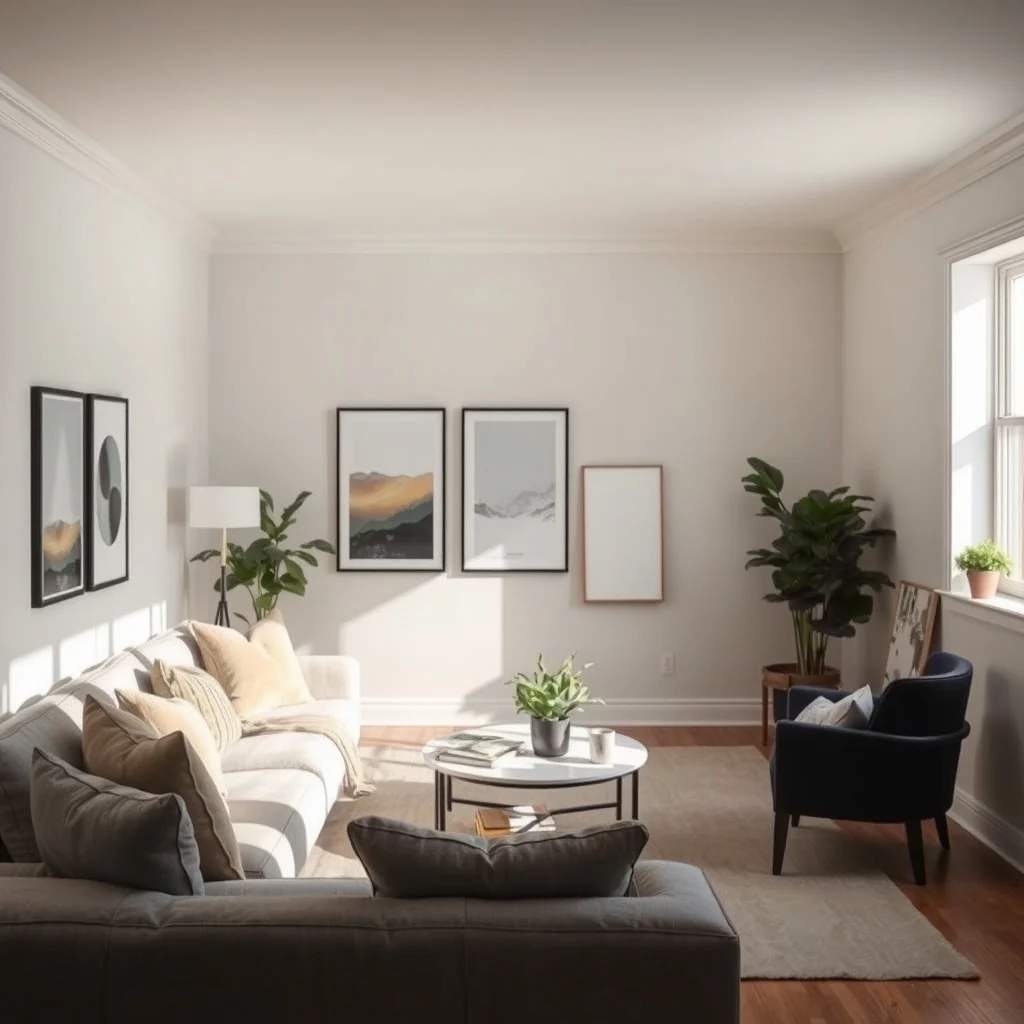
Accent lighting adds depth by drawing attention to specific elements such as a textured wall, a gallery of frames, or a built‑in bookshelf. Small recessed spotlights or narrow track heads can be angled to create a focused beam that accentuates these details without flooding the entire space. By directing light onto a single object, you generate visual interest that pulls the eye upward, a useful trick for rooms with low ceilings.
When choosing bulbs for accent work, a slightly cooler temperature—around 3000 K—helps the highlighted object stand out against the warmer base lighting. The main trade‑off is that too many accent fixtures can create a cluttered ceiling grid, so limit the number to two or three well‑placed spots. If you’re hesitant about permanent installations, clamp‑on track lighting offers a removable alternative that still delivers the same directional effect.
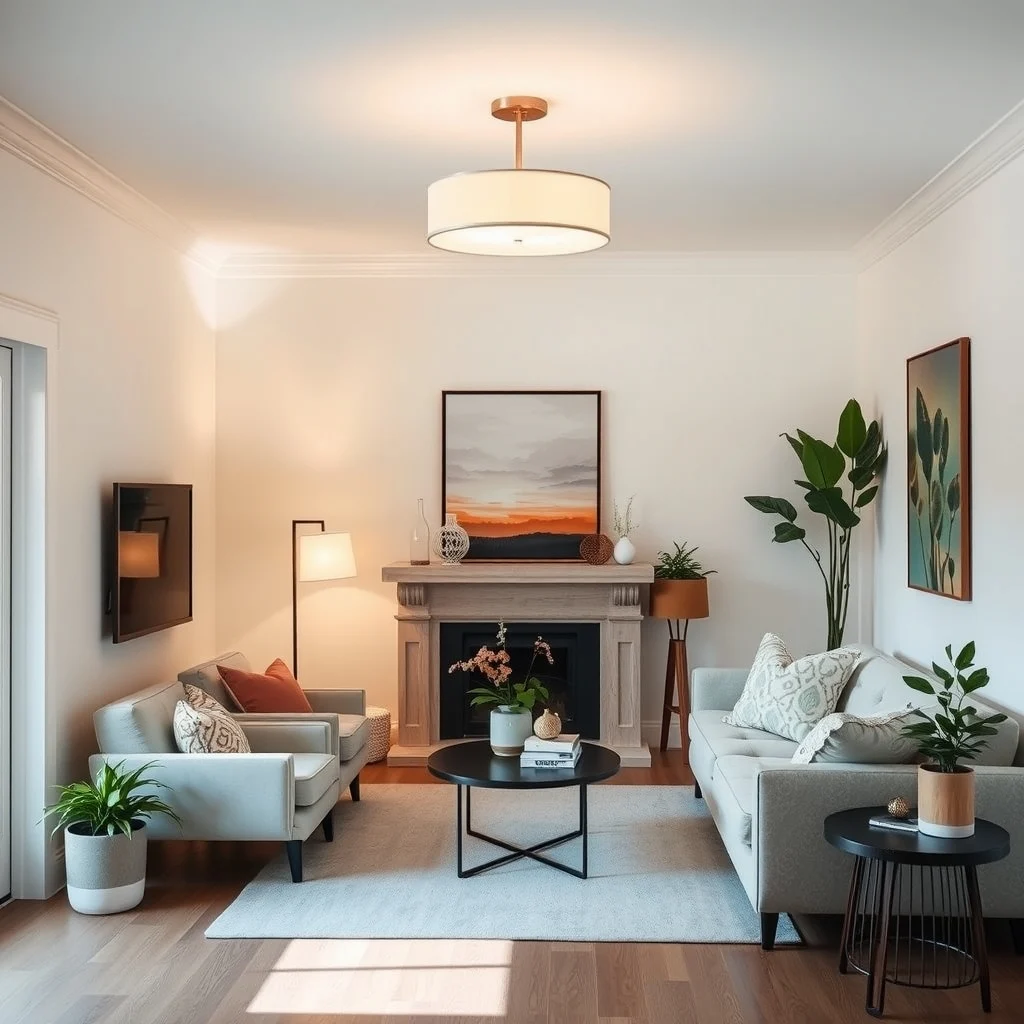
5. Install dimmers and smart controls for adaptable ambiance
© 2026 AI Illustrator — Inspiration Only
Control is the final layer that ties the entire lighting scheme together. A single‑pole dimmer switch for the ceiling fixture lets you lower the overall brightness, while a separate dimmer or smart plug for the floor lamp and sconces provides independent adjustment. With a smartphone app or voice‑activated assistant, you can program scenes—bright for a game night, low for a quiet dinner—without reaching for multiple switches.
While dimmers enhance flexibility, they do require compatible LED bulbs; mismatched bulbs can flicker or produce uneven light. If you’re unsure about wiring, hiring an electrician ensures the installation meets safety standards. The added cost of dimmers pays off in the way the room can shift moods throughout the day.
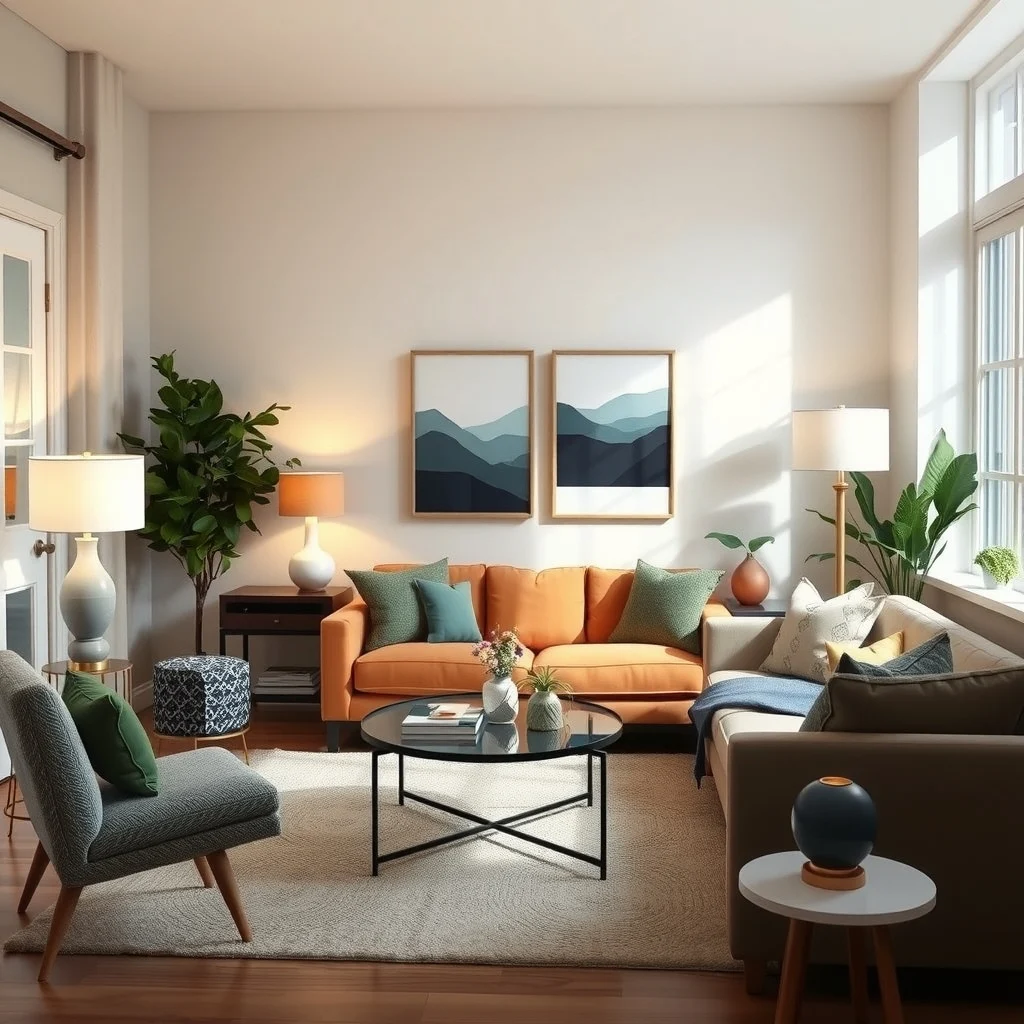
6. Balance lamp heights and proportions to avoid visual congestion
© 2026 AI Illustrator — Inspiration Only
In a small living room, each piece of furniture and lighting must respect the room’s scale. A table lamp that is too tall can dominate a coffee table, while a lamp that is too short may look lost on a larger surface. A good rule of thumb is to select a lamp whose height is roughly the same as the height of the object it sits on, creating a harmonious visual line.
Materials also play a role; a glass base reflects surrounding light, making the lamp appear lighter, whereas a heavy stone base can ground the space. If you prefer a mixed‑material look, pair a slender metal stem with a fabric shade to keep the silhouette delicate. The compromise is that a slimmer lamp may not provide sufficient illumination for tasks, so pairing it with a higher‑wattage bulb compensates without adding bulk.
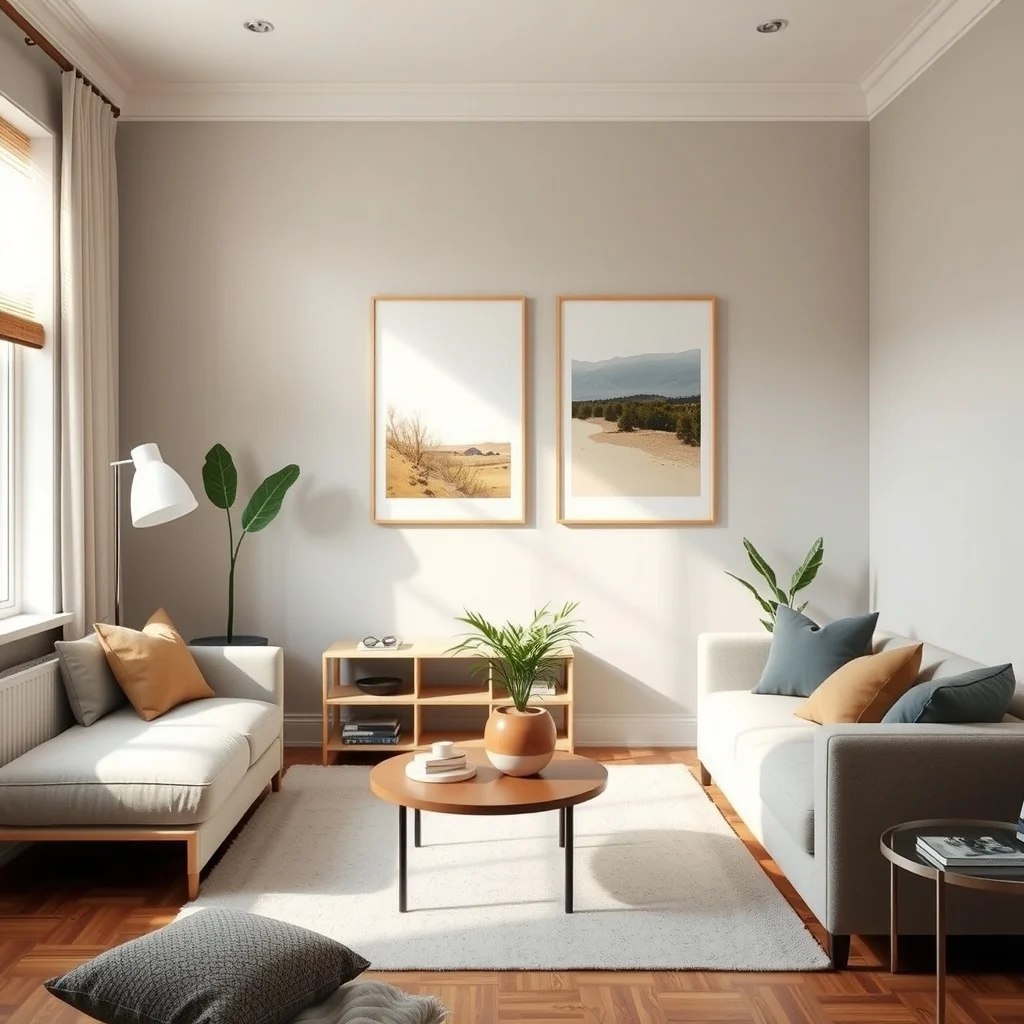
7. Conceal cords and choose switches that blend with the décor
© 2026 AI Illustrator — Inspiration Only
Visible cords and clunky switch plates can undermine the polished look you’re aiming for. Using cord covers that match the wall color or running cords behind baseboards keeps the floor clear and the visual field uncluttered. For floor lamps, opting for models with built‑in cord management—such as a recessed channel in the pole—eliminates the need for external covers.
Switch plates in brushed nickel or matte black can echo the finishes of your fixtures, turning a functional element into a design detail. If the room’s layout allows, consider a single “master” switch that controls multiple lights, reducing the number of toggles on the wall. The downside is that consolidating controls may limit the ability to dim each layer independently, so weigh the convenience against the desire for nuanced lighting scenes.
FAQ
© 2026 AI Illustrator — Inspiration Only
How many light sources should a small living room have?
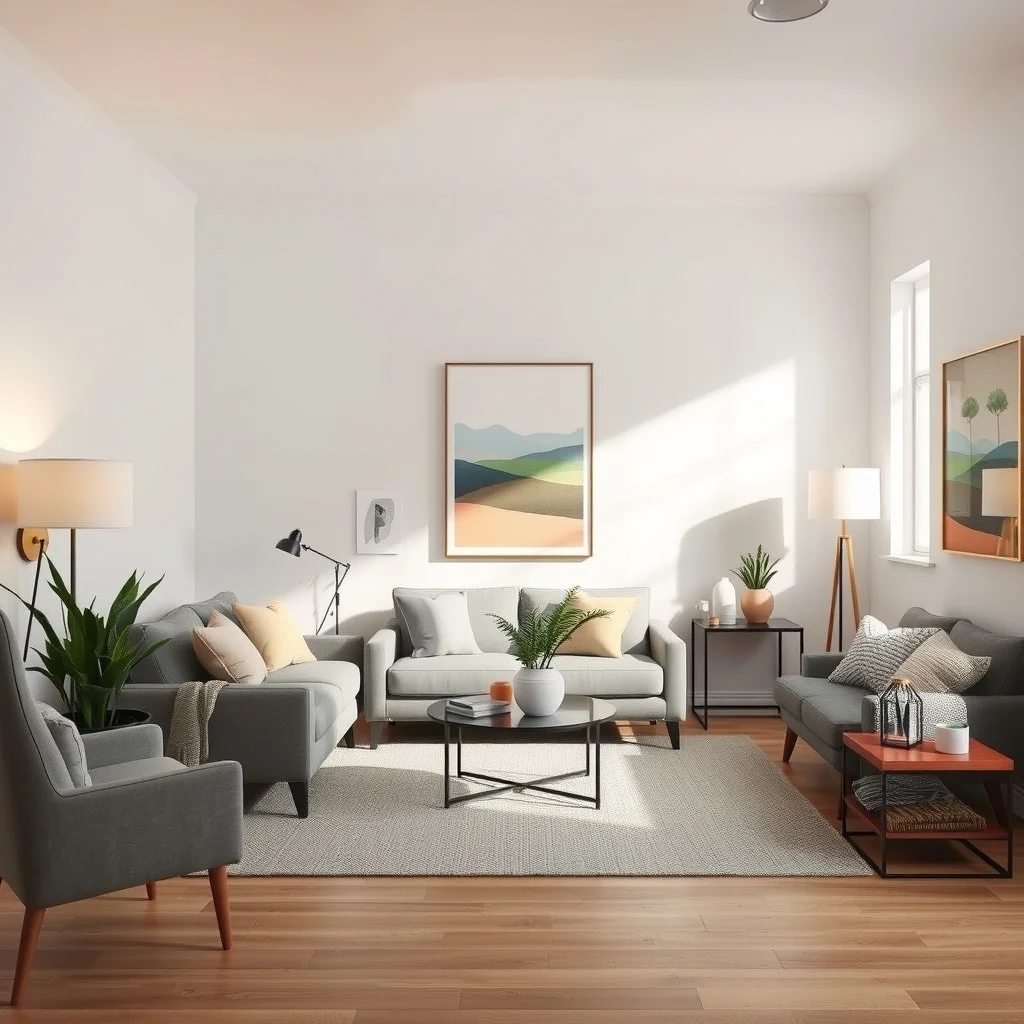
A small living room typically benefits from three to five distinct sources: an overhead base, one or two wall sconces, a floor or table lamp, and optional accent lights. This range provides enough flexibility to create various moods without overcrowding the ceiling or floor.
Can I use floor lamps in a room with a low ceiling?
Yes, as long as the lamp’s overall height stays proportionate to the ceiling—generally no more than one‑third of the floor‑to‑ceiling distance. Choose slim profiles and avoid wide‑base designs that could impede traffic.
What type of bulbs are best for layered lighting?
LED bulbs with adjustable color temperature give you the most control over each layer. Warm tones suit ambient and task lighting, while slightly cooler tones work well for accent illumination.
How do I avoid glare on a TV screen?
Position lights at least a few feet away from the screen and use diffused sources such as sconces or floor lamps with shades. Dimming the overhead fixture during viewing further reduces reflections.
Is LED the only option for designer lighting?
LED is the most versatile because of its energy efficiency and dimming capabilities, but halogen or incandescent bulbs can be used in fixtures that lack LED compatibility, provided they are installed with proper ventilation.
Final Thoughts
© 2026 AI Illustrator — Inspiration Only
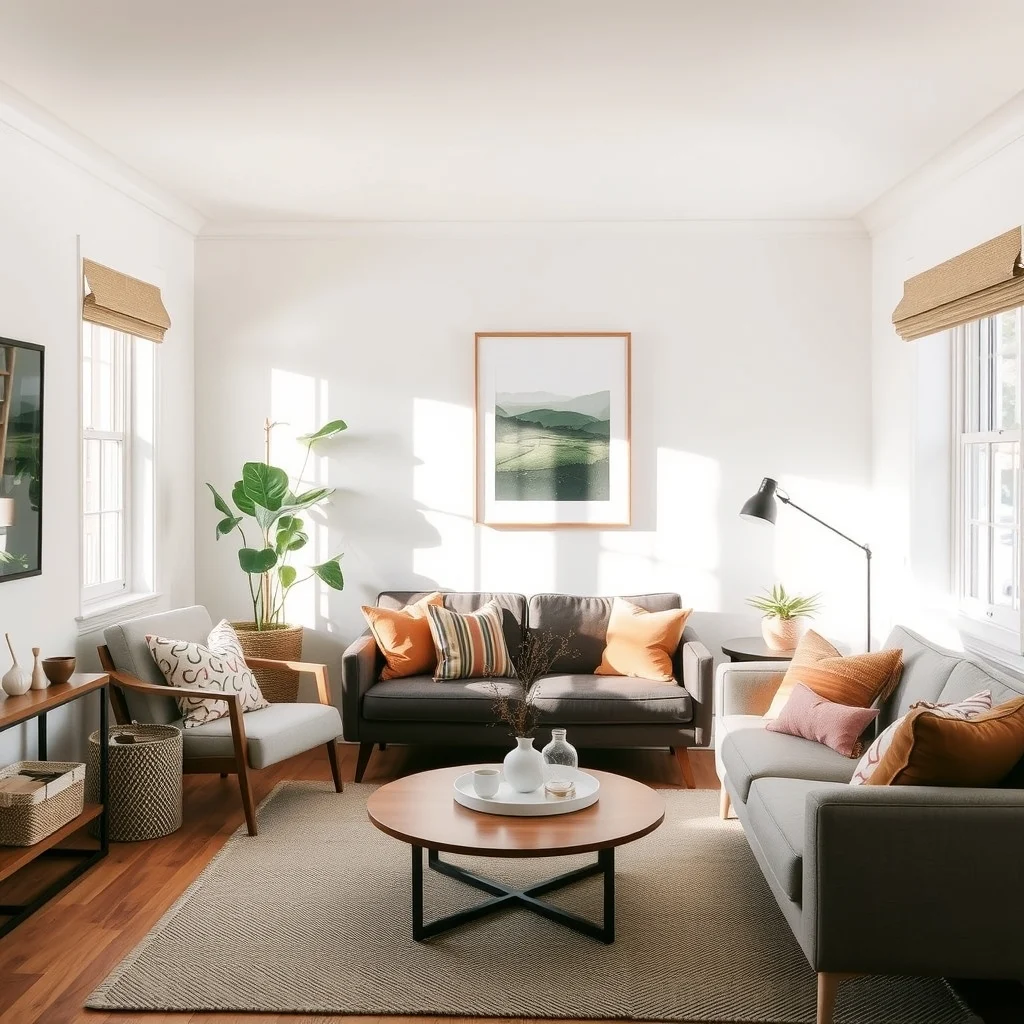
Layered lighting transforms a modest living room from cramped to curated, but the process relies on thoughtful placement, appropriate scale, and the ability to adjust each layer as the day changes. By starting with a subtle ceiling base, adding ambient wall sconces, positioning task lamps where you sit, highlighting architectural details, and finishing with dimmers and tidy cords, you create a balanced composition that feels intentional without feeling crowded. The result is a space that welcomes both quiet evenings and lively gatherings, all while maintaining the designer polish you’ve been aiming for.