
You’re hunting for a place and keep bouncing between a cute studio and a slightly roomier 1-bedroom. Same. The 2026 rental market is throwing curveballs, and “cost-effective” isn’t just about rent anymore—it’s about furniture, utilities, privacy, and how your space actually works with your life.
Let’s break it down like a stylish friend who also loves spreadsheets.
1. Rents in 2026: Sticker Prices vs. Real Prices
© 2026 AI Illustrator — Inspiration Only
What’s Your Apartment Decor Style?
Answer these quick questions to discover your perfect decor vibe.
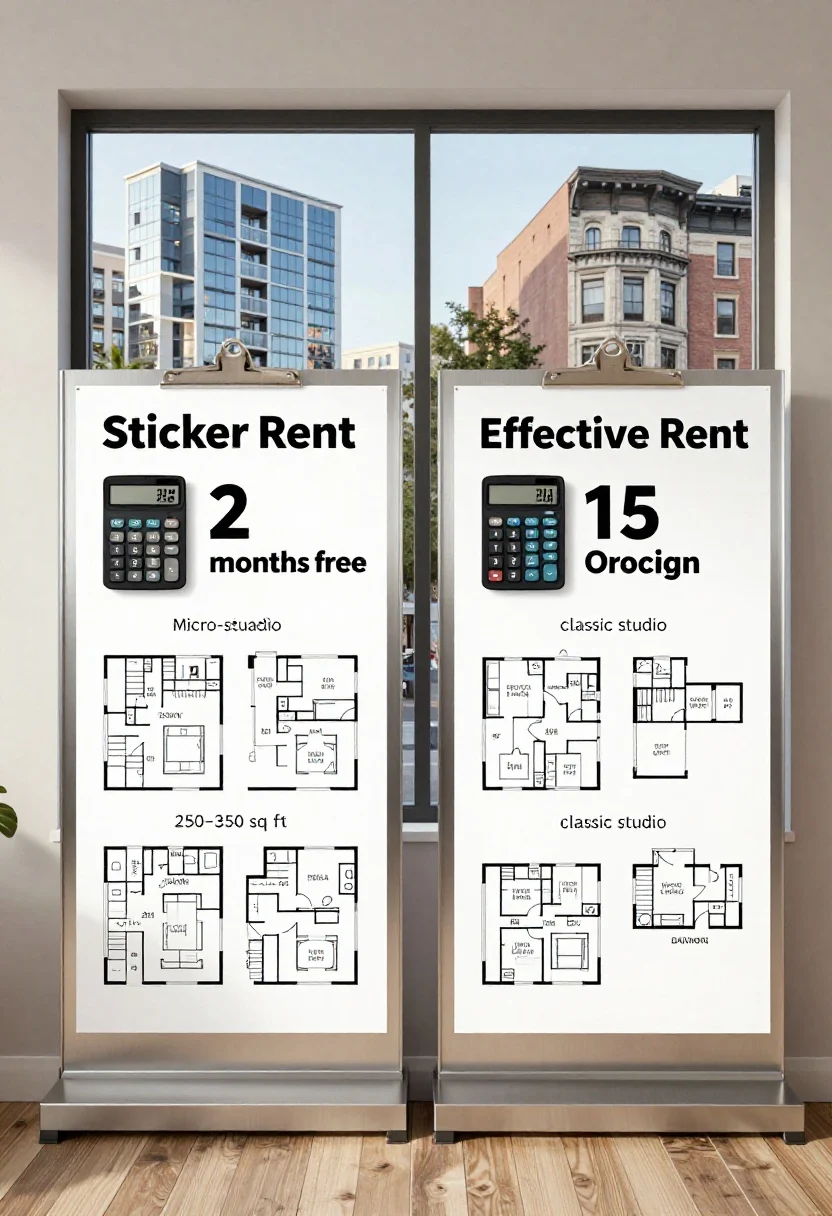
Here’s the headline: studios still have lower sticker prices in most cities, but 1-bedrooms are getting more competitive—especially in buildings offering promos. The spread varies by city neighborhood, not just zip code. And FYI, mid-rise buildings with newer finishes often narrow that price gap because studios get priced up for sleek design.
What to watch for:
- Effective rent: Those “2 months free” deals matter. Divide the annual total by 12 to compare fairly.
- Micro-studios vs. classic studios: Micro can be 250–350 sq ft with luxe perks but less storage. Check floor plans carefully.
- Older buildings: Sometimes a roomy 1-bedroom in a vintage walk-up costs the same as a glossy micro-studio with amenities.
Bottom line: Studios usually win on base rent, but don’t assume. In some markets, a discounted 1-bedroom can be only $150–$250 more per month—and that changes the math fast.
2. Total Monthly Costs: Not Just Rent, Bestie
© 2026 AI Illustrator — Inspiration Only
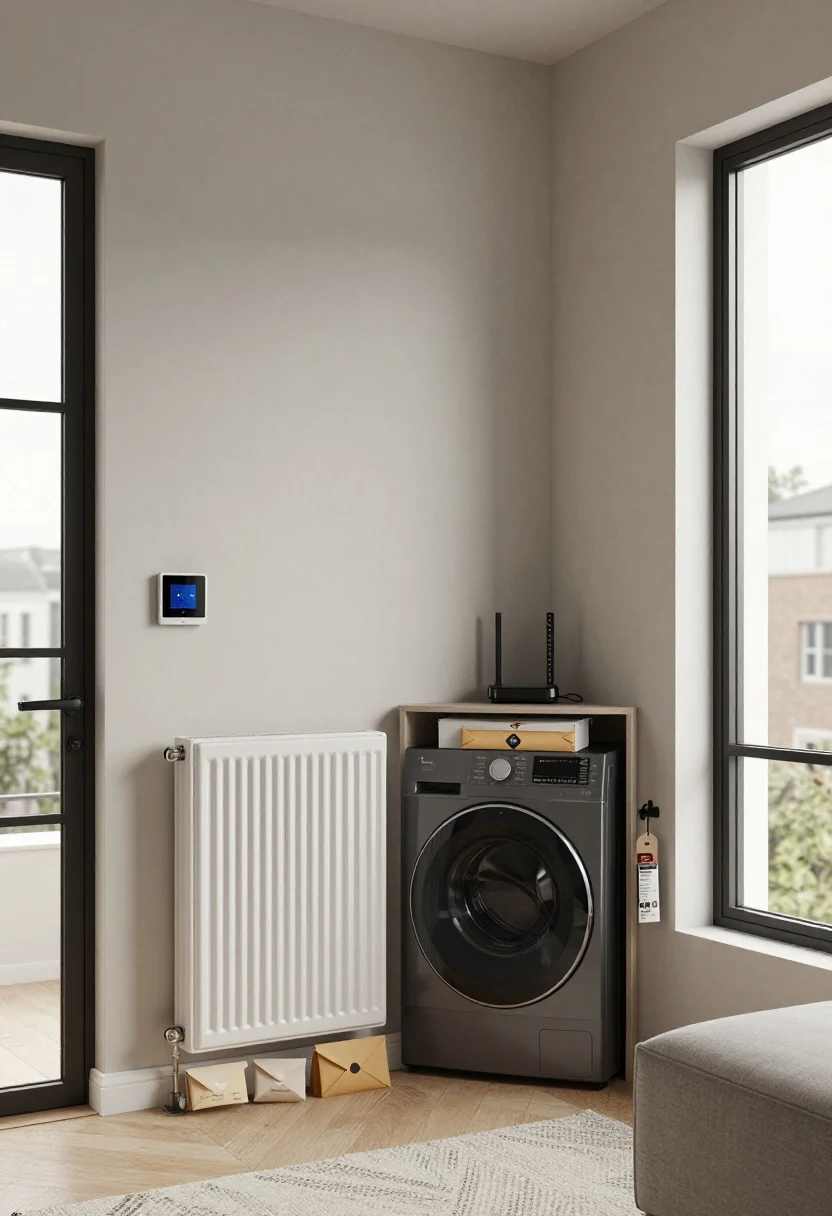
Utilities and fees can flip the script. A studio generally runs cheaper to heat/cool, but shared walls and natural light matter too. And don’t sleep on pet fees, parking, or laundry—small leaks that sink budgets.
Expense check:
- Utilities: Studios often save $30–$70/month. High ceilings or all-glass corners can erase that.
- Internet: Same price for both, unless building bundles Wi-Fi (nice!).
- Amenities and trash/pest fees: Flat building fees hit both the same; they don’t scale to unit size.
- Renter’s insurance: Minor difference, but a 1-bedroom can bump premiums slightly.
Pro tip: Ask leasing for the last 12 months of average utilities for your stack. Buildings track this, and it’s gold for budgeting.
3. Furnishing and Layout: Where Decor Dollars Multiply
© 2026 AI Illustrator — Inspiration Only
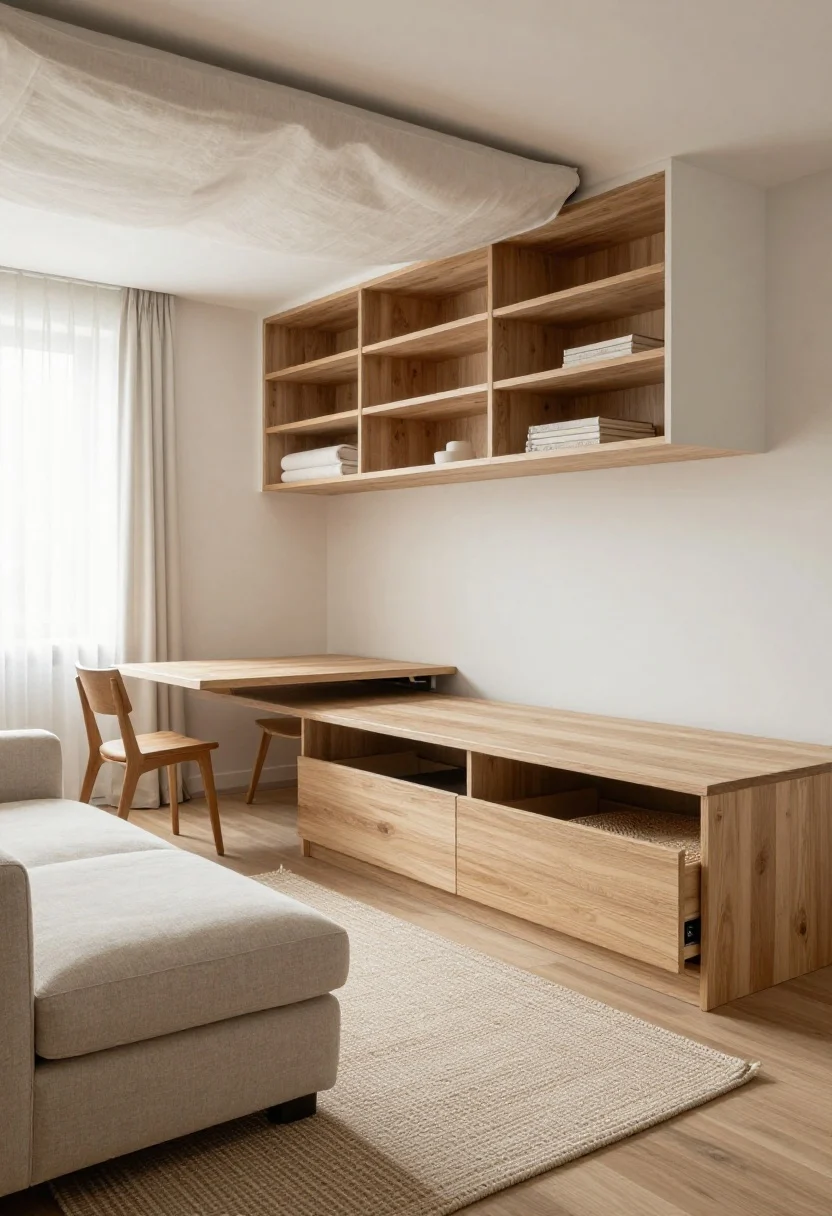
Here’s where decor obsession meets hard numbers. A smartly planned studio uses zoning to live big on a smaller footprint. A 1-bedroom gives you a door (heaven) but also tempts you to buy more furniture—hello, money pit.
Cost-savvy furniture strategy:
- Studios: Invest in a sleeper sofa or daybed, a fold-down dining table, and double-duty storage (ottomans, under-bed drawers). Add a ceiling-mounted curtain or open shelving to create a “bedroom” zone without blocking light.
- 1-bedrooms: You’ll likely add a bed frame + dresser + nightstands. That’s easily $800–$2,000 extra, even with budget brands.
- Rugs as room-makers: Two 5×7 rugs in a studio can define zones and feel luxe without hogging space. In a 1-bedroom, you might wind up with three or four rugs—ka-ching.
Design hack: In studios, keep sofas off walls and float them on a rug to carve “living” from “sleeping.” In 1-bedrooms, use the entry wall or hallway for a slim console with closed storage so clutter doesn’t spill into the living room.
4. Lifestyle Math: Privacy, Sleep, Work, and Sanity
© 2026 AI Illustrator — Inspiration Only
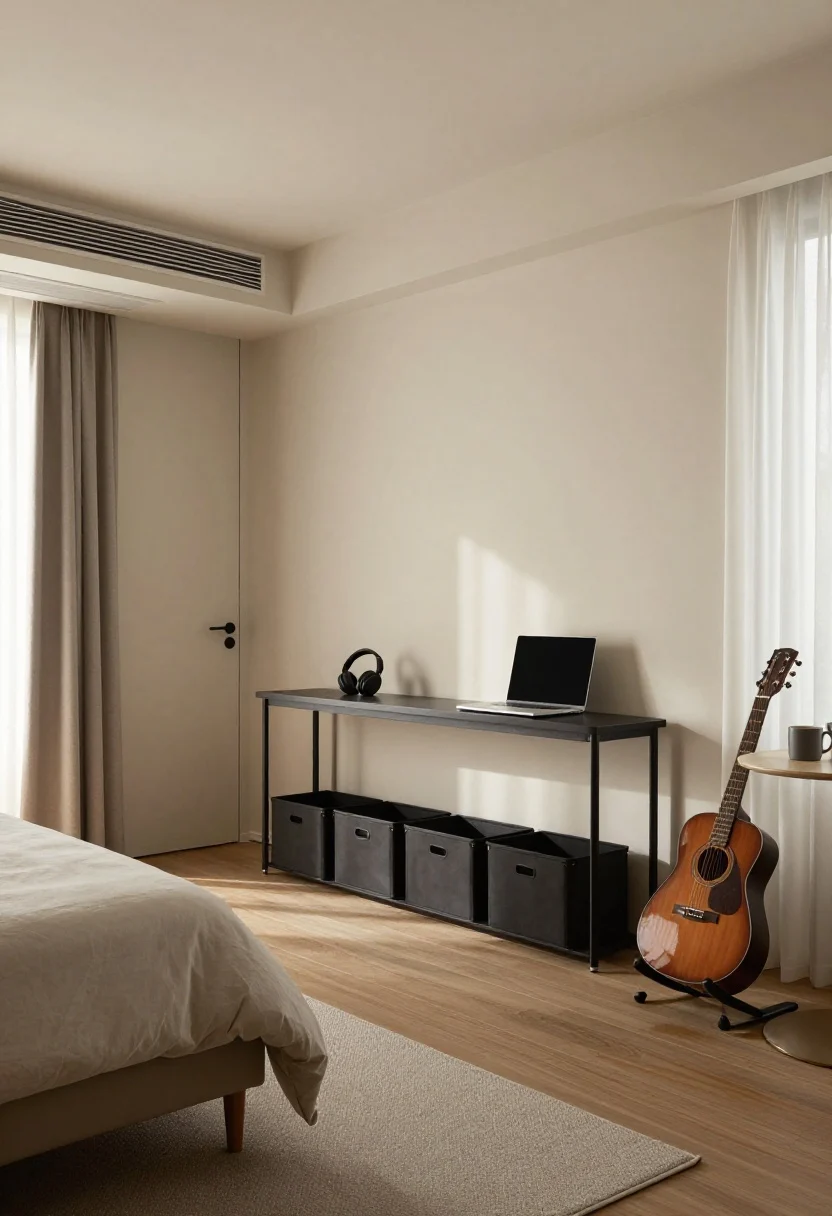
Let’s be real: your lifestyle might cost you more than the apartment if it’s a mismatch. If you WFH, share space, or have hobbies with gear (guitars, weights, canvases), a 1-bedroom might keep you productive—and out of coffee shops.
Consider your daily rhythms:
- WFH life: A 1-bedroom pays off if it replaces a coworking pass or constant lattes. Even one or two days a week at cafes can add $100–$200/month.
- Sleep quality: Better sleep equals better life. Keeping TV noise out of your bedroom? Priceless (and cheaper than melatonin).
- Hosting: Studios are great for cozy hangouts with 2–4 friends. If you entertain often or have overnight guests, a 1-bedroom wins on comfort and boundaries.
Rule of thumb: If paying $200 more for a 1-bedroom helps you avoid $150–$250 in lifestyle extras, it’s effectively a wash—and you gain peace.
5. Storage and Clutter: Hidden Costs You Don’t See on Tour
© 2026 AI Illustrator — Inspiration Only
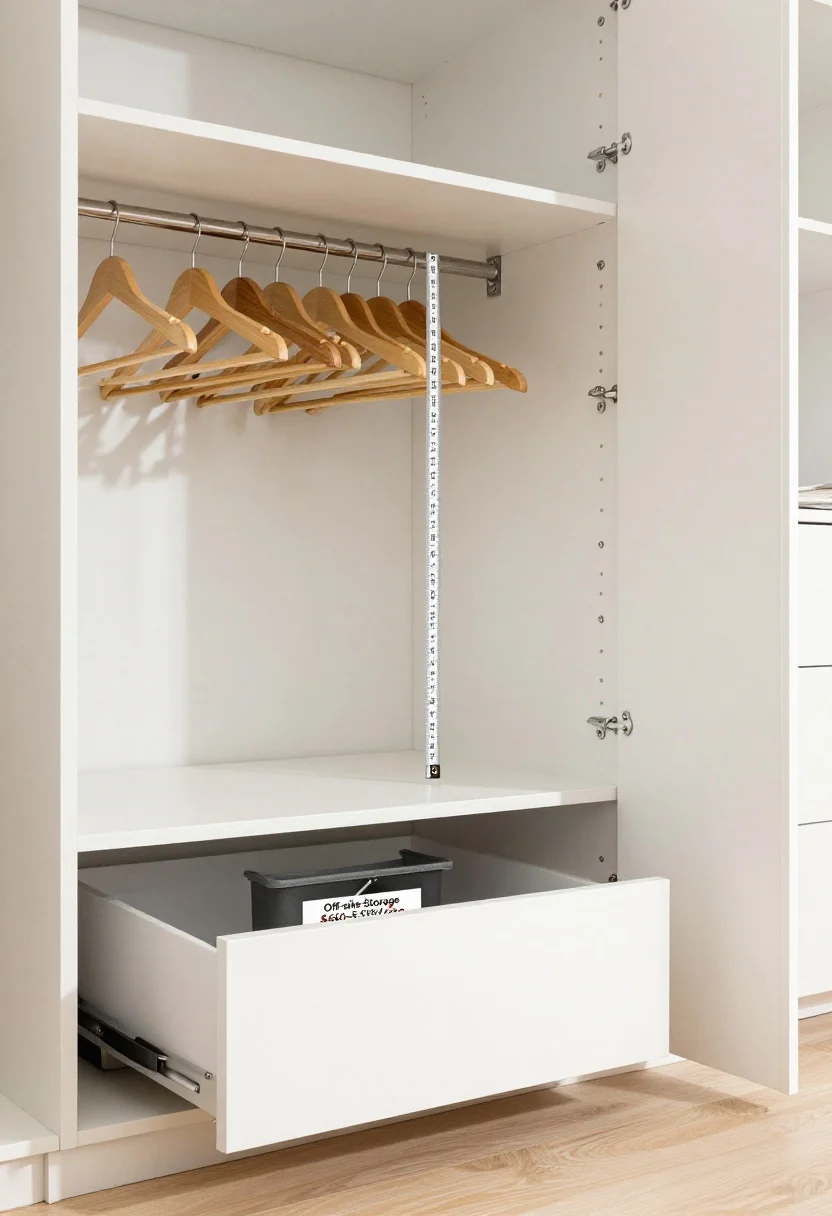
Storage is where budgets bust. A studio can push you into off-site storage (ugh). A 1-bedroom’s closets might save you that monthly bill and keep everything within reach.
Storage math check:
- Off-site storage unit: $60–$180/month depending on city. Over a year, that squashes your “studio savings.”
- In-unit solutions: Go vertical with ceiling-high wardrobes, wall-mounted shelves, and over-door racks. Add a platform bed with drawers to replace a dresser entirely.
- Entryway control: Wall hooks + shoe cabinet prevents that “my home is a backpack” vibe. IKEA Bissa or Trones = tiny-footprint heroes.
Pro move: Measure closet depth on tours. A true 24-inch-deep closet fits hangers; 20-inch or less means shoulder dents and sad blazers.
6. Decor That Saves Money: Make Small Feel Luxe, Make Big Feel Smart
© 2026 AI Illustrator — Inspiration Only
Whether you choose a studio or a 1-bedroom, decor can keep costs in check and boost resale value for your pieces when you move.
Studios: Stretch the space
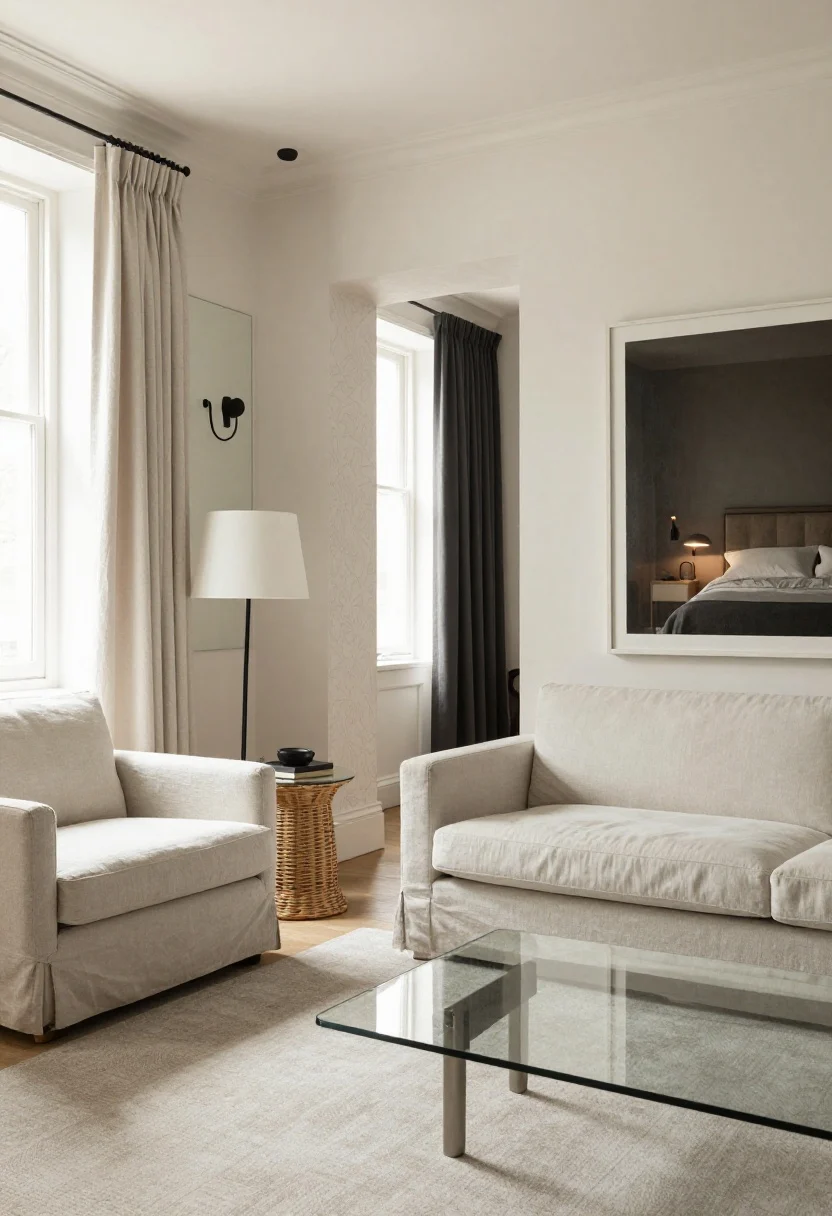
- Monochrome palette: Keep walls and big pieces in one airy tone (warm white, pale greige). Layer texture—bouclé, linen, rattan—so it doesn’t feel flat.
- Lighting zones: One overhead light screams dorm. Use a floor lamp + table lamp + plug-in sconce to “map” living, dining, and sleeping.
- Mirrors and glass: A tall mirror opposite a window and a glass coffee table bounce light and visually double square footage.
1-bedrooms: Design with restraint
- Curate big pieces: Sofa, bed, dining set—buy once, buy right. Keep silhouettes clean so they fit future apartments.
- Cozy bedroom formula: Upholstered headboard, dimmable lamps, blackout curtains. Sleep sanctuary equals less late-night scrolling (IMO).
- Art scale: Large statement art beats gallery clutter. One 36×48 over the sofa anchors the room and reduces tchotchke sprawl.
Money-saving finishes: Removable wallpaper in an entry niche, linen curtains hemmed to kiss the floor, and a neutral rug you can repurpose in your next place.
7. The Verdict in 2026: Who Wins on Cost-Effectiveness?
© 2026 AI Illustrator — Inspiration Only
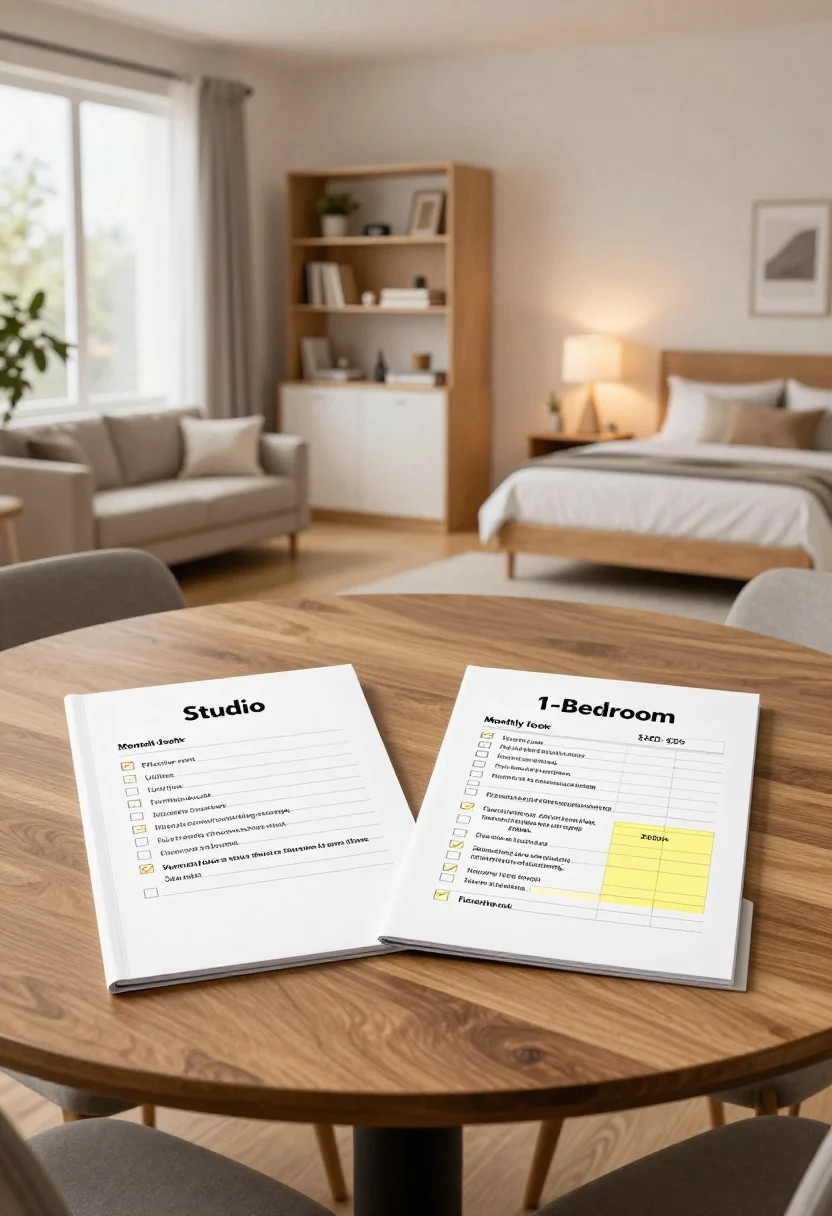
Short answer: Studios are more cost-effective if you’re minimalist, don’t need daily WFH privacy, and can master smart storage. The upfront furnishing costs are lower, utilities are lean, and you can make a small space feel designer with the right zoning and lighting.
But a 1-bedroom can be the smarter financial choice if:
- You WFH 3–5 days a week and would otherwise pay for coworking or daily cafes.
- You’d need off-site storage in a studio (that fee adds up fast).
- You host, have a partner, or just value sleep behind a real door.
- The price gap after discounts is under $200–$250/month.
Final checklist before you sign:
- Compare effective rent (with concessions), plus average utilities.
- Audit your furniture needs now vs. what you’ll “end up buying.” Be honest.
- Count lifestyle costs: coffee shops, coworking, storage, rideshares if you move farther out.
- Tour at different times of day for noise and light. Your future self will thank you.
My take? If the 1-bedroom’s true monthly difference is modest and it directly supports your sleep, work, and storage, it’s often worth it. Otherwise, a well-zoned studio with killer lighting and smart storage can feel high-end for less. Either way, design with intention and your home will do the heavy lifting—no extra square feet required.