
Walking down a narrow hallway that seems to swallow light can feel like a daily reminder that the space is cramped. The good news is that light, both natural and artificial, can be choreographed to open up the passage and make it feel more welcoming. Below are seven ideas that go beyond simply swapping a bulb. Each approach blends style, function, and a touch of psychology so you can enjoy a hallway that feels airy without a major renovation.
1. Layer Different Light Sources for Depth
© 2026 AI Illustrator — Inspiration Only
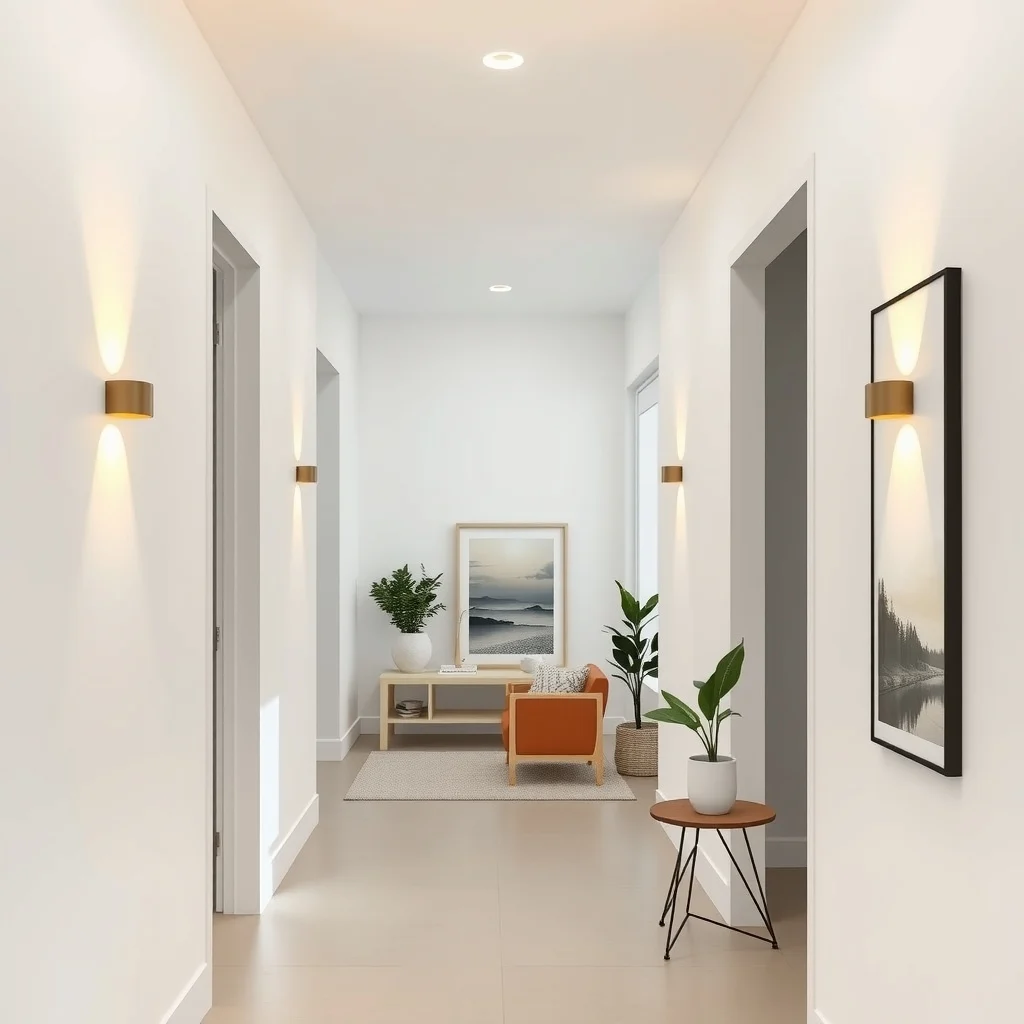
Instead of relying on a single ceiling fixture, think of lighting as a three‑dimensional canvas. A recessed LED downlight provides even illumination across the floor, while a pair of low‑profile wall sconces adds a soft wash along the sides. The combination creates a subtle gradient that prevents harsh shadows and makes the corridor appear wider. When choosing fixtures, opt for matte finishes such as brushed nickel or oil‑rubbed bronze; they diffuse light rather than reflecting it directly, which reduces glare. A practical tip is to space wall fixtures about one‑third of the way down the length of the hallway so the light overlaps without creating dark spots. The result is a balanced glow that feels natural and inviting.
What’s Your Apartment Decor Style?
Answer these quick questions to discover your perfect decor vibe.
2. Use Mirrors to Bounce Light Further
© 2026 AI Illustrator — Inspiration Only
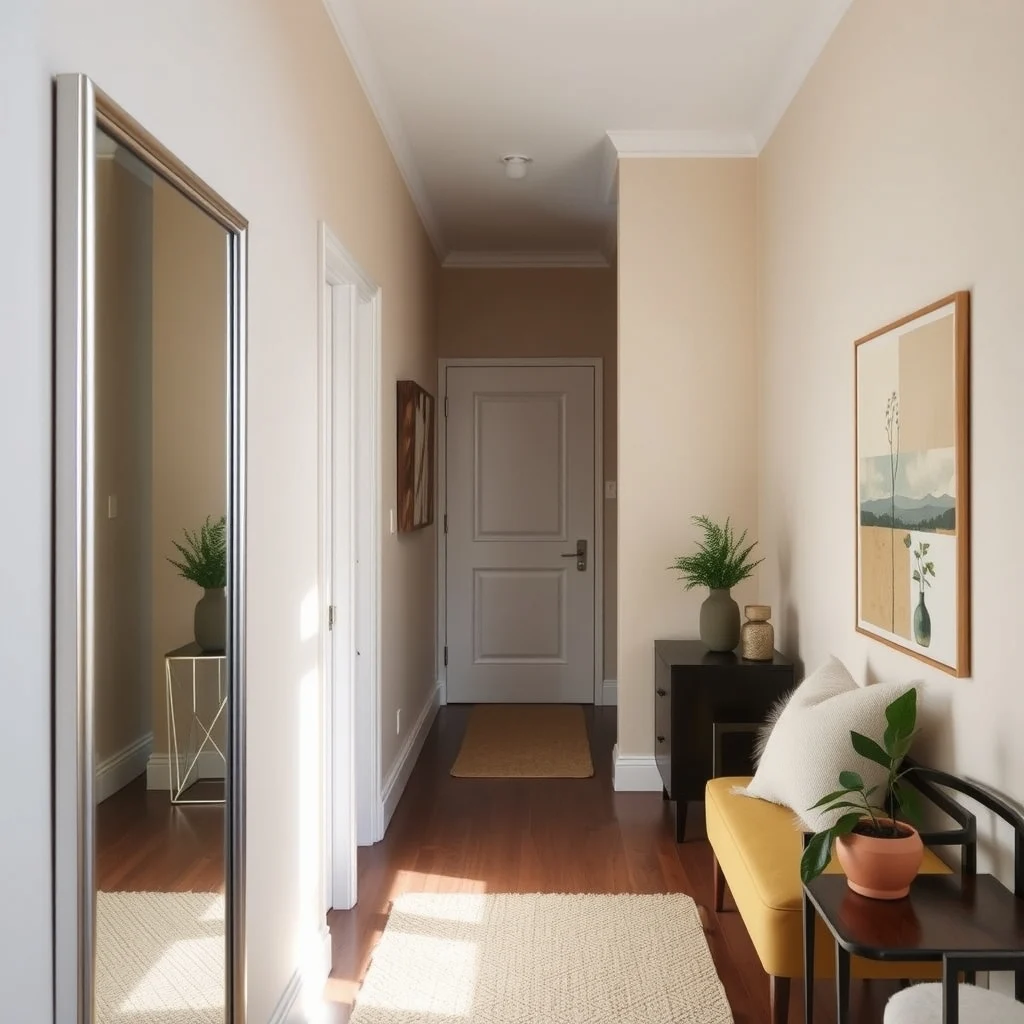
A well‑placed mirror can double the amount of light that reaches the far end of a hallway. Installing a narrow, floor‑to‑ceiling mirror on one side reflects both natural light from the front door and artificial light from fixtures, sending it down the length of the passage. Choose a frame in a light wood or a simple metal finish to keep the look streamlined. If floor space is limited, a series of smaller mirrored panels arranged in a staggered pattern can achieve the same effect without overwhelming the wall. The trade‑off is that mirrors require regular cleaning to maintain their reflective quality, but the payoff in brightness is immediate.
3. Paint the Walls in Light‑Reflective Shades
© 2026 AI Illustrator — Inspiration Only
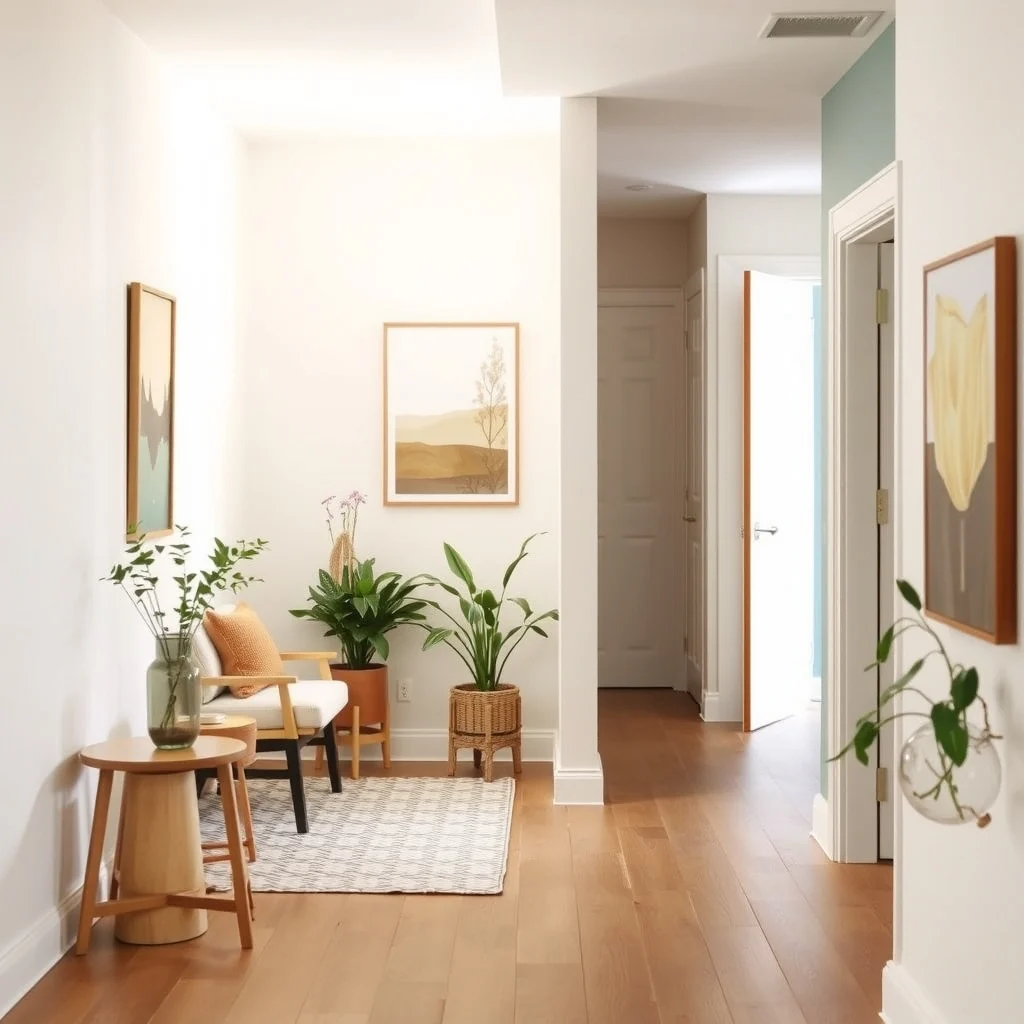
The color of the wall acts as a secondary light source. Soft, warm whites, pale greiges, or muted pastel tones reflect more light than deep hues, allowing the existing illumination to travel farther. When selecting paint, look for finishes with a slight sheen—such as eggshell or satin—because they bounce light without creating a glossy glare. If you enjoy a hint of color, a wash of pale sage or dusty lavender can add personality while still enhancing brightness. Keep in mind that darker accent walls may be appropriate at the far end for visual interest, but they should be limited to a narrow strip to avoid absorbing too much light.
4. Install Slim LED Strips Along the Baseboard
© 2026 AI Illustrator — Inspiration Only
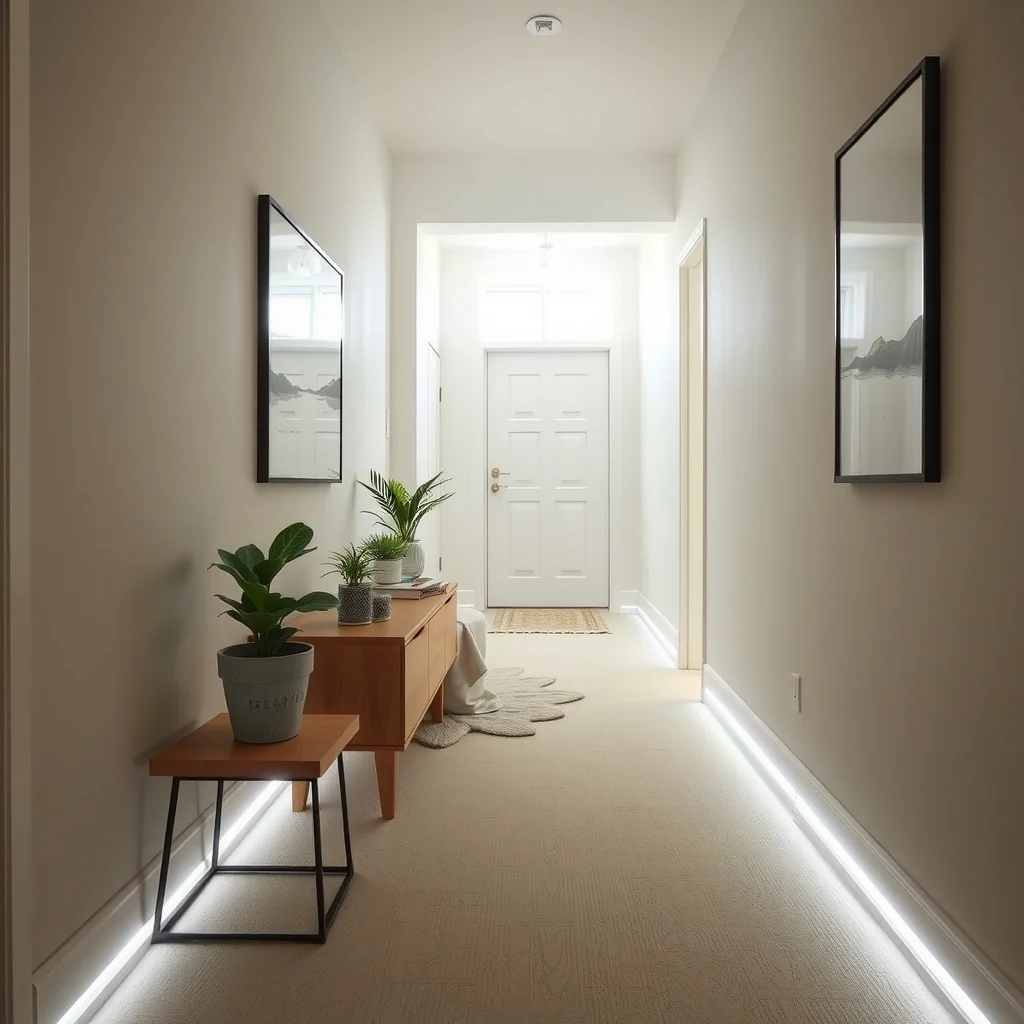
LED strips hidden behind a thin lip of the baseboard provide a gentle, upward glow that lifts the eye and reduces the perception of length. Because the light originates close to the floor, it highlights the texture of the flooring—whether it’s a light‑colored hardwood or a subtle carpet—without creating a spotlight effect. Choose a color temperature around 3000 K for a warm ambience or 4000 K for a more neutral feel, depending on the overall mood you want. The installation is relatively inexpensive, but it does require careful placement to avoid visible seams. Once in place, the strip becomes a quiet partner to the main fixtures, adding a modern touch.
5. Add a Statement Light Fixture at the Entry Point
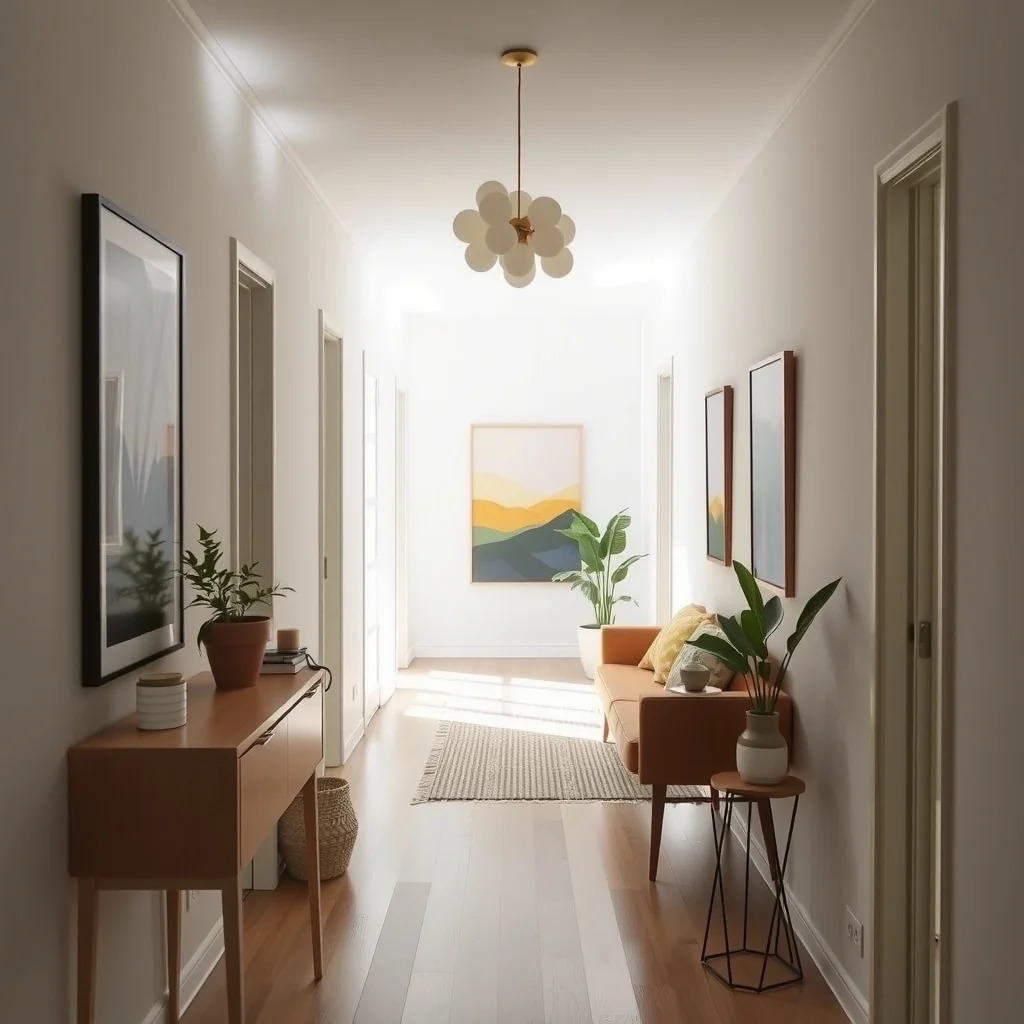
© 2026 AI Illustrator — Inspiration Only
The first impression of a hallway sets the tone for the rest of the journey. A decorative pendant or a cluster of small globes hung near the entry can draw the eye inward and create a focal point that distracts from the hallway’s length. Opt for a fixture with translucent glass or acrylic that spreads light evenly rather than concentrating it. While a bold fixture can be a visual anchor, be mindful of ceiling height; a piece that hangs too low may make the space feel cramped. Pair the statement light with a dimmer switch so you can adjust the intensity for daytime versus evening use.
6. Incorporate Light‑Colored Flooring or Rugs
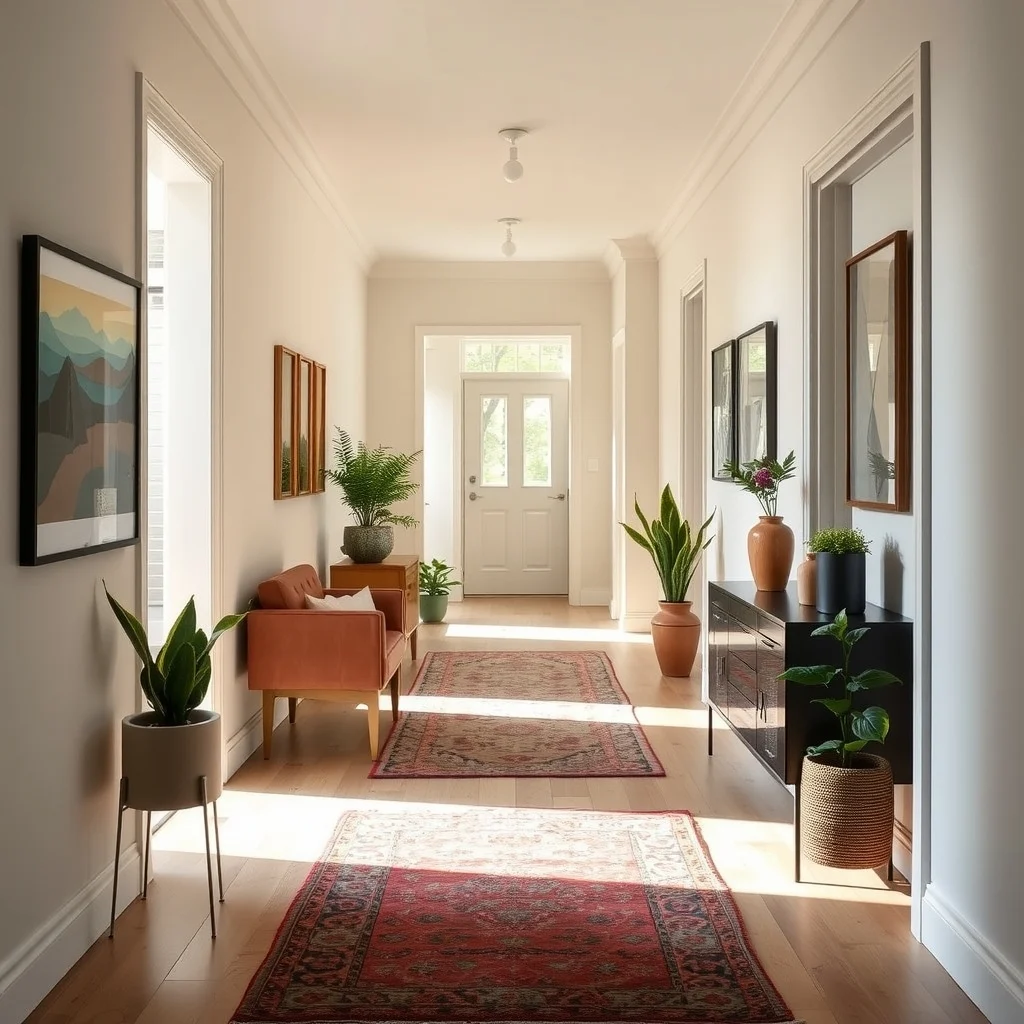
© 2026 AI Illustrator — Inspiration Only
Flooring is often overlooked in lighting strategies, yet it plays a crucial role in reflecting light upward. Light‑toned hardwood, bamboo, or large‑format porcelain tiles bounce natural and artificial illumination back into the room. If replacing flooring isn’t feasible, a runner in a pale natural fiber—such as jute or sisal—can achieve a similar effect. Choose a rug with a low pile to avoid trapping light. The downside is that lighter rugs may show stains more readily, so selecting a material with easy‑clean properties helps maintain the bright look over time.
7. Use Adjustable Track Lighting for Flexibility
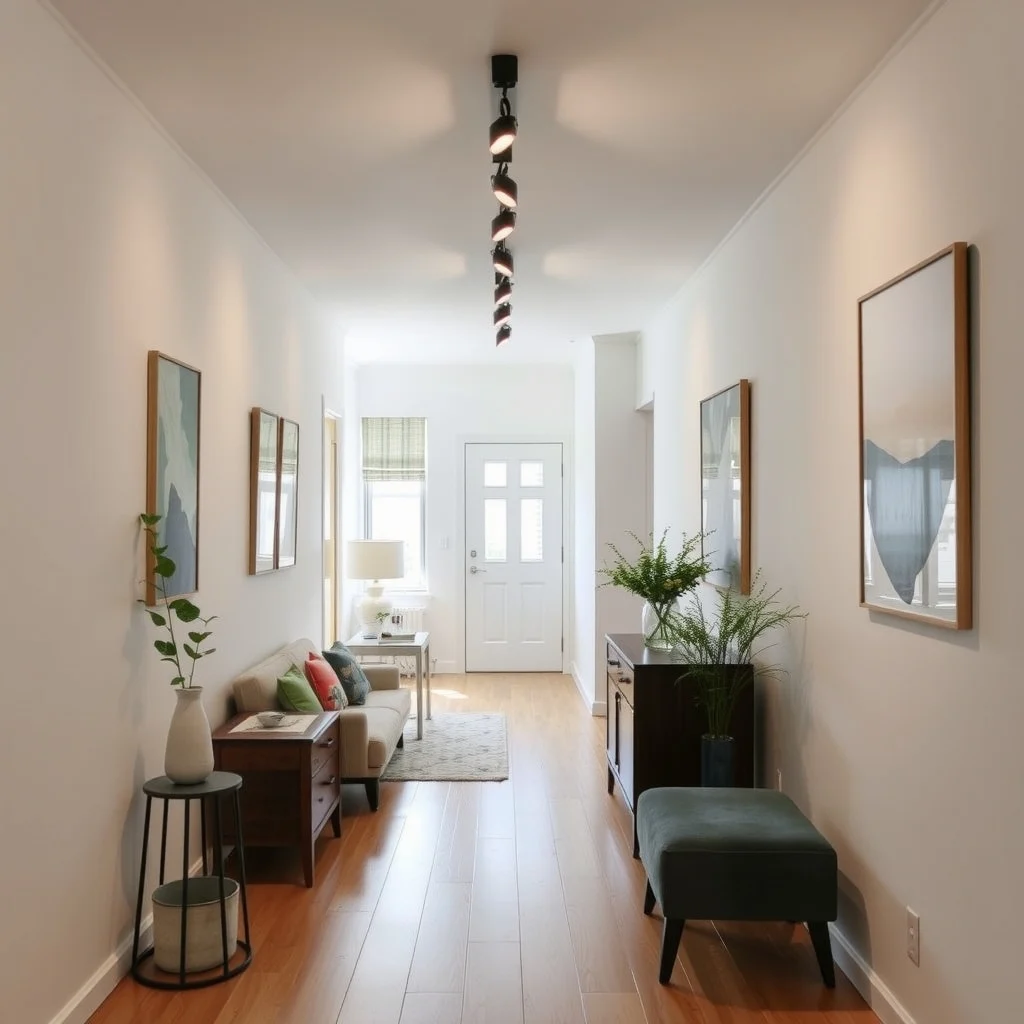
© 2026 AI Illustrator — Inspiration Only
Track lighting offers the ability to direct light exactly where it’s needed, making it ideal for hallways with varying ceiling heights or artwork displays. By positioning a linear track near the ceiling and angling the heads outward, you can illuminate the entire length without creating blind spots. Modern tracks often come with LED modules that are energy‑efficient and have a long lifespan. The main consideration is that the track itself becomes a visual element; choosing a minimalist black or brushed metal finish helps it blend with the architecture. A simple pull‑chain or remote control allows you to fine‑tune the brightness, adding practicality to the aesthetic.
FAQ
© 2026 AI Illustrator — Inspiration Only
How bright should hallway lighting be?
A hallway typically benefits from illumination in the range of 100–150 lux, which provides enough light for safe navigation without being harsh. Using a combination of ambient and accent lighting helps achieve this level while keeping the space comfortable.
Can I use smart bulbs in hallway fixtures?
Yes, smart bulbs are compatible with most recessed and surface fixtures. They allow you to adjust color temperature and brightness via an app or voice assistant, giving you control over the hallway’s mood throughout the day.
Is it safe to install LED strips yourself?
LED strips are low‑voltage and generally safe for DIY installation, but you should follow the manufacturer’s wiring instructions and ensure the power source is turned off. If you’re unsure about electrical work, consulting a qualified electrician is advisable.
What is the best way to keep mirrors clean in a hallway?
Use a soft microfiber cloth and a gentle glass cleaner to avoid streaks. Cleaning the mirror regularly prevents dust from dulling its reflective quality, which is essential for maintaining brightness.
Should I use a dimmer for hallway lights?
A dimmer adds versatility, allowing you to lower the light level in the evening for a softer atmosphere or raise it for daytime clarity. It also helps extend the lifespan of LED bulbs by reducing overall usage.
Final Thoughts
© 2026 AI Illustrator — Inspiration Only
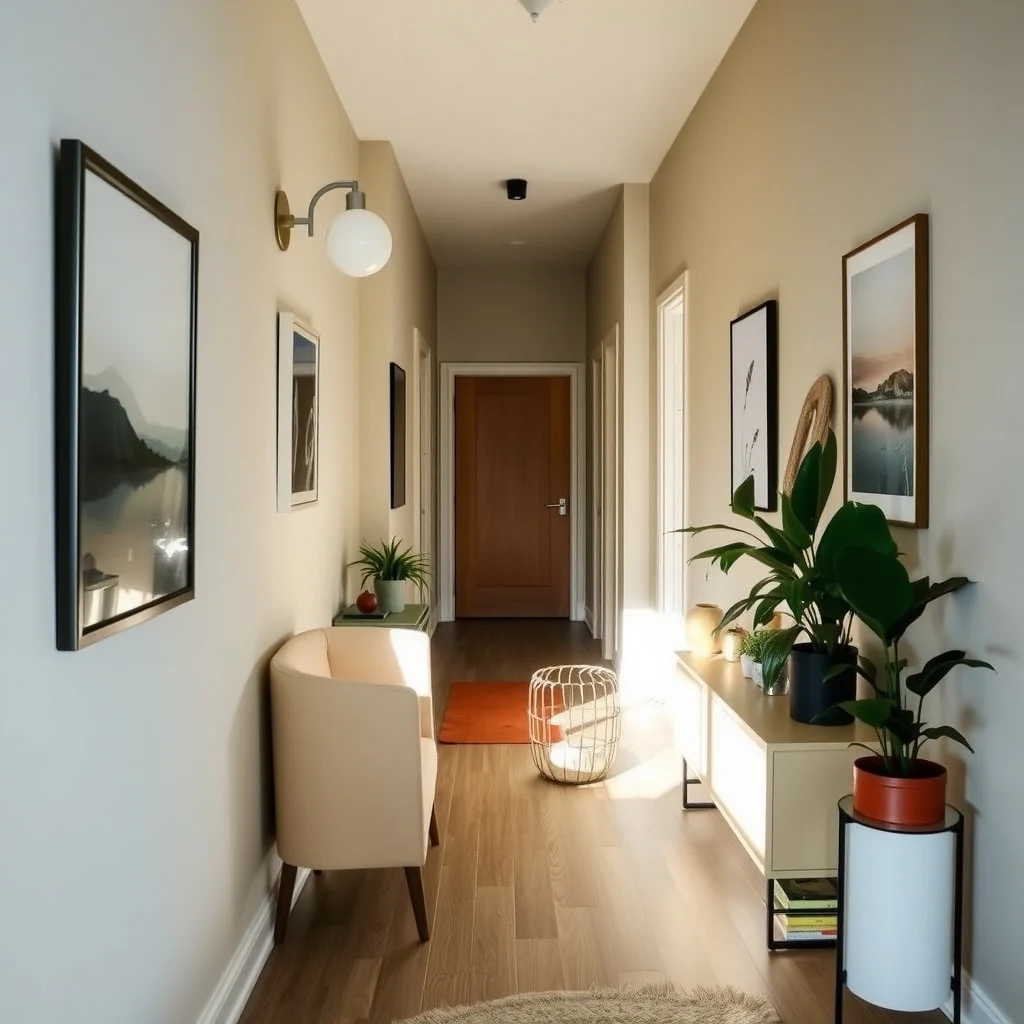
Brightening a long hallway is less about adding more light and more about directing the light you have in thoughtful ways. By layering fixtures, reflecting surfaces, and strategic colors, you can transform a narrow passage into a welcoming conduit that feels airy and functional. Each of the ideas above can be mixed and matched to suit your budget, style, and the specific constraints of your apartment. With a little planning, the hallway can become a bright, pleasant part of your home rather than a forgotten corridor.