
Your apartment can look richer by tonight—without opening your wallet. The secret is smart edits that manipulate light, scale, and texture so every corner feels considered. Below, you’ll find eight small changes that instantly upgrade your apartment without spending money—and why they work from a design perspective.
1. Edit Ruthlessly: Create Breathing Room for Instant Luxury
© 2026 AI Illustrator — Inspiration Only
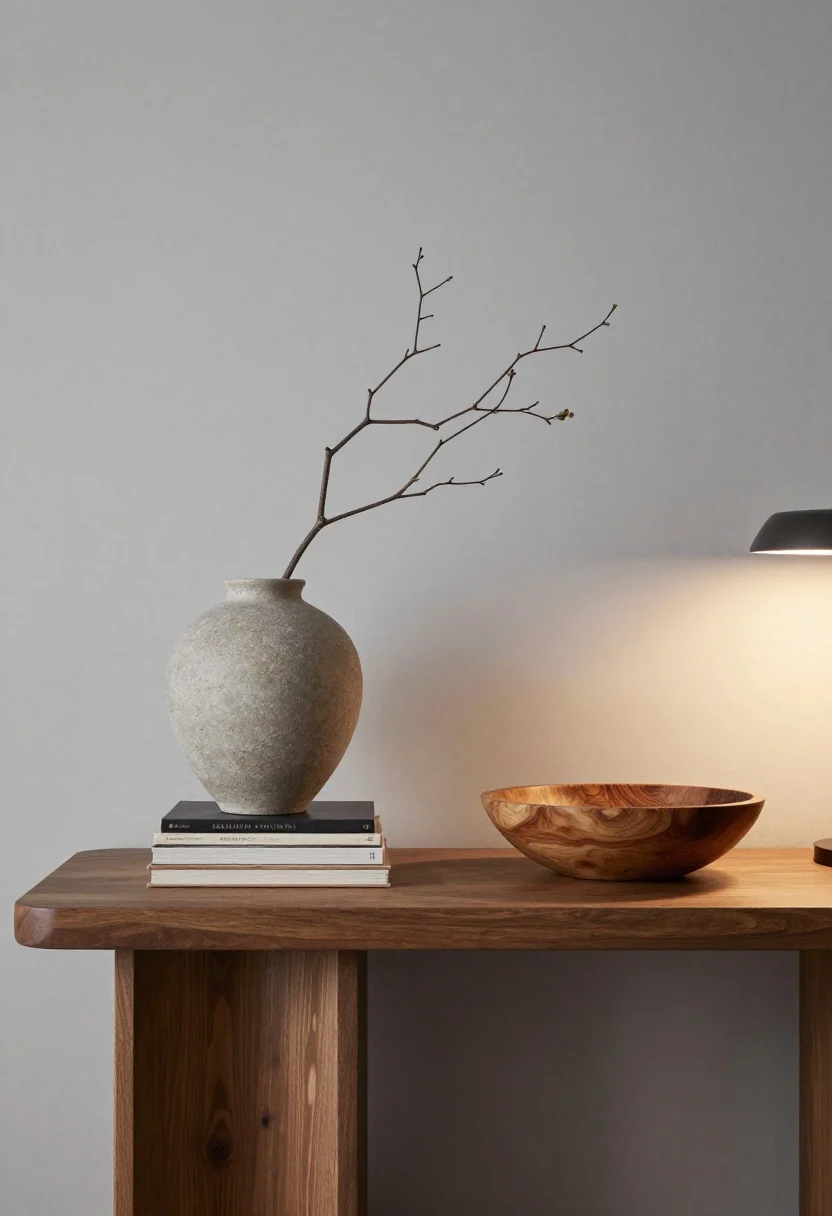
High-end spaces rarely feel crowded; they feel intentional. Start with a power edit. Clear every surface—a console, coffee table, nightstand—and only put back what has a purpose or a story. This is not minimalism for minimalism’s sake; it’s about visual balance and creating negative space, which reads as elevated and calm.
What’s Your Apartment Decor Style?
Answer these quick questions to discover your perfect decor vibe.
How to Do It
- Remove duplicates: You don’t need three throws on one sofa or six mismatched vases.
- Curate by material: Keep one stone object, one glass element, and one warm organic piece (like wood or woven) per surface for nuanced texture contrast.
- Enforce scale: One large vase plus a slim book stack beats a scatter of small trinkets.
Why It Works
Editing amplifies the scale of what remains and simplifies sightlines. This increases perceived proportion and makes your space look intentionally designed rather than accumulated.
Avoid: Tiny decor items clustered with no hierarchy. If in doubt, remove one more piece.
2. Rethink Layout: Float, Angle, and Anchor the Room
© 2026 AI Illustrator — Inspiration Only
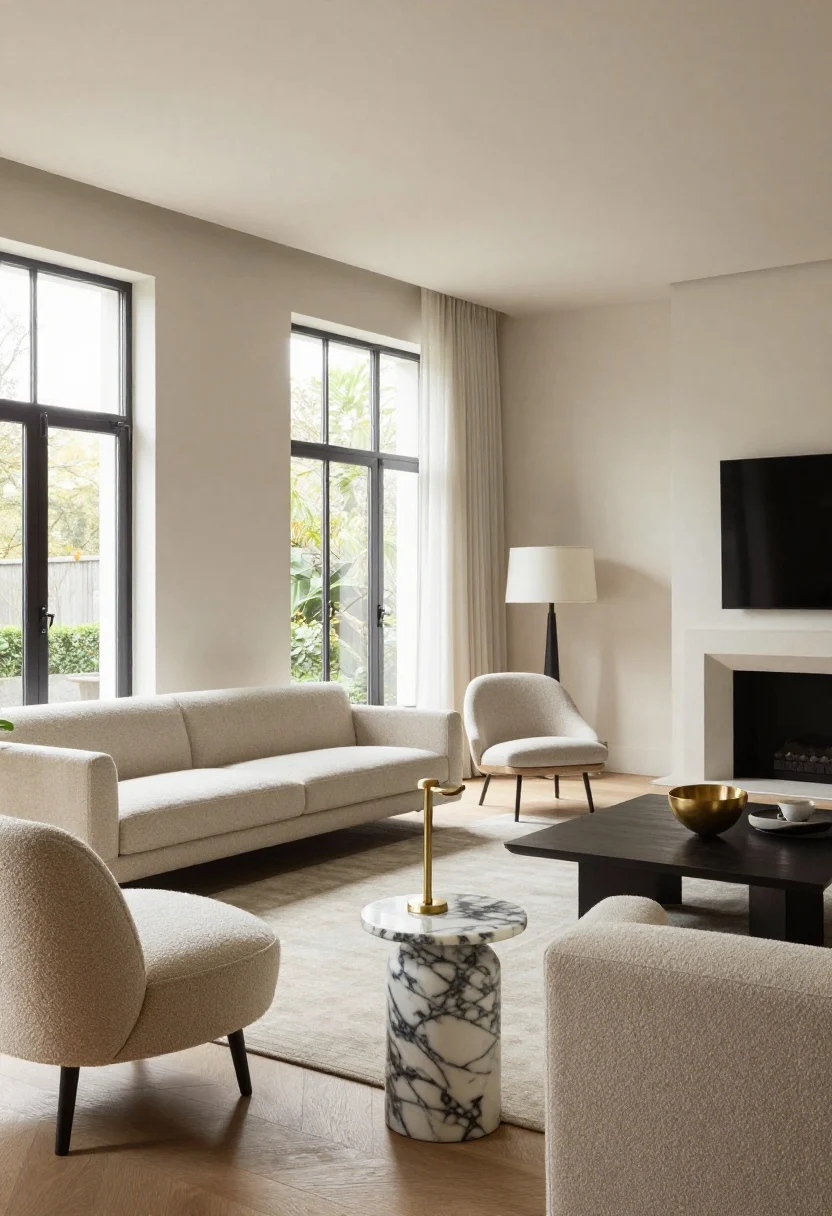
Move your furniture like a stylist. Even a small shift can transform circulation and volume. Most apartments place everything against a wall, which flattens a room. Try floating a chair near a window, angling a side table to create a conversation zone, or pulling the sofa forward to anchor a seating arrangement.
How to Do It
- Create a triangle: Sofa, chair, and light source form a conversation triangle.
- Open pathways: Ensure 30–36 inches for main walkways; even in tight spaces, aim for a clean line from entry to window.
- Use a pseudo “rug”: If you don’t have one, define zones with the edge of a coffee table or a bench to mimic a rug’s anchoring function.
Why It Works
Good layout respects proportion and traffic flow. Floating pieces adds dimension and reveals more floor, which tricks the eye into reading the space as larger and more layered—like a well-styled showroom.
Consider later: A neutral area rug to anchor seating, a slim sofa with legs to show more floor, and a sculptural side table for balance.
3. Style Your Surfaces with Hierarchy (The 1-2-3 Rule)
© 2026 AI Illustrator — Inspiration Only
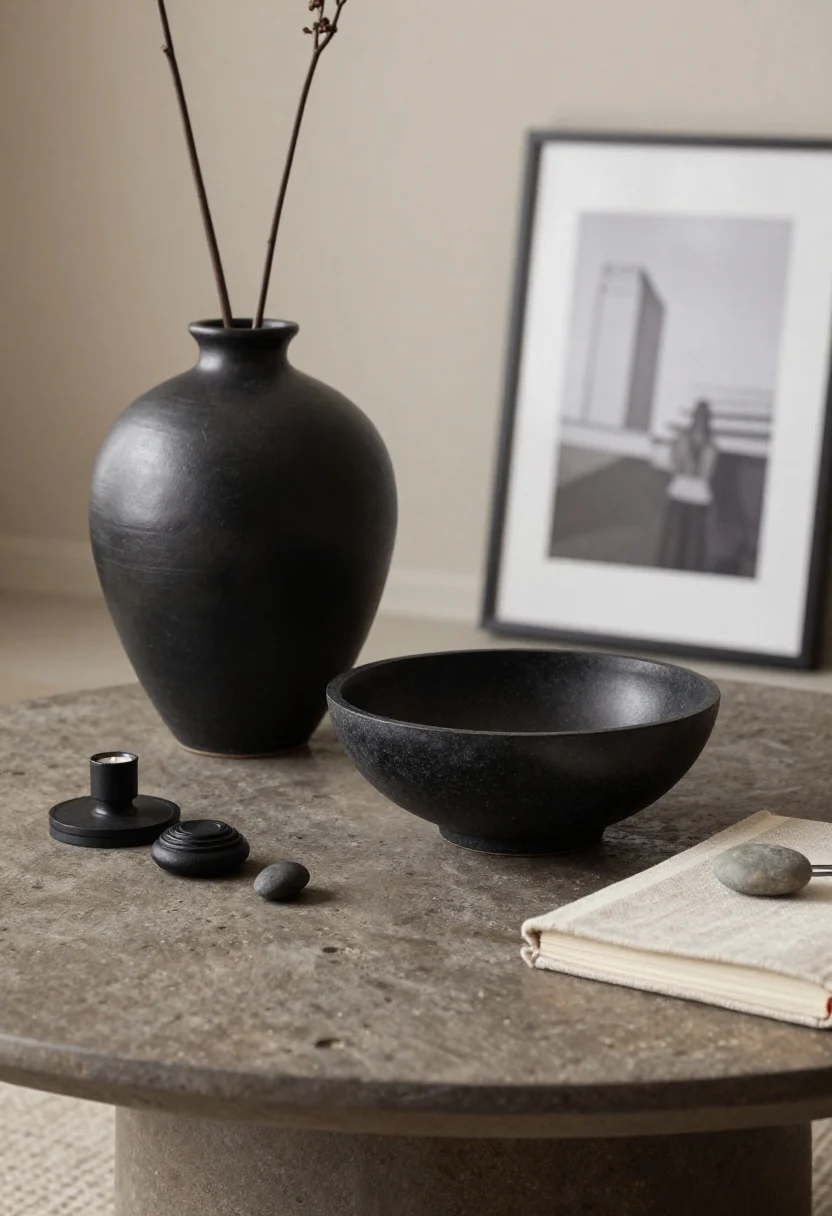
Flat surfaces are where apartments veer into clutter. To style like an editor, use the 1-2-3 hierarchy: one tall element, two medium, three small. Stick to a tight palette and varied textures—think glossy ceramic with matte stone and soft linen. This gives your vignette rhythm and depth without spending a cent.
How to Do It
- Books as pedestals: Flip your best-looking hardcovers horizontally to create elevation.
- Shop your home: Borrow a vessel from the kitchen, a framed print from the bedroom, a sculptural bowl from the entry.
- Odd numbers: Group objects in threes or fives for natural visual cadence.
Why It Works
Hierarchy directs the eye and prevents visual “noise.” Contrast and scale make everything feel intentional—even everyday objects. A well-edited console or coffee table instantly elevates the room.
Avoid: Overly symmetrical, mirror-image styling. It can look stiff unless you’re going for formal classicism.
4. Maximize Light: Reflect, Layer, and Control the Glow
© 2026 AI Illustrator — Inspiration Only
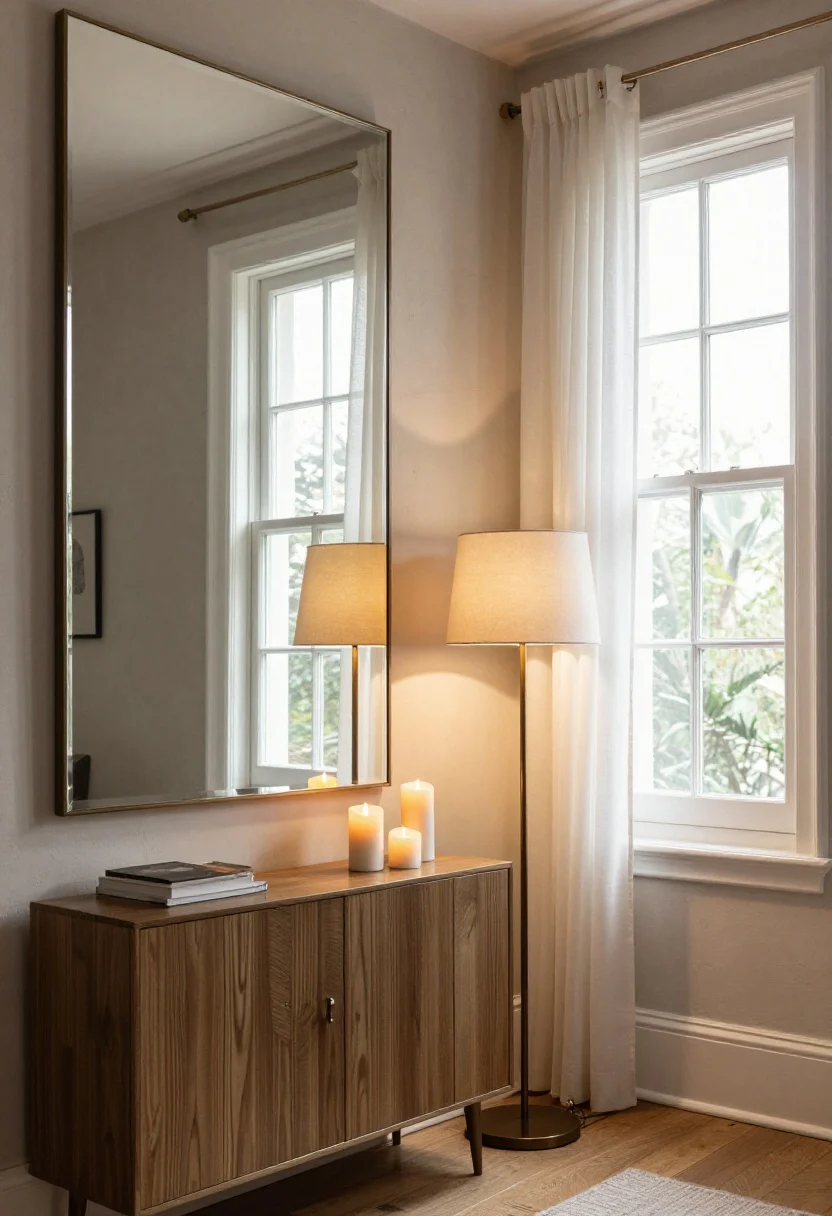
Light is the most luxurious material in any space—and it’s free to optimize. Clean your windows thoroughly (inside and out if possible), raise shades higher than usual, and move reflective objects to bounce natural light. Then, layer your evening lighting using what you already own: a floor lamp, a table lamp, and candles can create a gentle, three-level glow.
How to Do It
- Mirror swap: Place any mirror or reflective artwork opposite a window to amplify brightness.
- Sheer trick: If you have sheers, stack them fully to one side rather than splitting down the center; it opens more glass area.
- Warm it up: Use the warmest bulbs you have on hand in living zones and cooler ones for task areas like the kitchen.
Why It Works
Layered lighting adds dimension and enhances texture, making surfaces look richer. Brightening vertical planes (walls, curtains) expands perceived space. At night, a trio of light sources avoids harsh shadow lines and creates a boutique-hotel ambiance.
Consider later: Statement lighting like a sculptural floor lamp, dimmable bulbs, or a linen drum shade for softness.
5. Reframe Art and Photos with Fresh Placement
© 2026 AI Illustrator — Inspiration Only
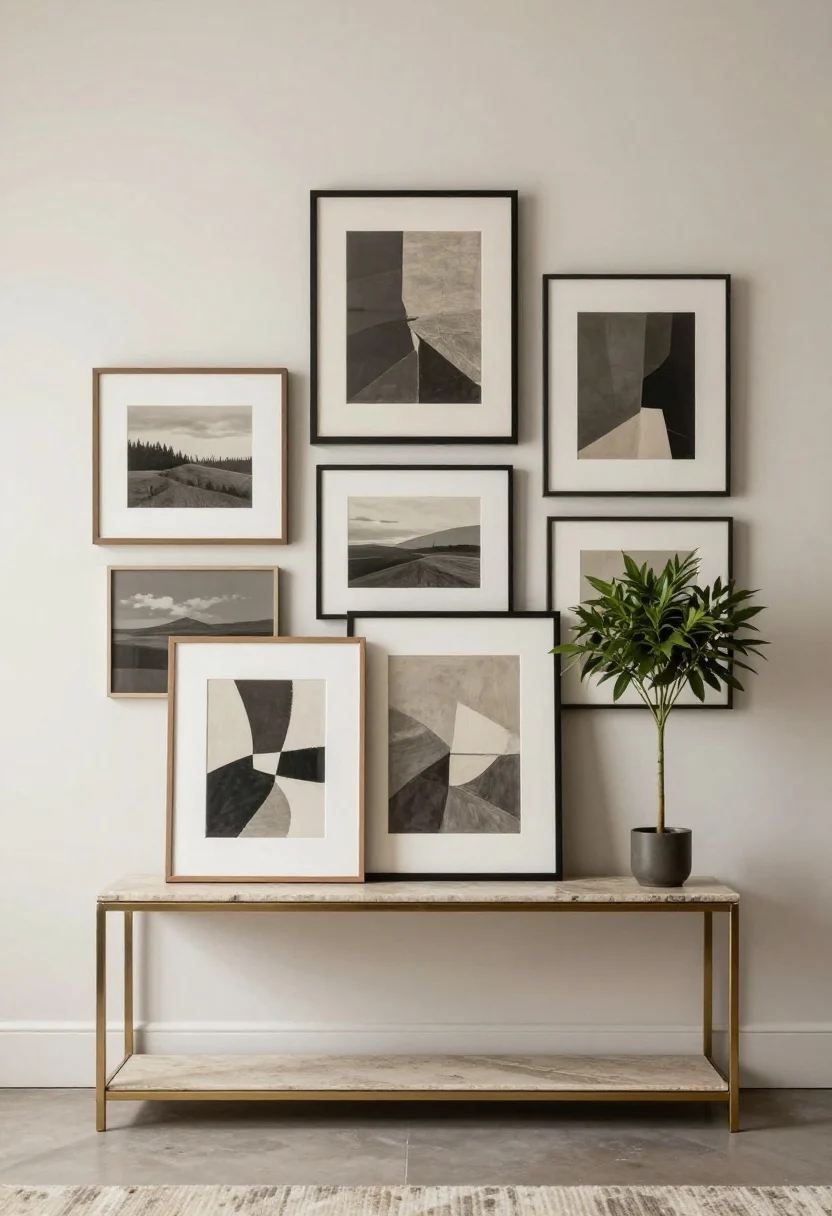
Most art hangs too high and too small. Lowering your pieces to sit at eye level (roughly 57 inches from the floor to center) and grouping related works together will make them feel like a considered collection. If frames don’t match, embrace the eclectic look but unify by color or theme.
How to Do It
- Gallery moment: Gather smaller art into a tight cluster rather than scattering. Keep 2–3 inches between pieces for a cohesive block.
- Lean and layer: On a console or dresser, lean art against the wall, layering a smaller piece in front for depth.
- Scale hack: If your art feels undersized over the sofa, center it above one cushion span, then add a vertical floor plant or standing lamp to balance the width.
Why It Works
Proper placement respects proportion and sightlines. Grouping art creates a focal point with visual mass, which looks gallery-grade. Leaning introduces casual layers that feel editorial rather than staged.
Avoid: A single postcard-sized piece floating on a big wall. Build a story or shift to a more intimate zone like a bedside or entry niche.
6. Elevate Textiles: Fold, Fluff, and Layer with Intent
© 2026 AI Illustrator — Inspiration Only
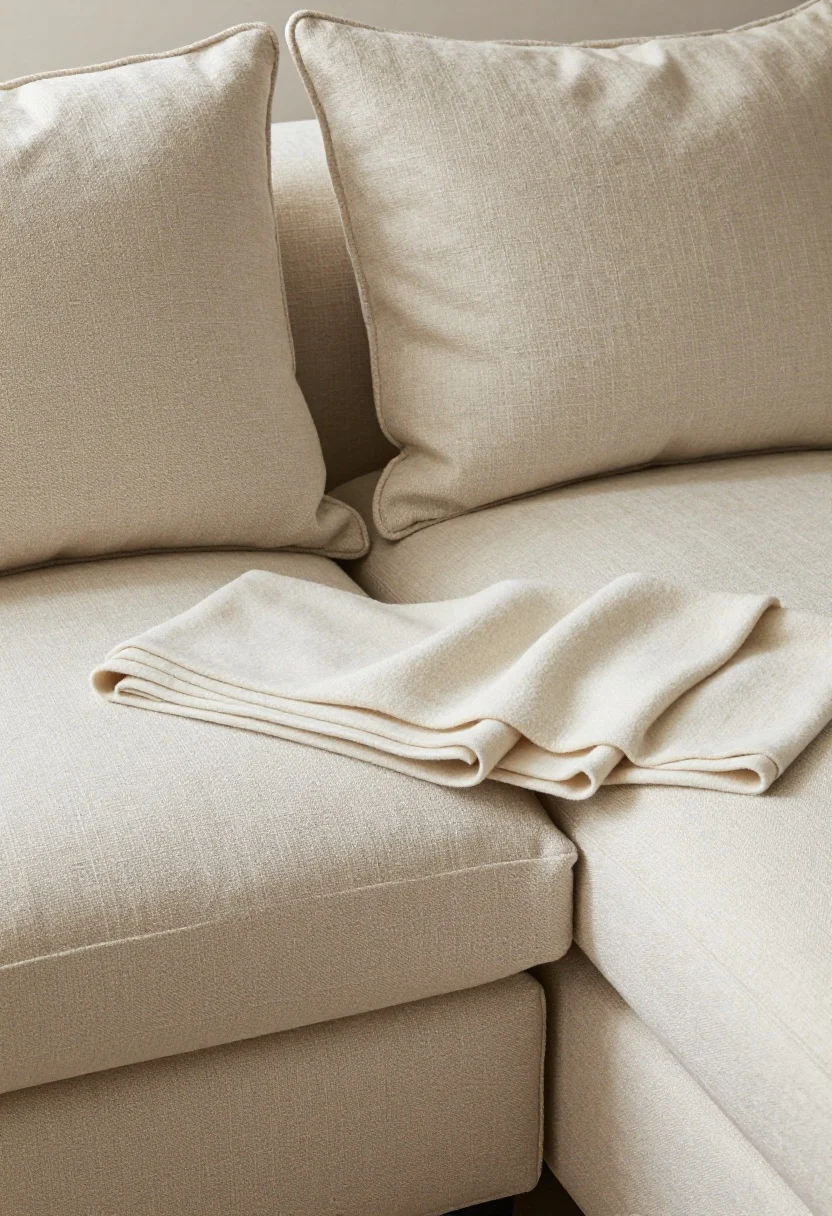
Textiles are the fastest way to shift mood and perceived quality. Refresh what you already own: iron or steam pillow covers and duvet fronts, fold throws hotel-style, and rotate cushion inserts for maximum loft. When everything looks crisp and tactile, the apartment reads premium.
How to Do It
- The L-shape pillow stack: On the sofa, place two larger pillows at the arms, then layer a lumbar in front for contrast and support.
- Throw styling: Fold a throw lengthwise into thirds, then drape along the sofa’s arm with a deliberate 6–8 inch drop.
- Bed upgrade: Tuck the duvet at the foot and fold it back once to expose crisp sheets—instant boutique feel.
Why It Works
Neat, intentional fabric treatments emphasize texture and line. Plush forms signal comfort; crisp edges signal luxury. Together, they mimic the layered approach of high-end interiors.
Consider later: Neutral linen duvet covers, oversized euro pillows, or a textured throw for depth.
7. Hide the Visual Noise: Cord Control and Smart Storage Zones
© 2026 AI Illustrator — Inspiration Only
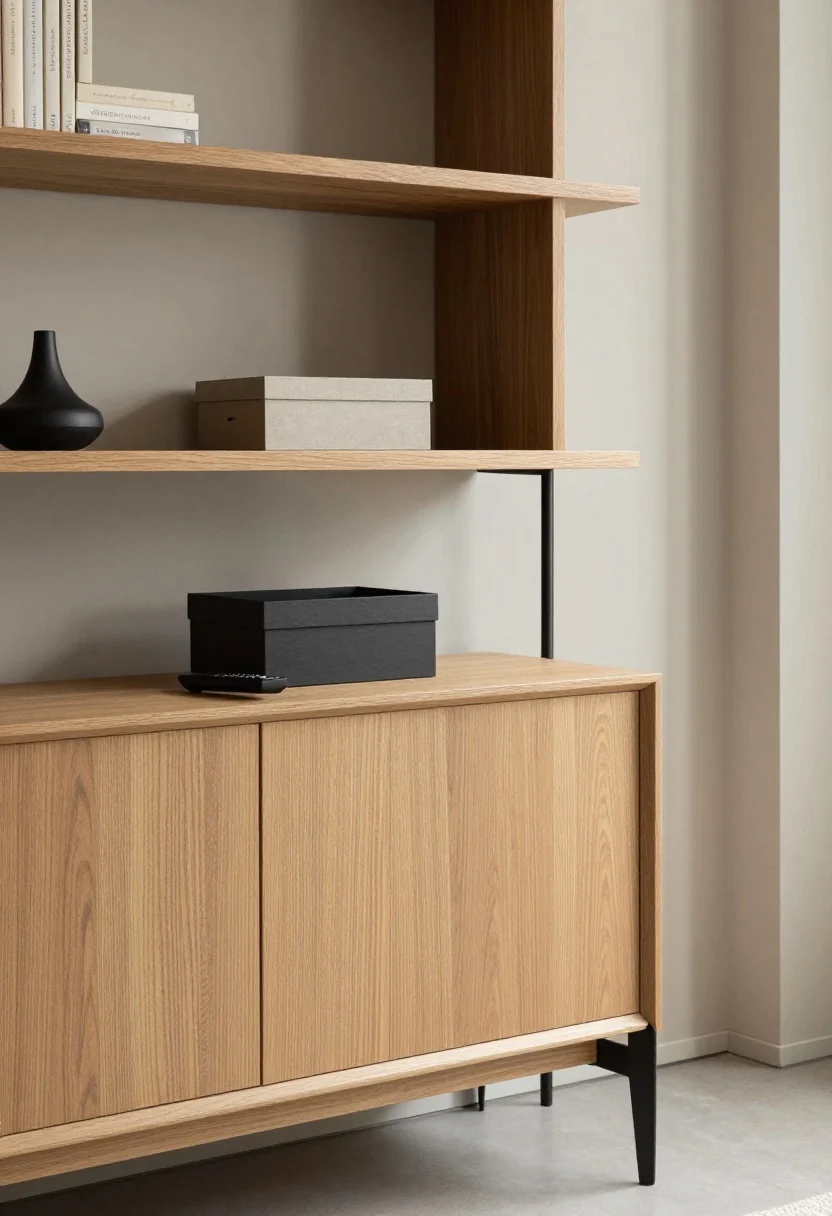
Visual noise is the enemy of luxury. You can’t always buy new storage, but you can corral chaos and disguise it. Dedicate one concealed zone for every category: tech, mail, keys, remotes. Tuck cords behind furniture using tape or clip what you already have, and let one power strip act as the hub rather than a trail of chargers.
How to Do It
- Single drop: Route all cables to fall in one vertical line behind a leg or table edge rather than splaying in multiple directions.
- Box it: Repurpose a sturdy shoebox or lidded container as a catchall in the entry or on a bookshelf.
- Rotate focus: Keep only one functional item visible per surface—e.g., remote on the coffee table, chargers stowed.
Why It Works
Reducing small, busy elements allows major pieces to breathe. Clean verticals and quiet horizontals create a refined backdrop where materials—wood grain, stone, metal—take center stage.
Consider later: Discreet storage baskets, a closed-door media console, and slim wall hooks for entries.
8. Create a Signature Scent and Soundscape
© 2026 AI Illustrator — Inspiration Only
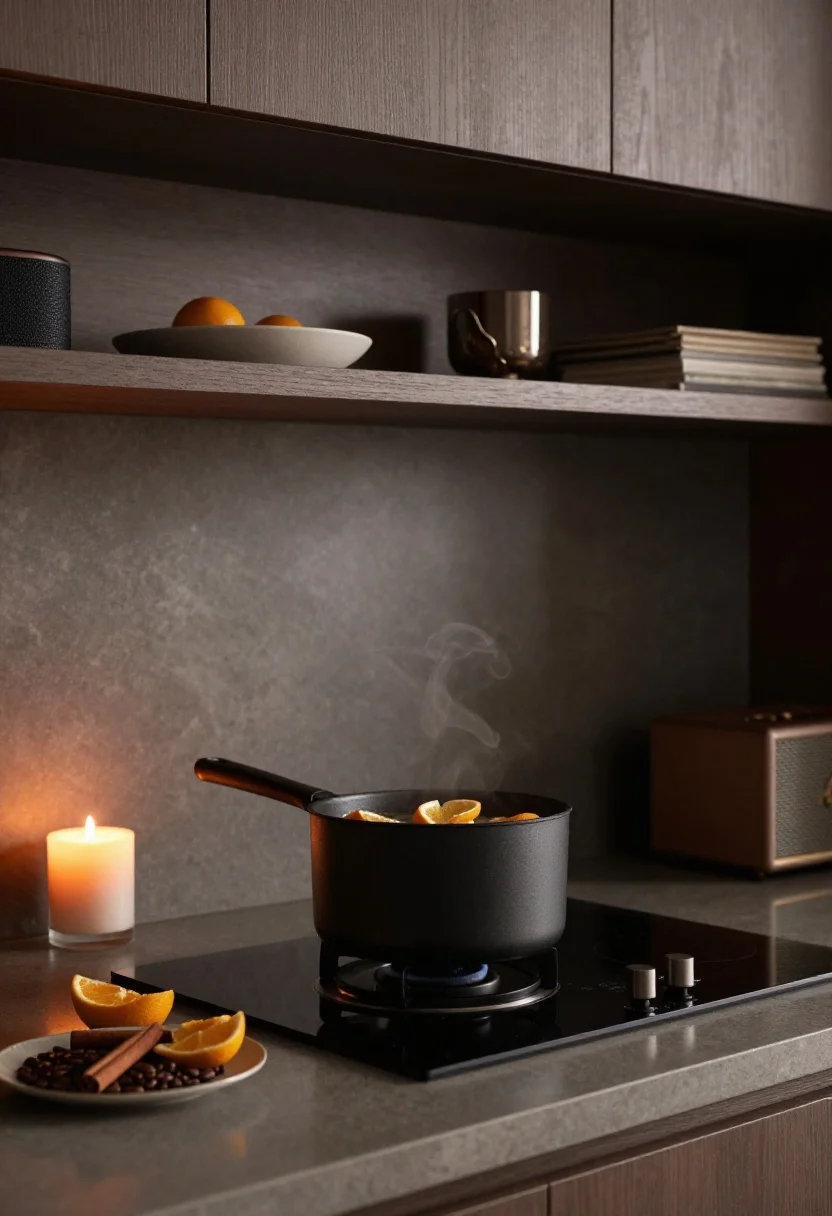
Luxury isn’t just visual. A subtle signature scent and curated sound instantly transform an apartment’s feel. You don’t need to shop—use what you have: simmer citrus peels and cinnamon, bake vanilla on low in the oven for a few minutes, or set a small dish of coffee beans on a shelf. Then pair with a soft playlist at low volume.
How to Do It
- Zone aroma: Keep fresher notes near the entry and warmer notes in living areas to guide mood.
- Evening ritual: Dim lights, light a single candle if available, and choose mellow instrumentals for a hotel-lounge vibe.
- Consistency: Repeat daily for a week; the space will begin to feel intentionally “yours.”
Why It Works
Multisensory cues elevate your environment beyond its square footage. A consistent scent and low, enveloping sound create emotional continuity—the mark of a well-designed, premium-feeling home.
Practical Room-by-Room Pass
© 2026 AI Illustrator — Inspiration Only
For momentum, do a 30-minute sweep by zone:
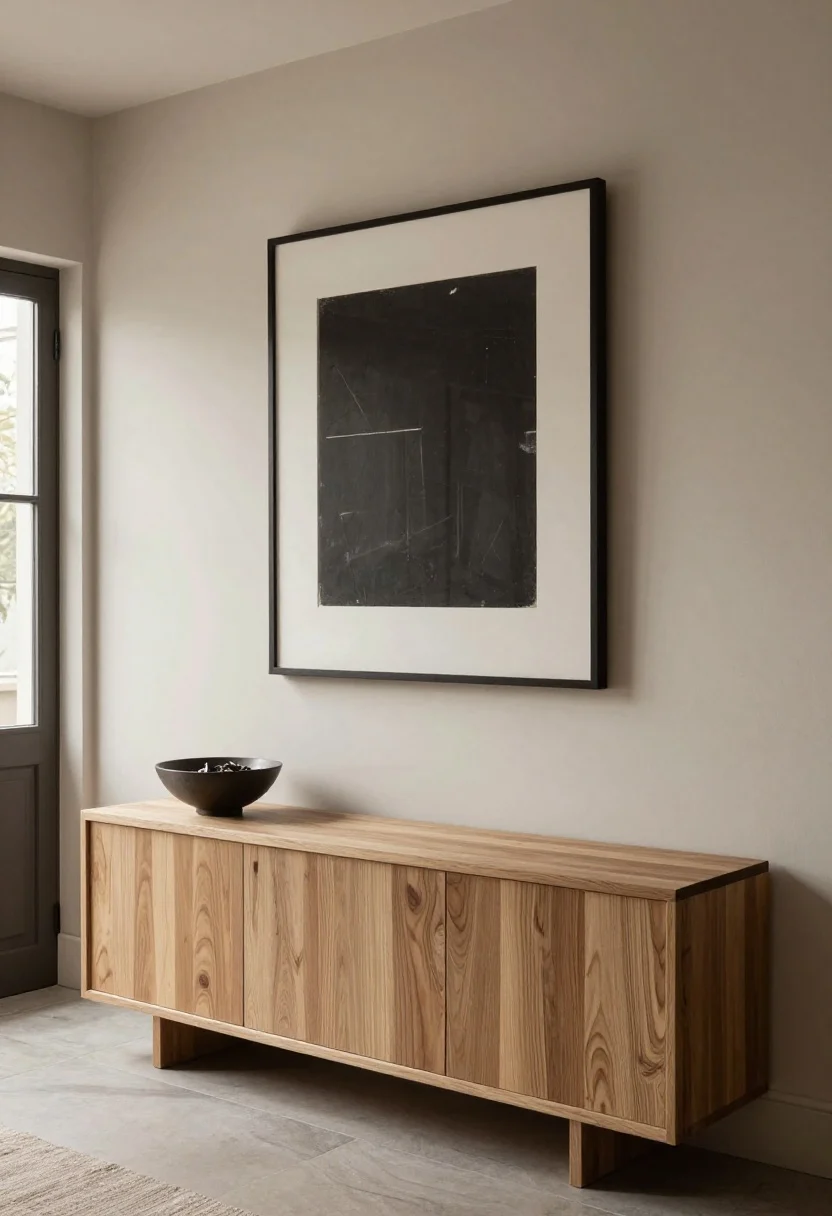
- Entry: Clear the console, add a single bowl for keys, hang or lean one piece of art lower.
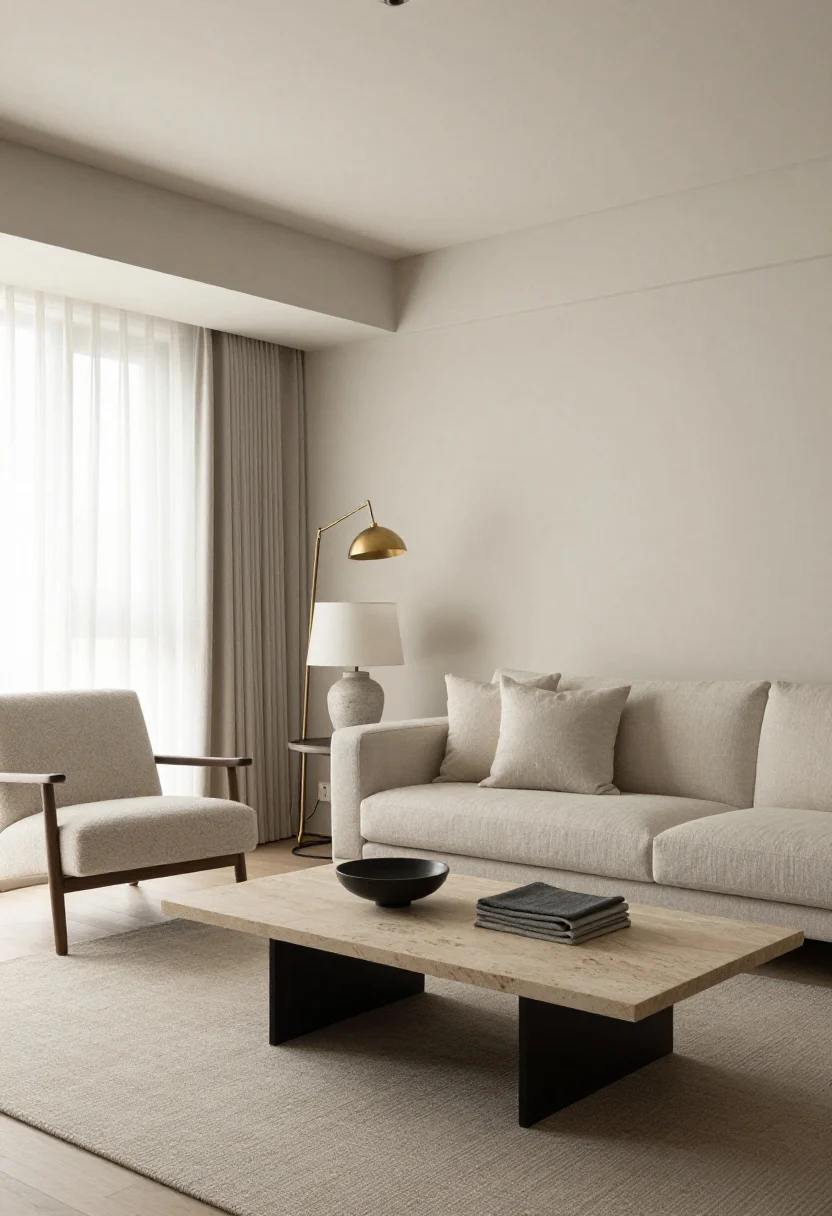
- Living: Float a chair, edit coffee table to a 1-2-3 composition, fluff textiles, route cords.
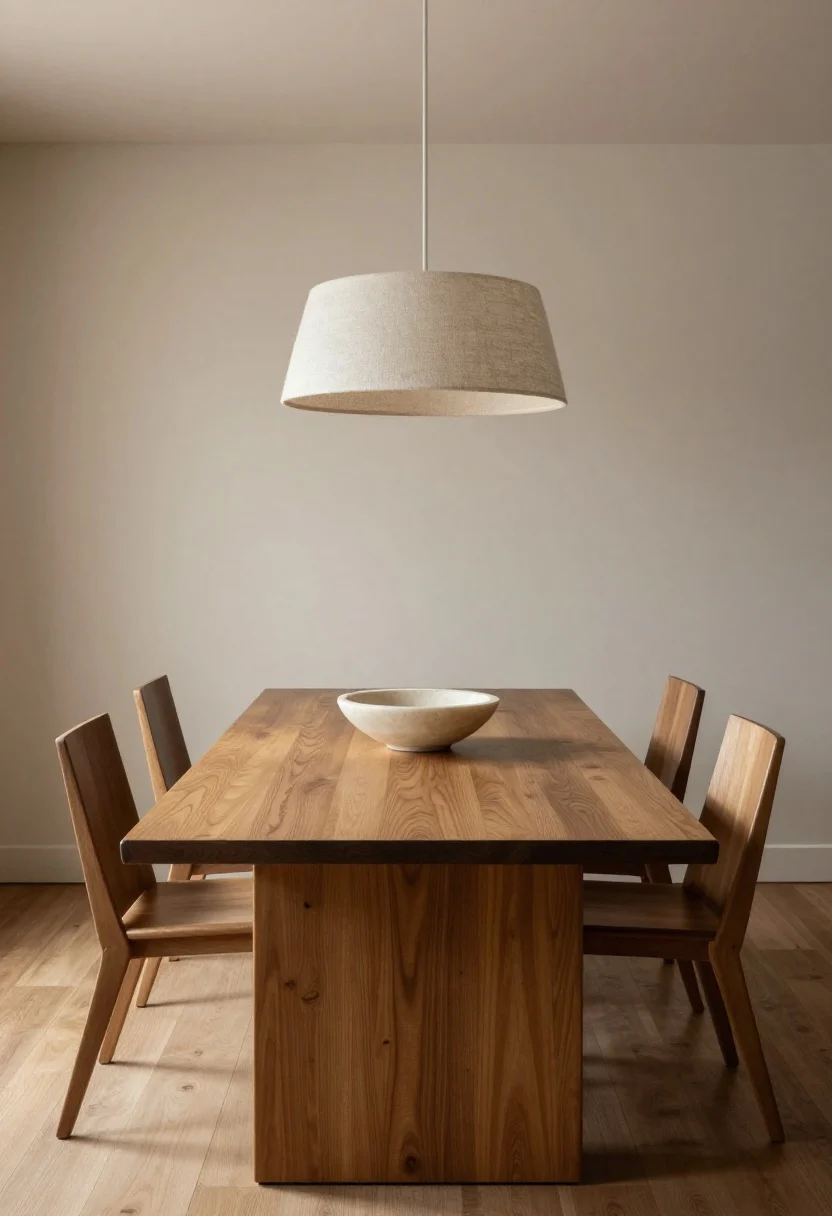
- Dining: Center the table under the light, place a single sculptural object, clear chair backs.
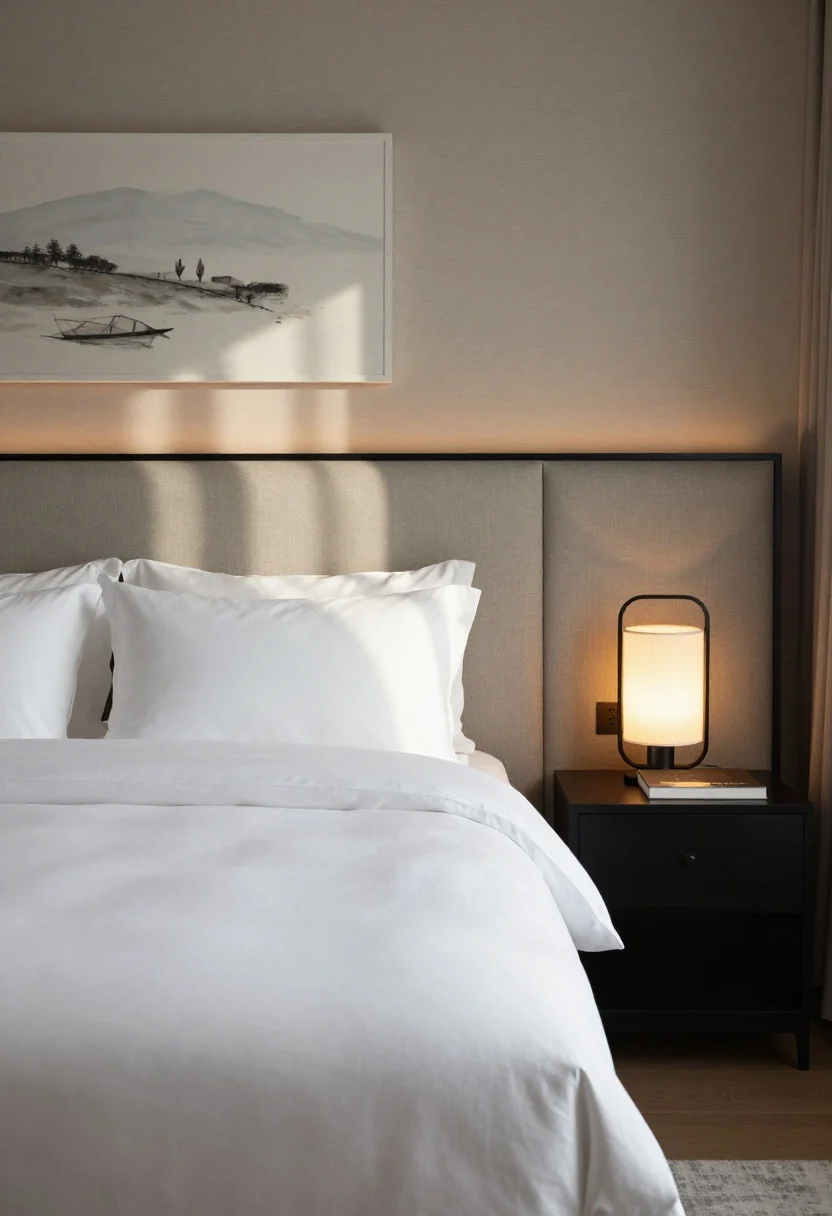
- Bedroom: Reset the bed with a crisp fold-back, lower art, keep only a lamp and book on the nightstand.
- Kitchen: Clear counters to essentials, decant wooden spoons into a single vessel, align items by height.
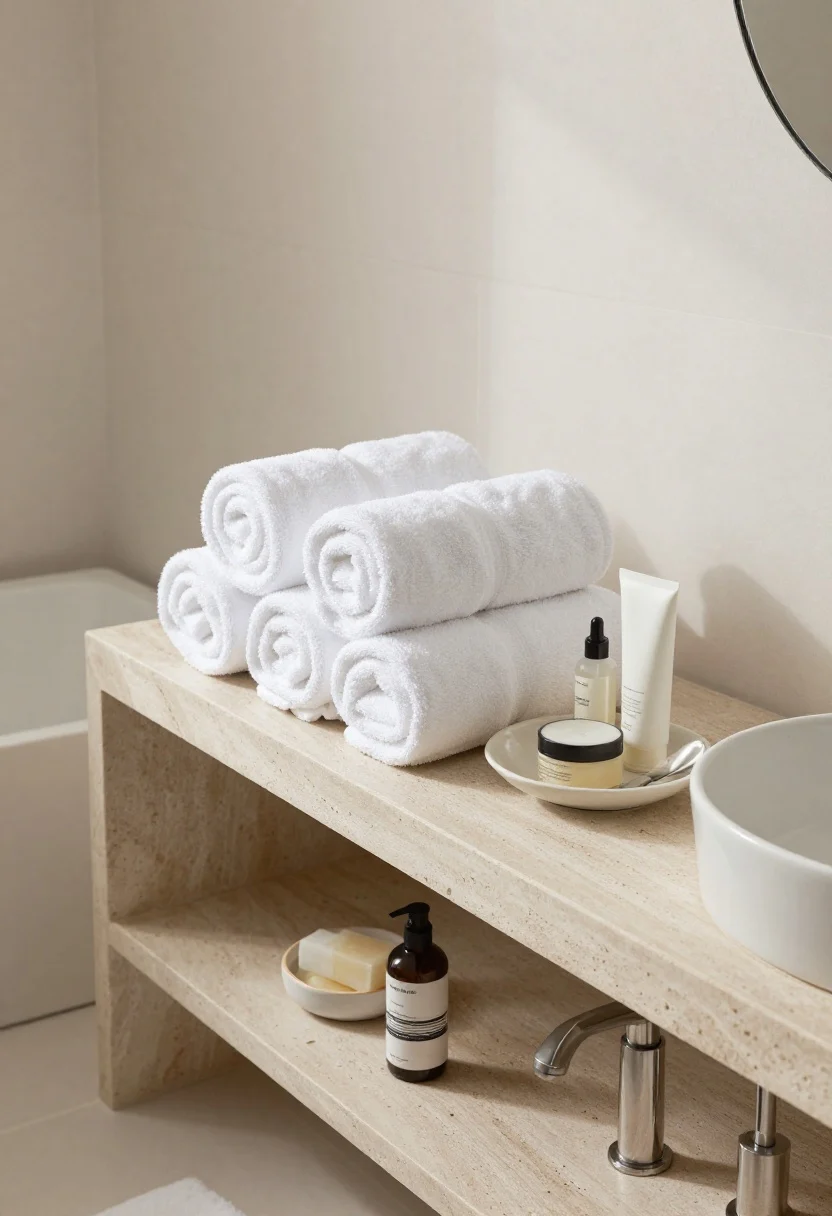
- Bath: Roll a few towels spa-style, hide extras, and group products on a single tray or dish.
What to Avoid (So It Stays Elevated)
© 2026 AI Illustrator — Inspiration Only
- Over-accessorizing: If every surface is talking, nothing is heard. Choose a hero per zone.
- Tiny rugs: They visually shrink a room. If you don’t have one that fits, skip it until you do.
- Harsh overheads: Relying solely on a ceiling fixture flattens texture. Add table or floor light where possible.
- Art too high: Keep the center near eye level for gallery polish.
- Uncontained cables: They instantly cheapen a room’s look. Consolidate and hide.
If You Do Shop Later, Focus Here
© 2026 AI Illustrator — Inspiration Only
When the time is right, aim for impact-per-dollar items that support the principles above:
- Rugs: A room-size neutral to anchor living zones.
- Sofas/Chairs: Pieces on legs to reveal floor and lighten the silhouette.
- Lighting: A sculptural floor lamp and a pair of table lamps for layered warmth.
- Storage: Closed consoles, baskets, and slim shelving for clean lines.
- Wall Decor: Larger-scale art or cohesive gallery frames to control proportion.
Conclusion
© 2026 AI Illustrator — Inspiration Only
You don’t need a shopping spree to make your apartment feel expensive—you need clarity, light, and proportion. By editing surfaces, refining layouts, perfecting textile moments, and taming visual noise, you instantly shift your home toward a polished, luxury aesthetic. Start with the changes that cost nothing; the rest becomes easy.
FAQ
© 2026 AI Illustrator — Inspiration Only
How do I make a small apartment look bigger without buying anything?
Edit surfaces, float at least one furniture piece, lower art to eye level, and maximize light by cleaning windows and repositioning reflective objects. Fewer, larger gestures read as more spacious.
What’s the fastest free upgrade before guests arrive?
Five moves: clear the entry, fluff pillows, fold a throw neatly, style the coffee table with a 1-2-3 composition, and turn on layered lighting. Add a subtle scent for finish.
Where should I start if I’m overwhelmed?
Begin with the room you enter first. Clear and style one surface, fix the layout for clean pathways, and address lighting. Momentum builds quickly once one zone feels resolved.
Recommended Products
Disclosure: As an Amazon Associate, this site may earn from qualifying purchases.
These affiliate-ready categories are broad, safe shopping prompts readers can use to build the look without fake pricing or made-up reviews.
- Anchor rooms — Defines zones and expands perceived space.
- Layered lighting — Adds height and warm, ambient glow.
- Hide clutter — Conceals visual noise for cleaner lines.
- Create focal point — Proper scale adds visual mass and polish.
- Textile upgrade — Crisp texture and layered comfort.
Shop the Look on Amazon: Give readers a fast path from inspiration to action.