
Your place is tiny. Cute-tiny, but still tiny. The good news? You don’t need a sledgehammer or a lottery win to make it feel huge. With a few smart moves, you can trick the eye, squeeze every inch of function, and seriously level up the vibe. Ready to make your small apartment feel twice as spacious? Let’s play design Tetris.
1. Edit Like A Stylist, Not A Minimalist
© 2026 AI Illustrator — Inspiration Only
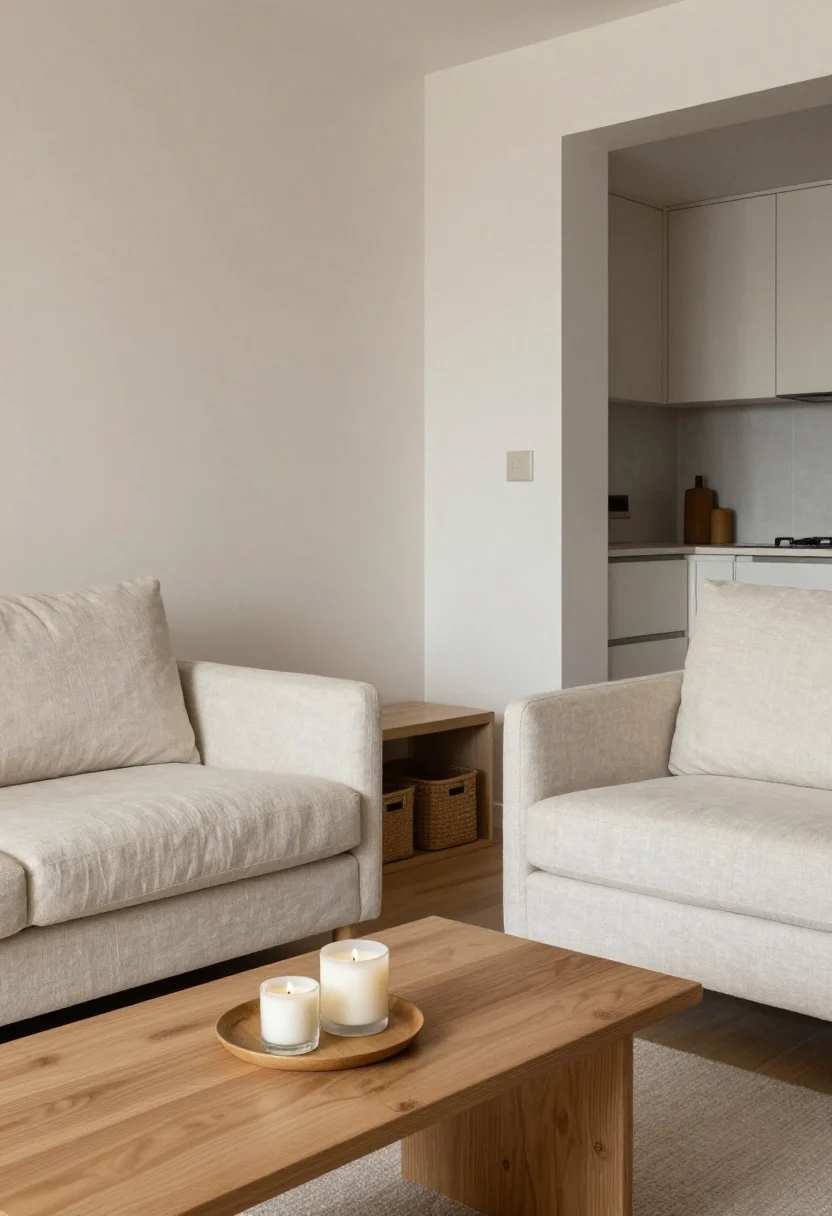
Decluttering isn’t about living with one spoon and a single houseplant. It’s about curating. Keep what you love, rehome what’s “meh,” and give every remaining item a purpose and a place.
What’s Your Apartment Decor Style?
Answer these quick questions to discover your perfect decor vibe.
Edit The Room, Not Your Personality
- Start with surfaces: Clear counters, nightstands, and the coffee table. Then add back only what sparks joy or utility (yes, your candle collection can stay—pick one or two).
- Contain the chaos: Use lidded baskets under benches, slim drawer dividers in the kitchen, and a catchall by the door. Visual noise shrinks a space faster than a low ceiling.
- Right-size your furniture: A petite sofa beats an overstuffed sectional that eats half the room. Look for sofas around 72–80 inches wide and armchairs with narrow arms.
Bonus: Fewer, better pieces give your eye breathing room. The space reads calmer, cleaner, and instantly larger.
2. Master The Light: Windows, Mirrors, And Glow
© 2026 AI Illustrator — Inspiration Only
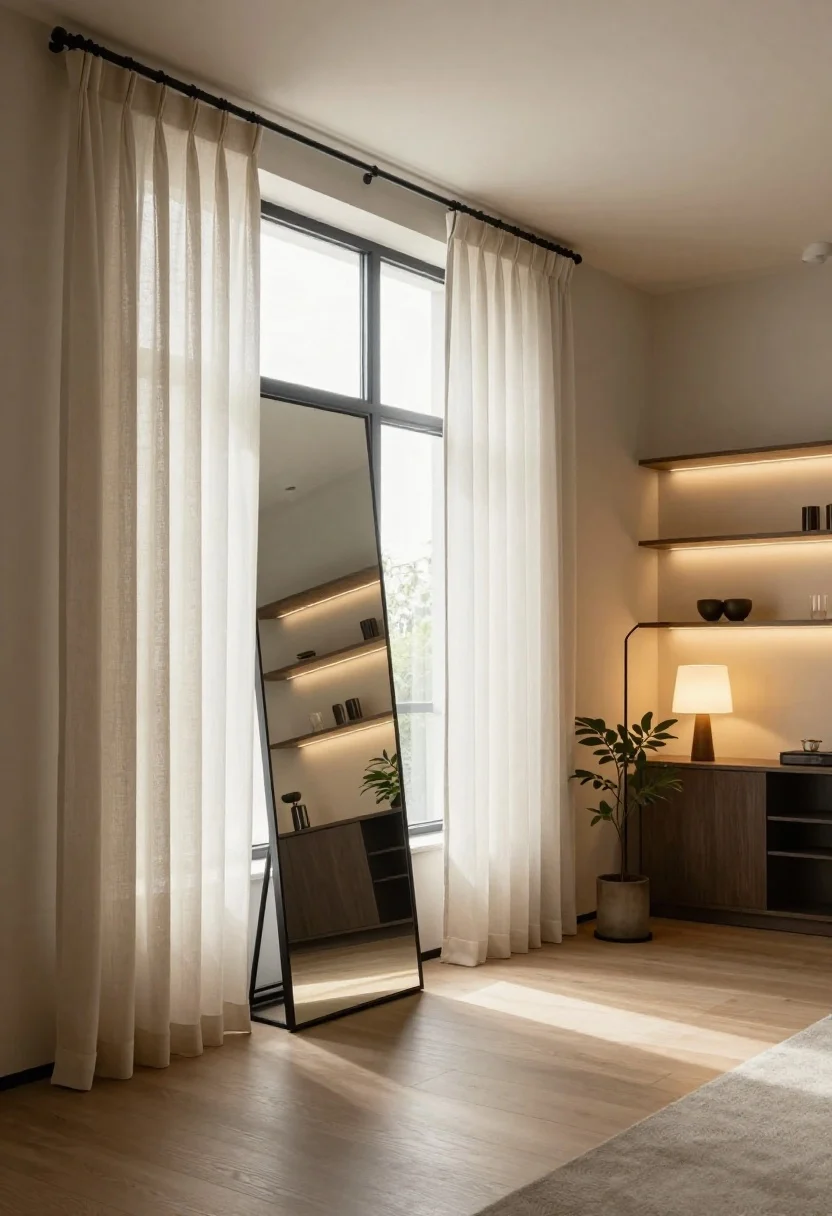
Light is square footage’s glamorous cousin. The more you have, the bigger your apartment feels—period. If your windows are shy, we’ll cheat it with mirrors and layered lighting.
Window Tricks That Work
- Hang curtains high and wide: Mount rods 6–10 inches above the window and extend them past the frame so panels stack off the glass. Your windows look taller and wider instantly.
- Sheers by day, blackout by night: Double rods let you keep privacy without sacrificing daylight. Choose airy linen sheers to soften light rather than block it.
Mirror, Mirror, Make It Bigger
- Opposite a window is prime placement to bounce natural light. A 24×36-inch or larger mirror makes a noticeable difference.
- Leaning floor mirrors add height and drama—great behind a plant or next to a console for depth.
Layered Lighting = Spacious Glow
- Ceiling + task + accent: Use a flush mount or pendant, add table or floor lamps, and sprinkle in LED strips under cabinets or shelves.
- Warm-dim bulbs (2700–3000K): Keep it cozy without turning the room into a cave. FYI, consistency in color temperature keeps the space cohesive.
3. Go Vertical: Walls Are Your Secret Square Footage
© 2026 AI Illustrator — Inspiration Only
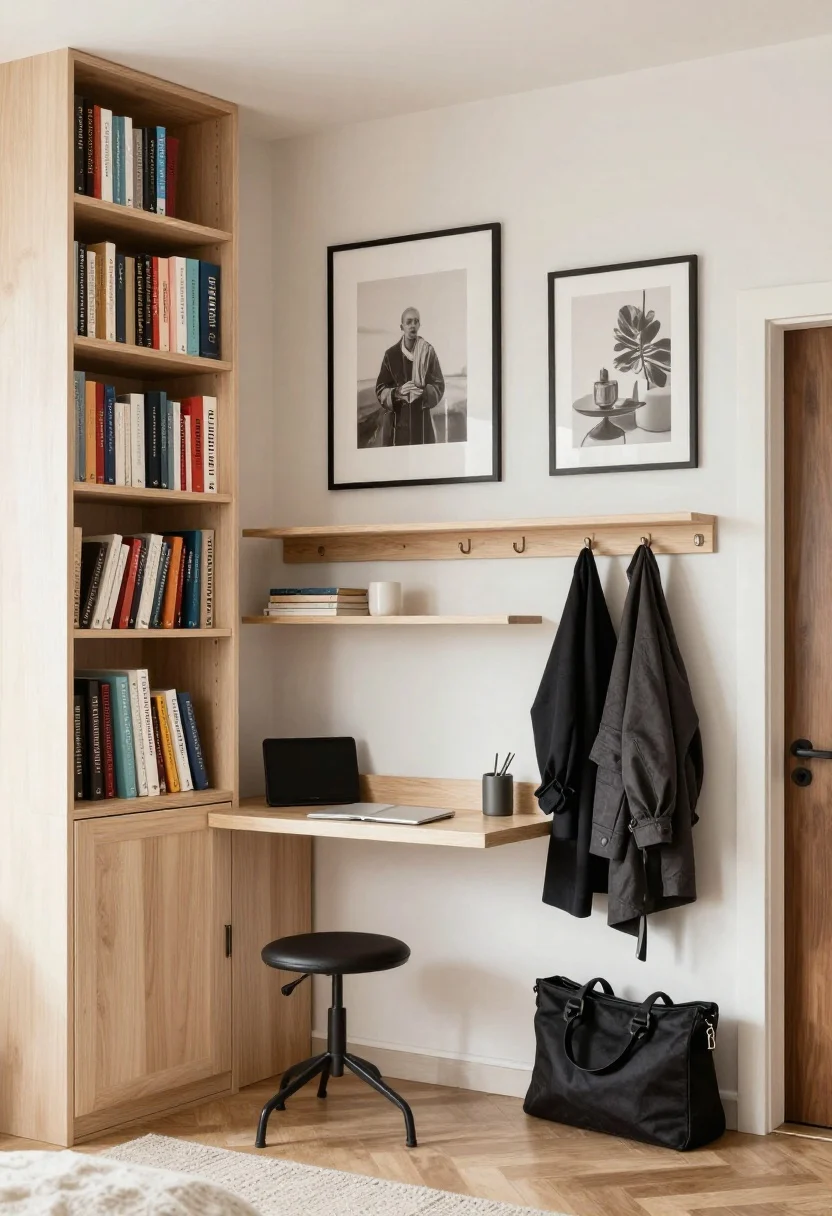
When the floor plan says “nope,” the walls say “I got you.” Vertical design draws the eye up, which is the visual version of adding cubic feet.
Build Up, Not Out
- Floating shelves: Stack two or three above a console or desk instead of using another bulky bookcase. Leave breathing space between objects for that gallery-store look.
- Tall storage: Bookcases that reach near the ceiling make the room look taller. Add doors on the bottom half to hide clutter and display the pretty stuff up top.
- Peg rails and hooks: In entries and kitchens, they manage coats, bags, and utensils without eating floor space.
Art Placement That Stretches Space
- Hang higher than you think: Place large art so the center is at 60–62 inches, but let frames climb in a vertical pair to emphasize height.
- One big statement over many smalls: A single oversized piece reads cleaner and less cluttered than a mosaic of tiny frames. IMO, go bold.
4. Furniture That Works Overtime (And Looks Good Doing It)
© 2026 AI Illustrator — Inspiration Only
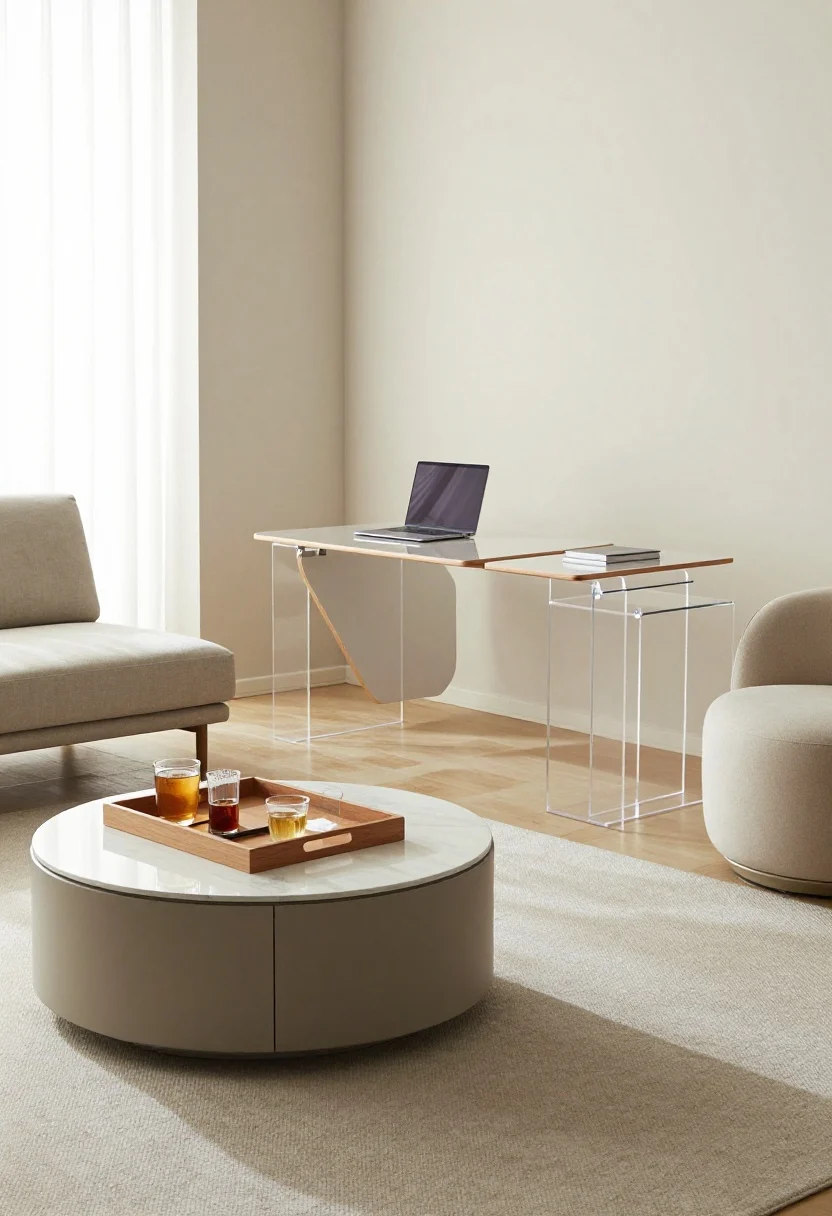
Multifunctional pieces are basically the apartment MVPs. They shape-flow, stash things, and transition from day to night without breaking a sweat.
Pick Pieces With Built-In Superpowers
- Storage ottomans: Coffee table by day, blanket vault by night. Choose one with a tray-top insert to set drinks.
- Lift-top coffee tables: Eat, work, or Zoom without a dedicated desk. Push it back down for a tidy living room vibe.
- Murphy or daybeds: If your studio wears many hats, these transform the same footprint from lounge to sleep without the sofa-bed regret.
- Drop-leaf or gateleg tables: Dine for four when friends visit; fold to console size the rest of the week.
Legs, Lines, And Clear Materials
- Show the floor: Sofas and chairs with visible legs feel lighter than skirted or blocky bases.
- Acrylic or glass: Clear nesting tables and console shelves practically disappear, making rooms feel airy.
- Rounded corners: Curved tables and side chairs improve flow in tight paths and soften the room visually.
5. Color, Pattern, And Texture: The Illusionists
© 2026 AI Illustrator — Inspiration Only
Color is powerful. It can push walls out, lift ceilings, and make rooms feel serene instead of stuffed. Let’s use it strategically.
Smart Color Palettes
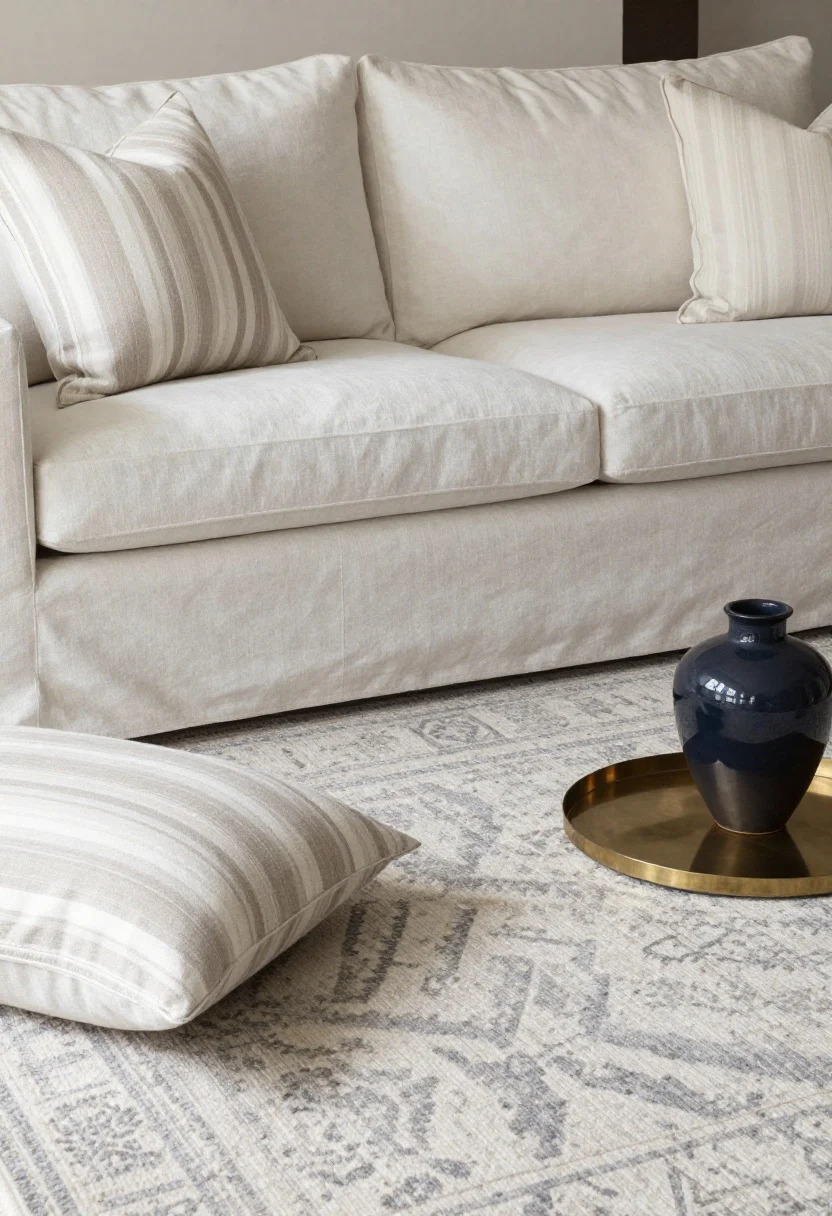
- Light, low-contrast base: Stick to soft whites, pale taupes, or misty grays for walls and big furniture. Contrast equals visual clutter; low contrast equals calm.
- Monotone layers: Mix shades of one hue—like warm beige with caramel and sand—for depth without busyness.
- Dark accents, not dark rooms: A navy console or charcoal lamp grounds the space without shrinking it.
Pattern That Plays Nice
- Scale matters: One larger-scale pattern (a rug or duvet) + one small accent pattern (throw pillows) keeps the eye focused.
- Stripes to stretch: Vertical stripes elongate walls; horizontal stripes widen narrow rooms. Subtle is key.
Texture = Rich, Not Busy
- Layer softly: A nubby throw, linen curtains, and a smooth leather accent chair add interest without visual clutter.
- Reflective finishes: Brushed brass, glossy ceramics, and satin paint bounce light and feel luxe.
6. Layouts That Flow (Even If Your Floor Plan Doesn’t)
© 2026 AI Illustrator — Inspiration Only
You can’t change the square footage, but you can redesign the circulation. Great layouts make small rooms feel effortless—and yes, bigger.
Define Zones Without Walls
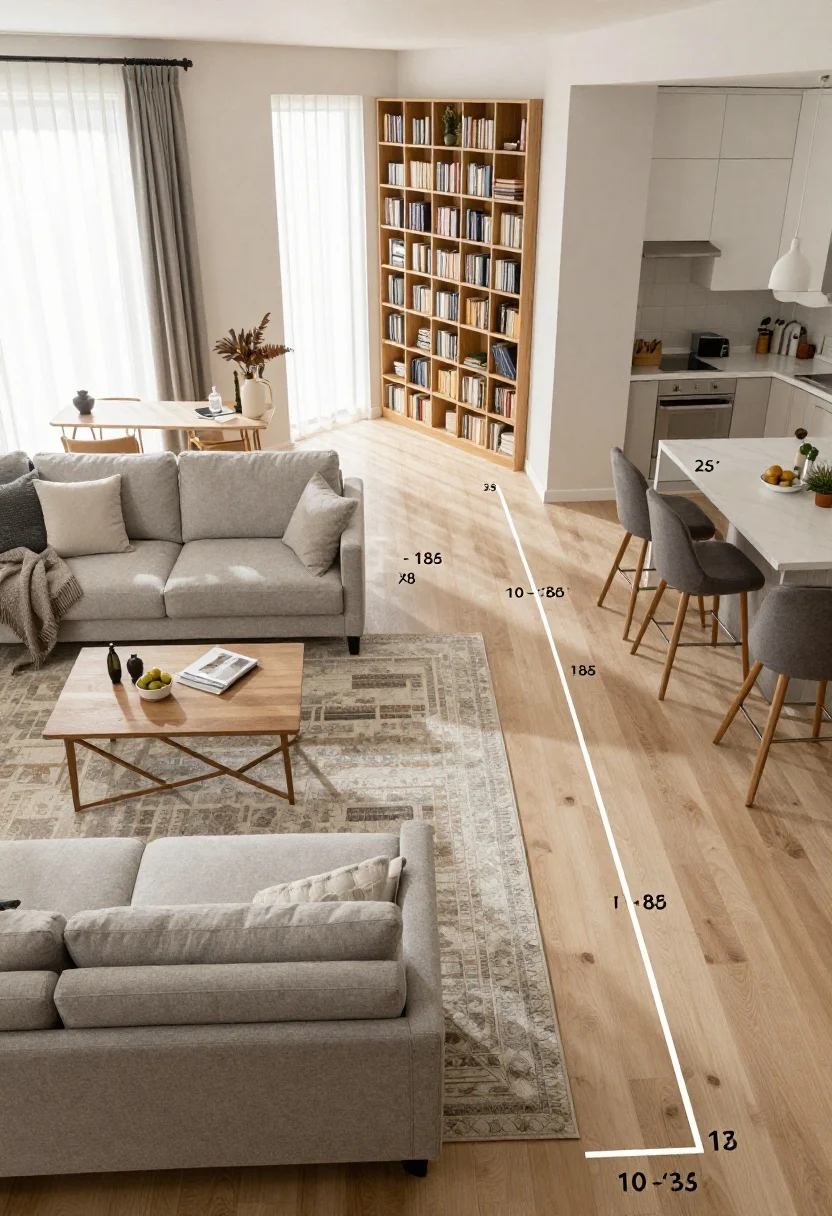
- Rugs as boundaries: An 8×10 rug under the sofa and chairs unifies a living zone; a runner defines the kitchen path.
- Slim consoles as dividers: Place one behind the sofa to mark off “living” from “entry” without blocking light.
- Open bookcases: Use as airy partitions in studios so light still flows through.
Mind The Pathways
- Leave 30–36 inches for main walkways and 18 inches around seating so you’re not shimmying sideways everywhere.
- Pull furniture off the walls: Even a few inches creates shadow lines that suggest more space.
- Corner power: Tuck floor lamps, plants, or a petite accent chair into corners to visually “use” the whole room.
Room-By-Room Micro-Layouts
- Studio: Put the bed farthest from the door, sofa facing it, and a narrow console as a “headboard” boundary. Hide under-bed bins with a tailored bedskirt.
- Galley kitchen: Magnetic strips for knives, pot rails, and a fold-down wall shelf for prep. Keep counters clear—appliances live in a cabinet “appliance garage.”
- Tiny bedroom: Two slim sconces free your nightstands; opt for a 12–16-inch-deep dresser and a mirror above to bounce light.
7. Style Moves That Make It Feel Intentional (AKA Luxe On A Budget)
© 2026 AI Illustrator — Inspiration Only
When a small apartment feels curated, it reads expensive—and spacious. Intention is the magic. A few high-impact finishing touches go a long way.
Upgrade The Details
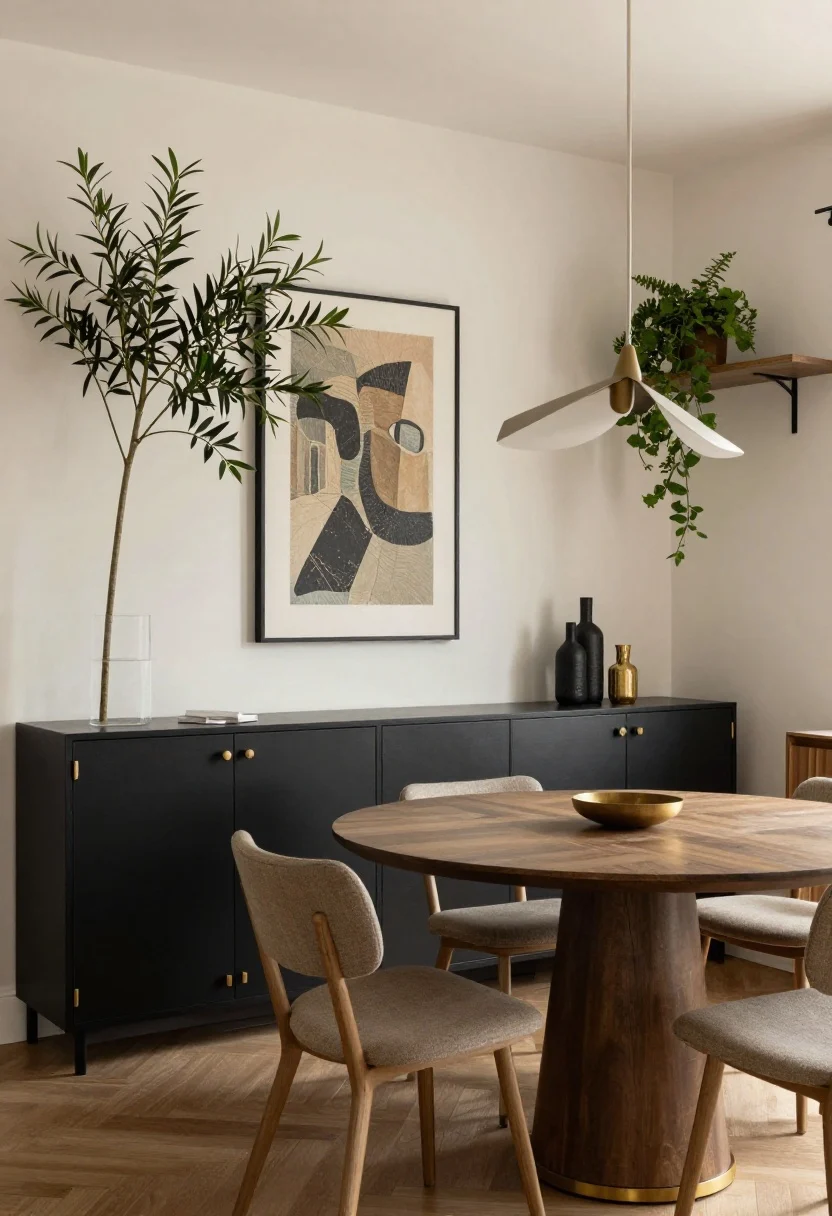
- Hardware swap: Change basic cabinet pulls to matte black or unlacquered brass for instant elevation.
- Statement lighting: A sculptural pendant over the dining nook or a tripod floor lamp adds height and presence.
- Oversized art or a tapestry: Fewer, bigger moments look cleaner and more architectural.
Greenery, But Make It Strategic
- Tall, slim plants: Think olive tree, fiddle-leaf, or bird of paradise to draw the eye up without hogging width.
- Trailing plants high: Mount a shelf or hang planters to green-up dead space near windows and soften corners.
Textiles That Tie It Together
- One cohesive rug palette: Use complementary rugs across rooms for visual flow—no patchwork chaos.
- Repeat materials: Woven baskets, linen curtains, and a jute rug echo each other so the space feels unified.
FYI, you don’t need to buy everything new. Prioritize the pieces that change how you live: a better sofa scale, a mirror that doubles your daylight, or a lift-top coffee table you’ll use daily.
Conclusion: Small Space, Big Energy
© 2026 AI Illustrator — Inspiration Only
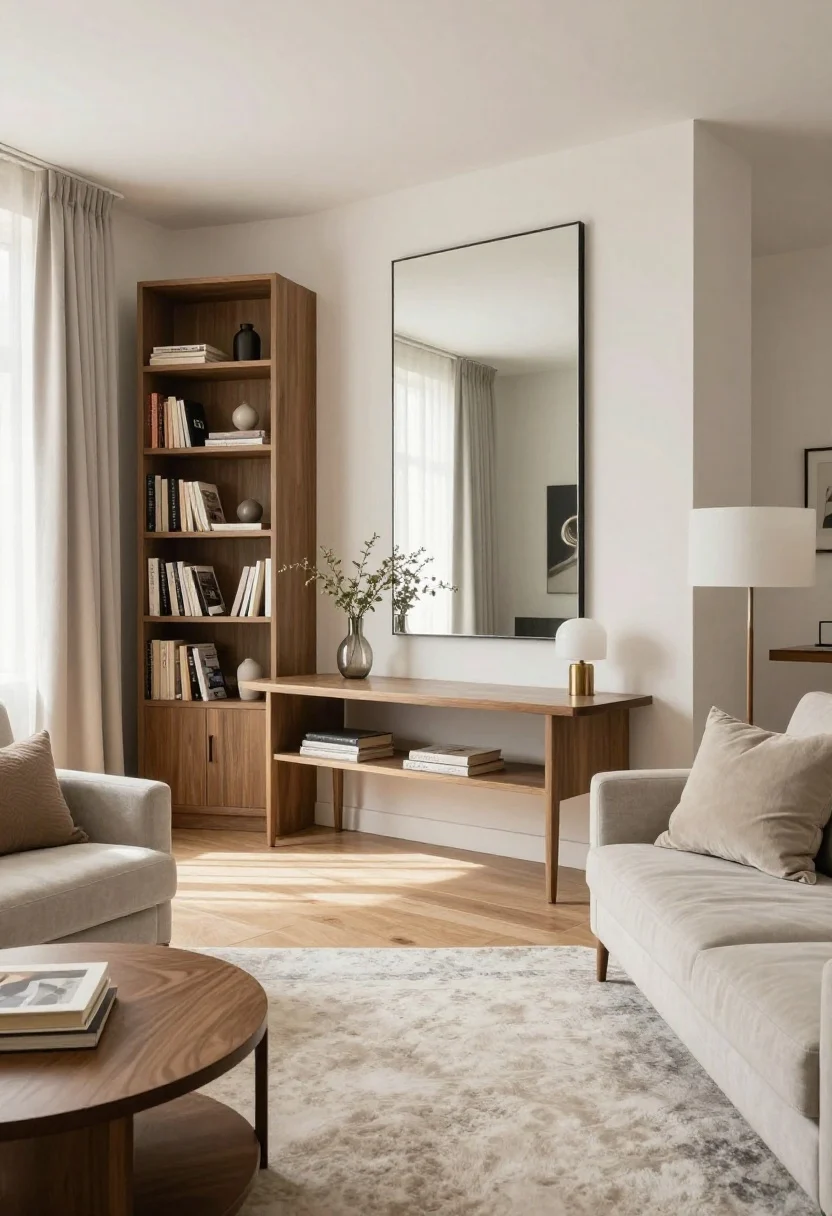
Here’s the vibe: edit thoughtfully, let in light, go vertical, choose multitaskers, and keep color calm. Then layer textures, map clear pathways, and finish with a few bold, polished details. Do that, and your small apartment won’t just feel twice as spacious—it’ll feel like you finally moved into your best self’s home. Now go hang those curtains high and claim those extra “square feet,” no lease required.