
Your studio is cute… until your bed photobombs your Zoom call and your frying pan perfumes your pillow. Been there. The good news? You don’t need walls to create privacy—you need smart zoning. With the right layout and a few stealthy moves, your all-in-one space can feel like three separate rooms that play nicely together.
Let’s break down the best ways to slice and dice a studio—without drywall, drama, or blowing the rent.
1. Build a “Room” With Rugs, Not Walls
© 2026 AI Illustrator — Inspiration Only
What’s Your Apartment Decor Style?
Answer these quick questions to discover your perfect decor vibe.
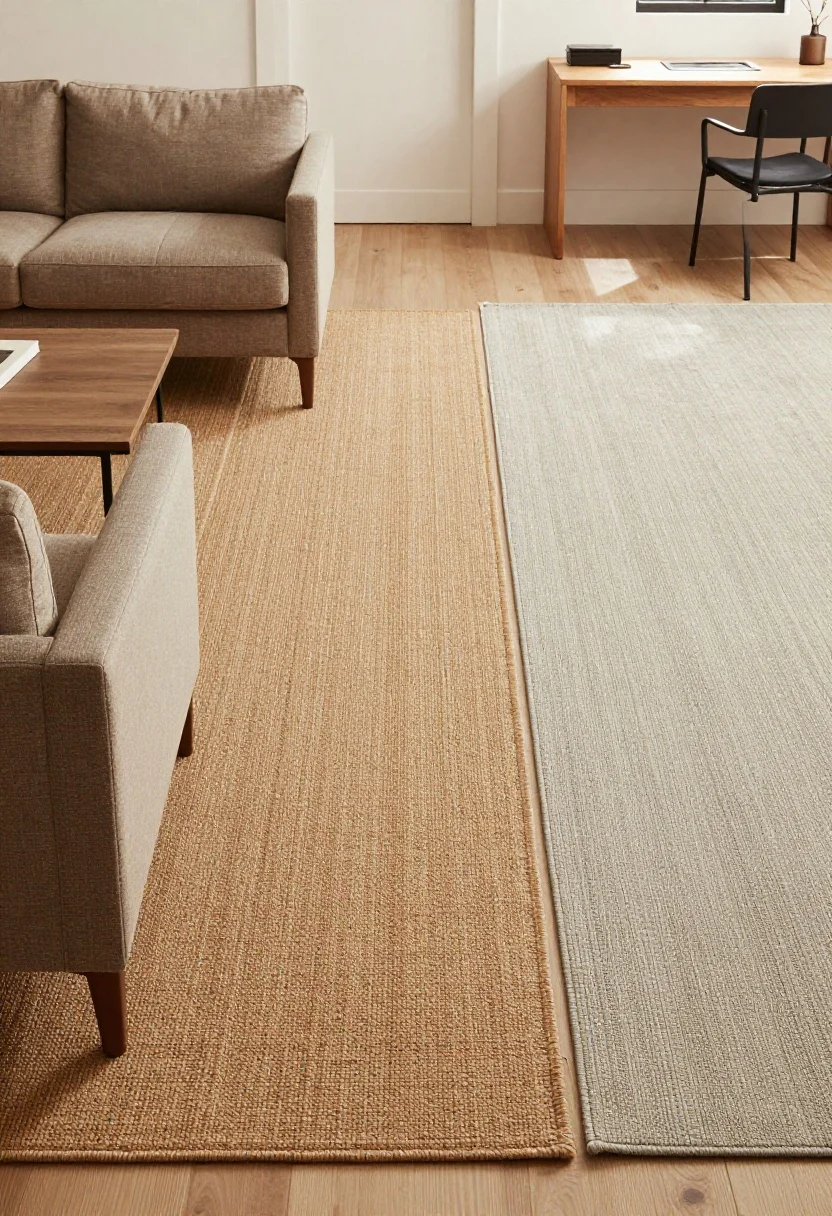
Rugs are your floor plan, no blueprint required. A large rug anchors your “living room,” while a slimmer runner defines an entry or “hallway.” Keep the bed on its own soft island to carve out a restful zone.
What Works Best
- Scale matters: In the living area, choose a rug big enough for front legs of sofa and chairs to sit on it—instant cohesion.
- Contrast zones: Go plush under the bed, flatweave near the kitchen or desk for easy clean-up and rolling chairs.
- Color coding: Use a subtle palette shift—e.g., warm earthy rug for living, cool neutral under the bed—to signal different vibes.
FYI: Layering a small patterned rug over a larger jute piece is a fast way to add character without visual chaos.
2. Float Furniture to Create Invisible Barriers
© 2026 AI Illustrator — Inspiration Only
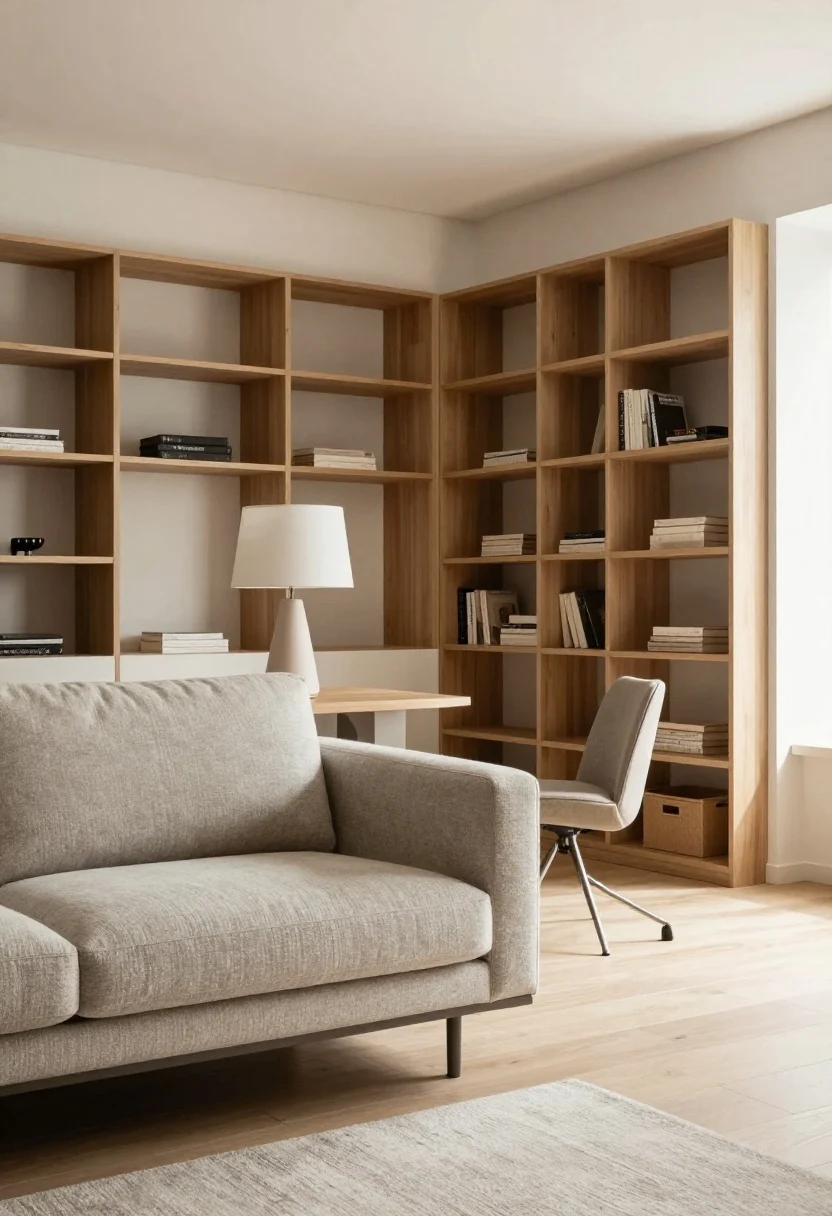
Push everything to the walls and your space looks like a waiting room. Float pieces to form gentle “barriers” that guide flow and give you privacy without blocking light.
Layout Playbook
- Sofa as divider: Place a sofa with its back toward the bed. Add a slim console behind it for storage and a lamp—boom, two rooms.
- Open-back shelves: A low bookcase or etagere divides zones while letting light pass through. Style with baskets for clutter control.
- Swivel chairs: One swivel lets you pivot between conversation and TV without dragging furniture around.
Pro move: Keep pathways at least 30 inches wide so your “zones” don’t feel like an obstacle course.
3. Zone With Verticals: Curtains, Screens, and Slatted Magic
© 2026 AI Illustrator — Inspiration Only
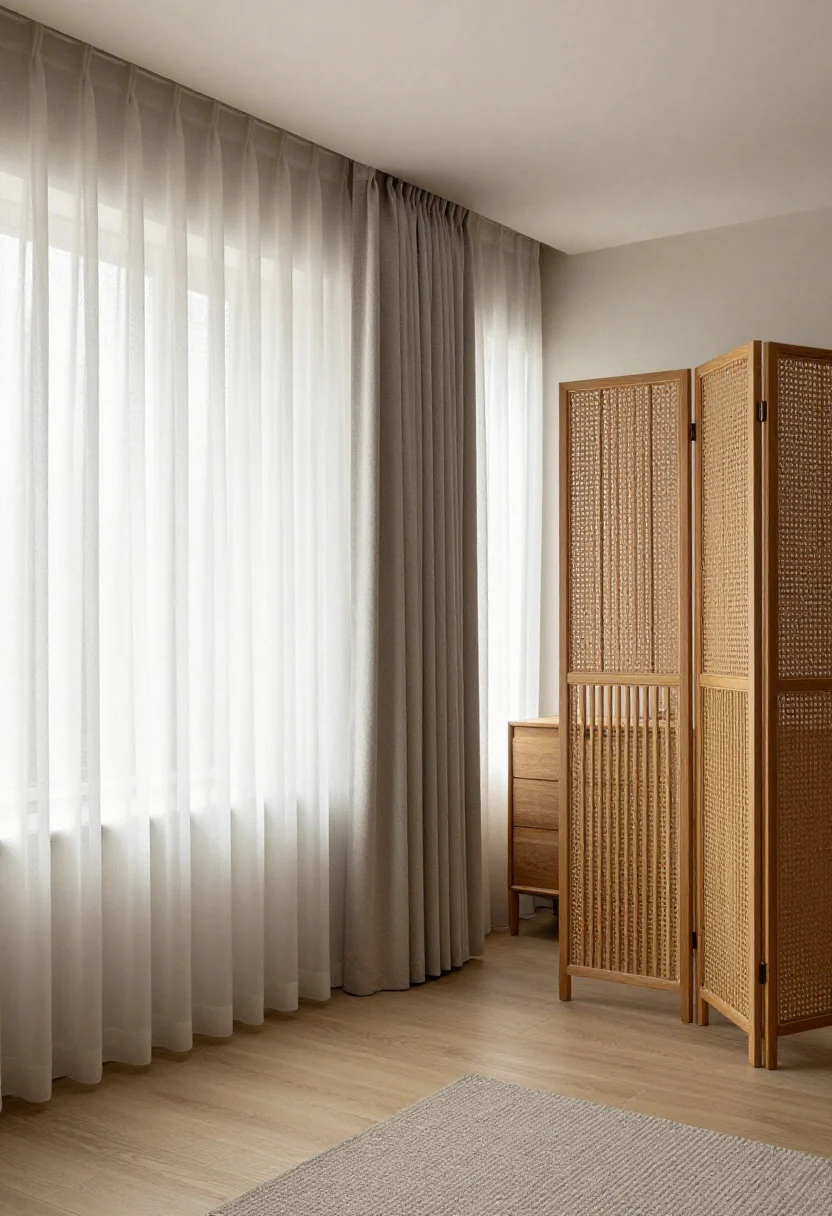
When you crave privacy, go vertical. Soft or slatted partitions are flexible, renter-friendly, and surprisingly chic.
Options to Try
- Ceiling-track curtains: Sheers mute visuals; blackout panels turn your bed into a cozy cocoon. Mount them wall-to-wall for a luxe look.
- Folding screens: Rattan or upholstered screens fold up by day and tuck behind a dresser. Pick a pattern you love—it’s art and architecture in one.
- Slatted dividers: Wood or metal slats give definition without cutting off airflow. Great between sleeping and living zones.
IMO, ceiling tracks are the MVP. They look custom, hide clutter on command, and make a studio feel instantly intentional.
4. Create a Micro-Entry to Stop Visual Chaos
© 2026 AI Illustrator — Inspiration Only
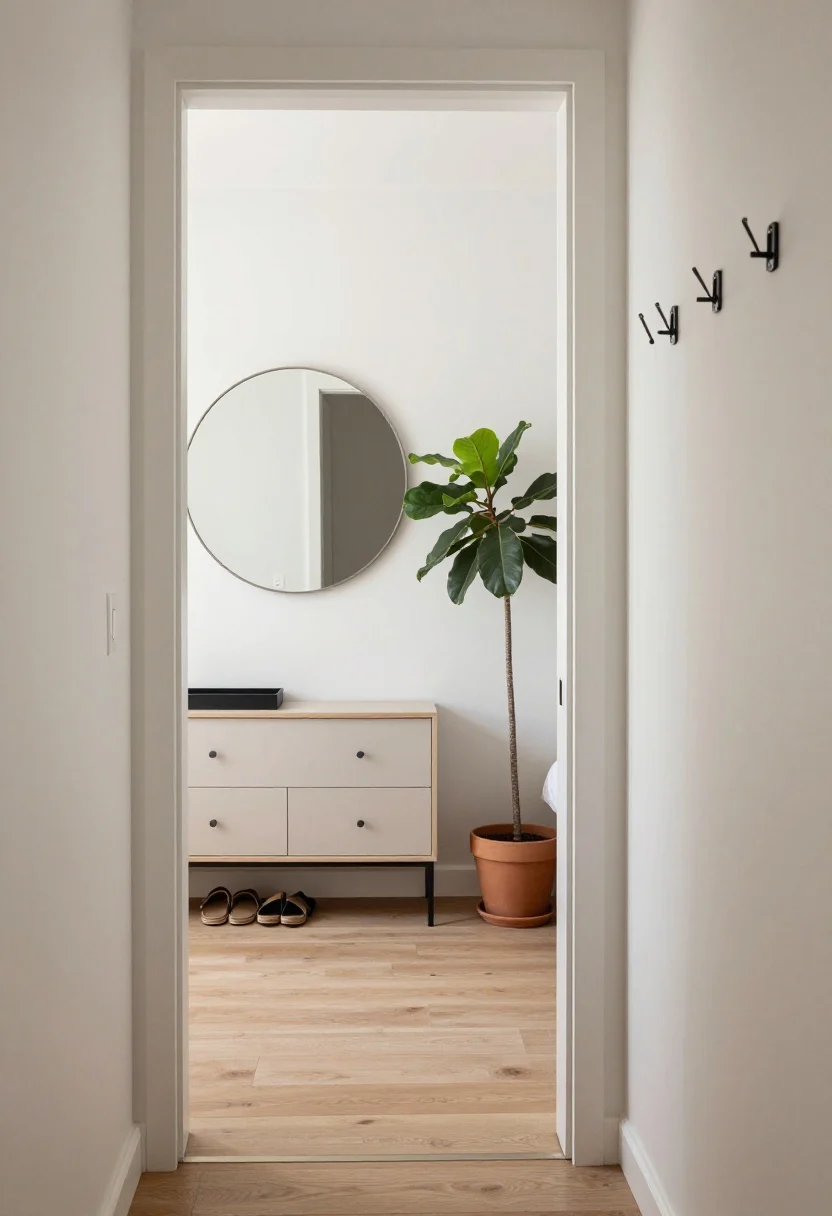
Front doors in studios often open straight into your life. Add a mini “entry” so visitors don’t immediately see your bed, your breakfast, and your entire personality.
How to Fake an Entry
- Turn a rug sideways: A 2×6 runner placed perpendicular to the door reads as a hallway.
- Slim console + mirror: Choose one with drawers and a catchall tray. The mirror bounces light and expands the zone.
- Coat hooks or a rail: Mount high to keep sightlines clean. Add a narrow shoe cabinet to hide clutter.
If your door opens onto your bed, install a tall plant or a slatted screen just inside for a little privacy curtain effect—subtle but game-changing.
5. Make the Bed Disappear (Or At Least Behave)
© 2026 AI Illustrator — Inspiration Only
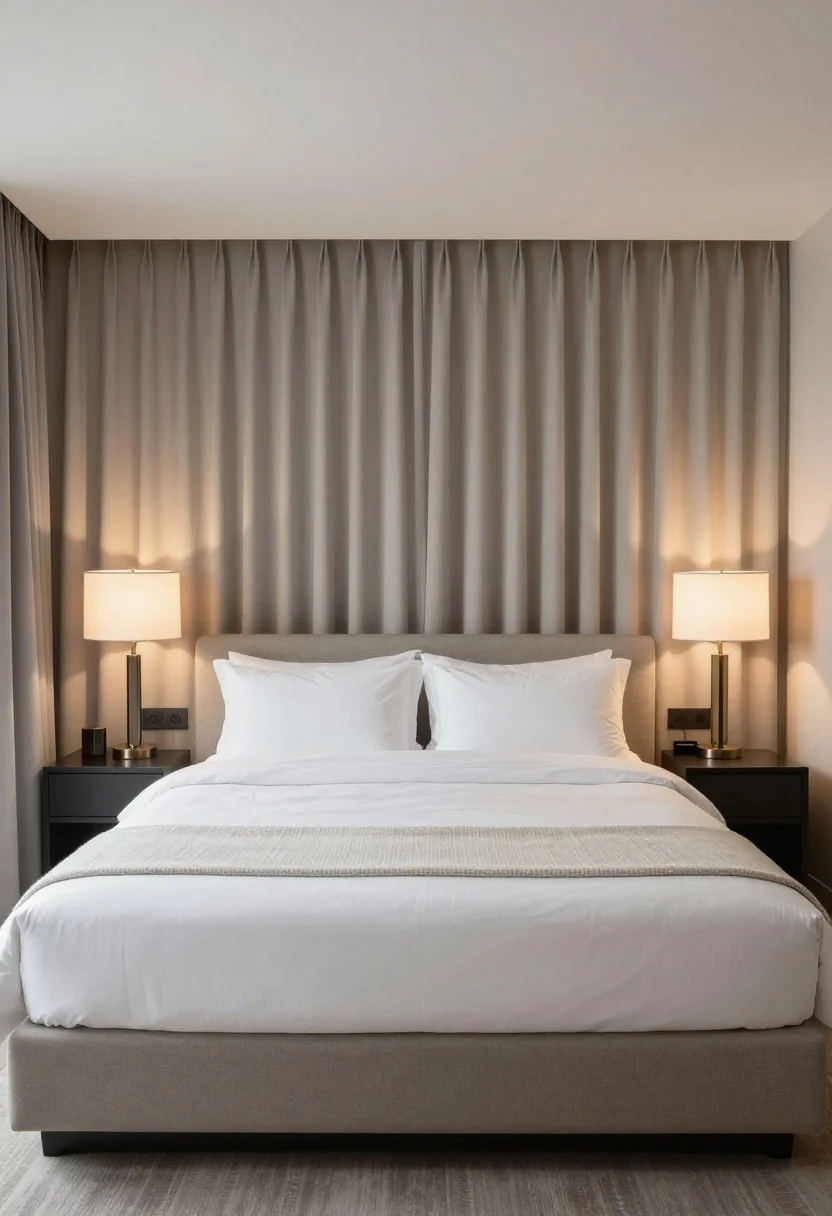
The bed is often the studio’s biggest visual offender. Tame it with choices that make it recede—or fold away entirely.
Smart Bed Strategies
- Daybed or sofa bed: Great if you host often or like a loungey vibe. Add large back cushions by day for a living-room look.
- Murphy bed or lifting storage bed: Murphy for max floor space; lift-up storage to hide linens and off-season clothes.
- Hotel tricks: Crisp bedding, a tailored coverlet, and a textured throw at the foot signal “polished,” not “I live in my bed.”
Want extra separation? Use a console + lamps behind the sofa to shield the bed or pull a ceiling curtain across just the headboard area. Out of sight, out of mind (and out of frame on Zoom).
6. Light Each Zone Like Its Own Room
© 2026 AI Illustrator — Inspiration Only
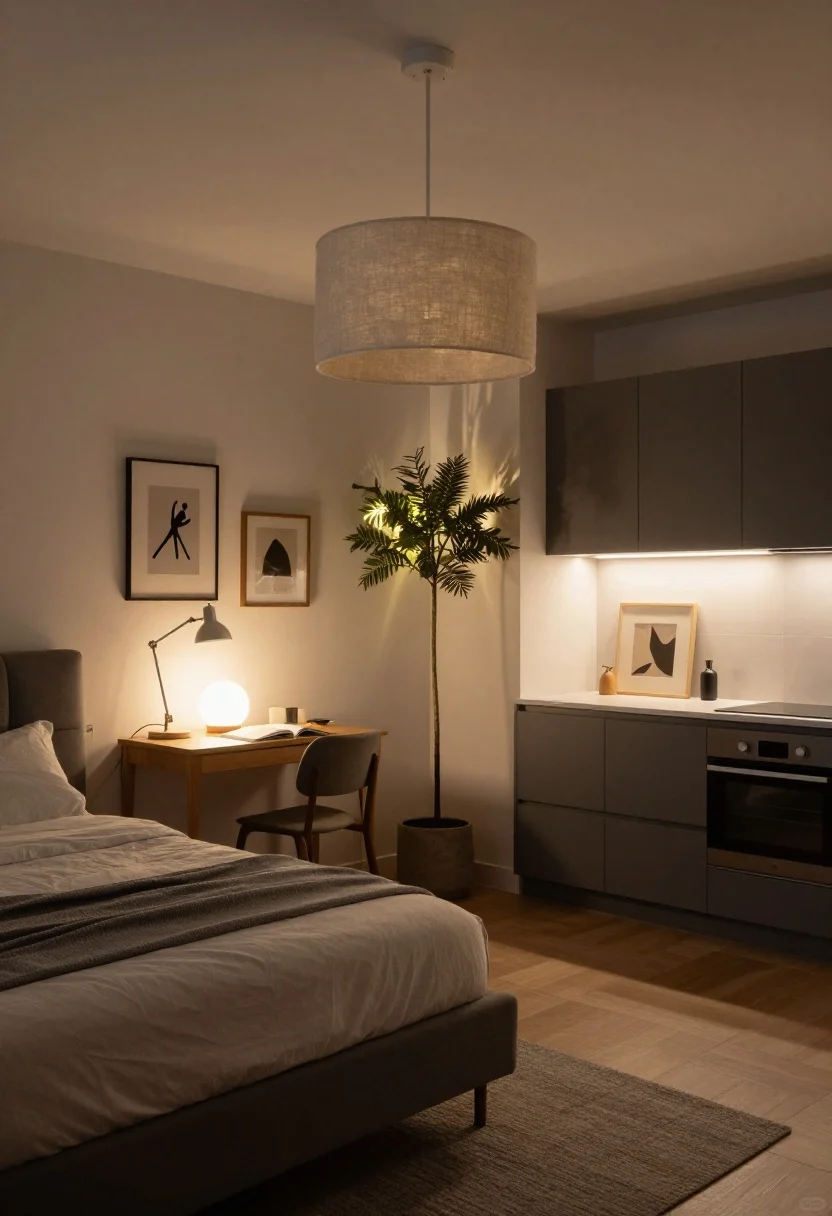
Lighting is zoning’s secret weapon. Instead of one overhead light bleaching everything, layer sources so each area has a mood and a job.
Layered Lighting Formula
- Ambient: A linen drum pendant or track lights on a dimmer for overall glow.
- Task: Swing-arm sconce by the bed, a focused desk lamp, under-cabinet strips in the kitchen.
- Accent: LED uplights behind plants, art lights over frames, or a small lamp on the console.
Bonus zoning trick: Use smart bulbs with different scenes—“Work,” “Chill,” “Guests.” Tap a button and your studio changes personality without moving a thing. FYI, warm temps (2700–3000K) flatter skin and soften corners.
7. Double-Duty Furniture That Works Overtime
© 2026 AI Illustrator — Inspiration Only
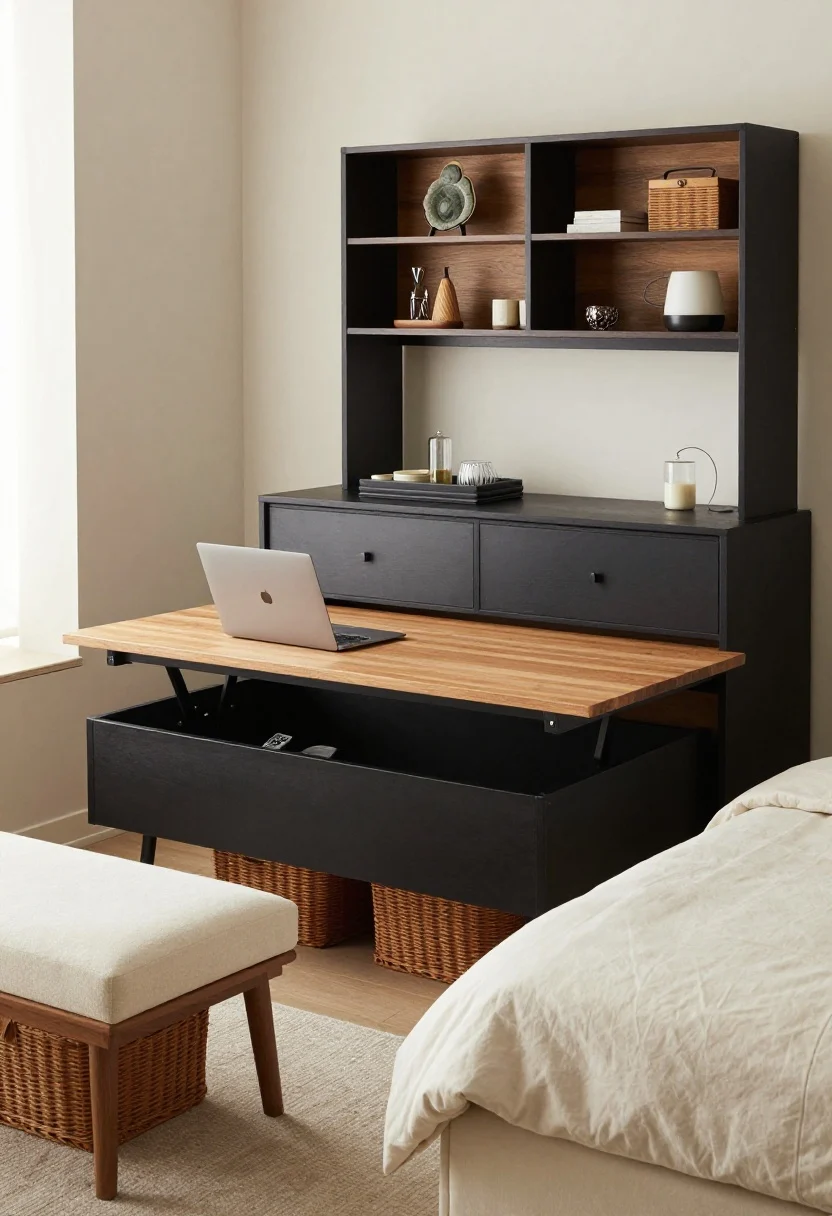
If every piece serves two purposes, you need fewer pieces—and more room to breathe. Choose furniture that pulls its weight in storage, seating, and screening.
High-Impact Picks
- Storage coffee table: Lift-top for dining and laptops; stash remotes inside so the living zone stays tidy.
- Expandable dining table: A narrow console that flips into a two-seater or four-seater for guests.
- Benches with baskets: Park one at the foot of the bed to hide linens; slide it into the living zone for extra seating.
- Bar cart as nightstand: Roll it to the living area when entertaining. Add a tray to corral bedtime essentials.
- Open shelving with bins: Use opaque bins on the bottom rows (hide the mess), open display up top (curate the pretty).
Keep finishes coordinated—think oak, black metal, and cream upholstery—so even when a piece moonlights in another zone, your studio still feels cohesive.
Conclusion
© 2026 AI Illustrator — Inspiration Only
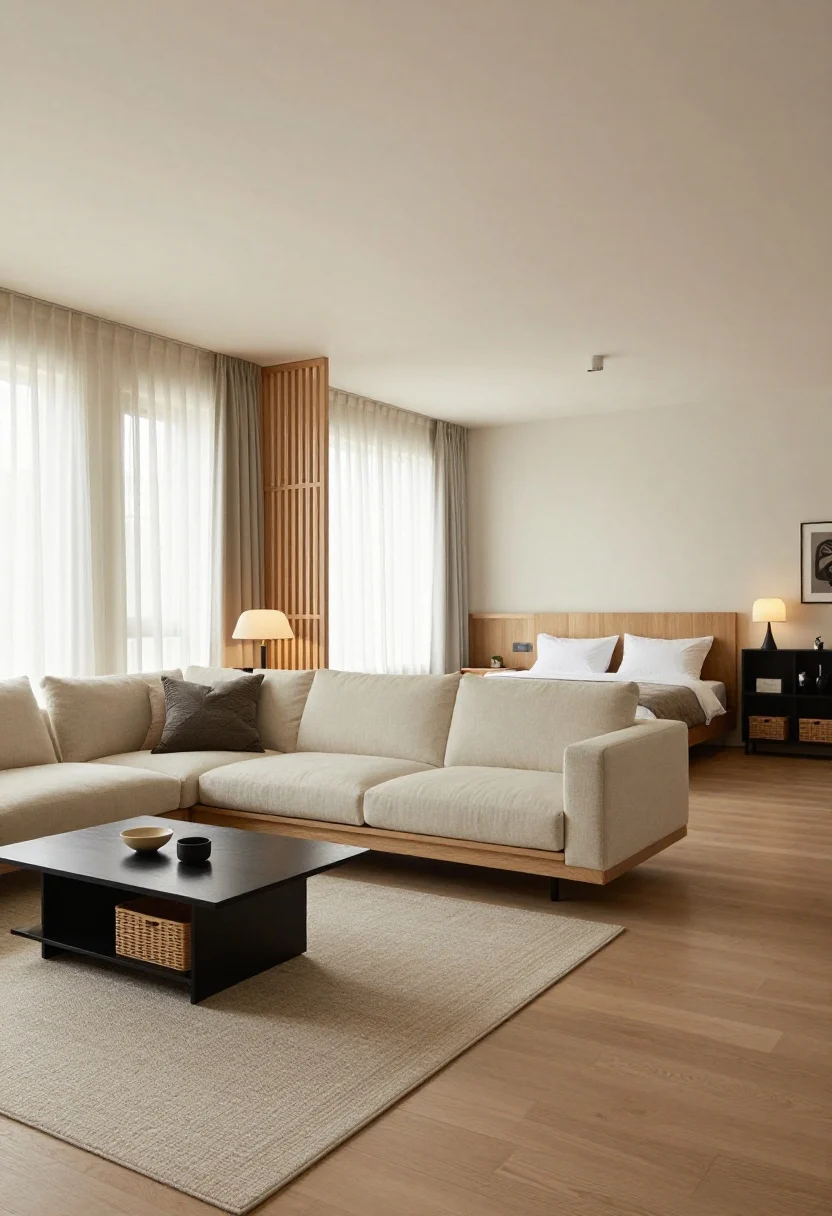
You don’t need more square footage to get more privacy—you just need smarter boundaries. Anchor zones with rugs, float furniture to shape traffic, and pull up curtains or screens when you want a soft divide. Tame the bed, layer your lighting, and pick double-duty pieces that keep clutter out of sight.
Give these tricks a weekend and your studio will feel calmer, bigger, and way more livable. And yes, your bed can finally stop crashing your meetings. Promise.