
In a compact apartment every design decision is magnified. A soft, muted green can turn a bustling floor plan into a quiet retreat without a full remodel. Below are seven practical ways to weave that gentle hue through walls, textiles, furniture, and accessories while keeping the space relaxed and functional.
1. Choose a Soft Shade as a Base
© 2026 AI Illustrator — Inspiration Only
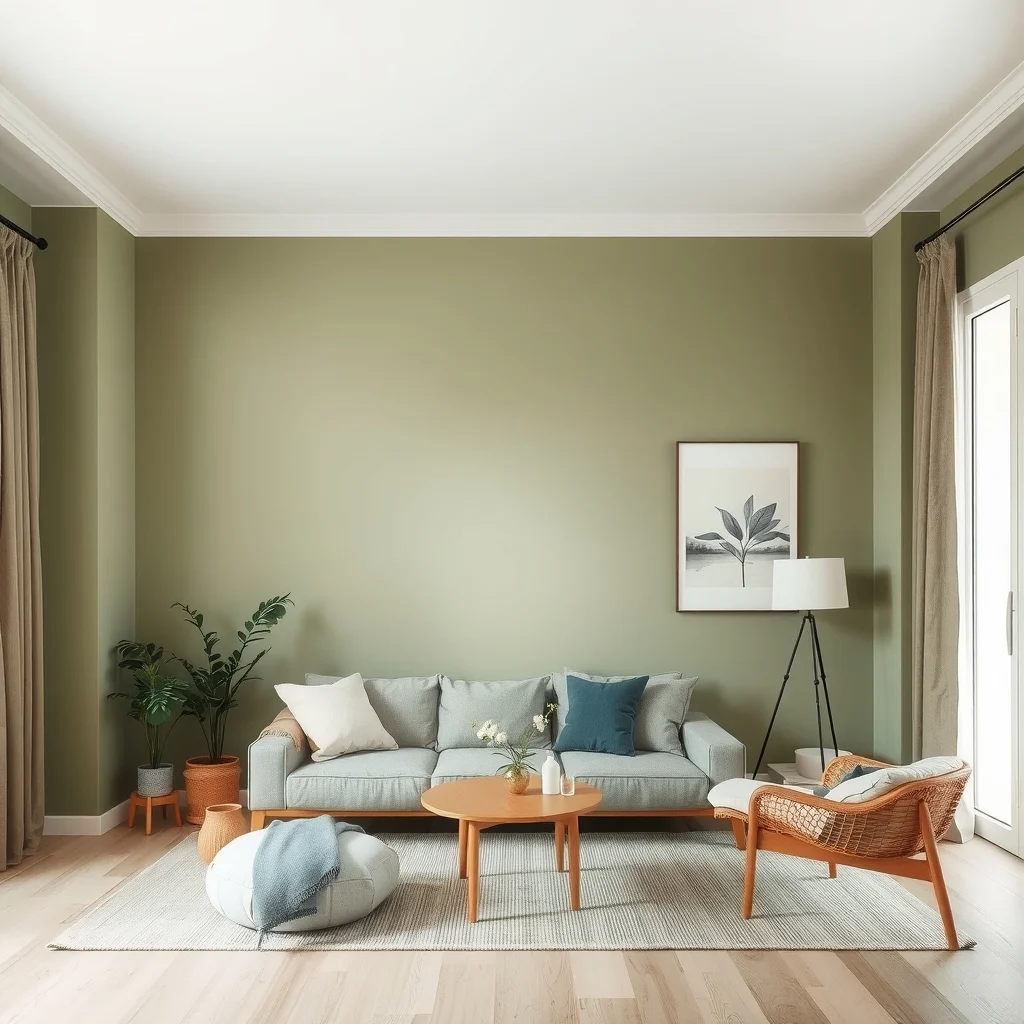
Begin with the wall color, because it sets the overall mood. Shades such as Sherwin‑Williams “Sea Salt,” Benjamin Moore “Sage Tint,” or a pale moss from Behr provide the calming qualities of green without the intensity of brighter tones. These colors reflect natural light softly, making rooms feel larger while anchoring the palette.
What’s Your Apartment Decor Style?
Answer these quick questions to discover your perfect decor vibe.
When selecting paint, apply a large swatch on an adjacent wall and view it morning, noon, and evening. If the hue leans too cool or too warm, adjust with a small amount of gray or beige in the mix. Pair the green walls with a light, neutral ceiling and trim—off‑white or warm ivory—to preserve an airy feel. A matte or low‑sheen finish reduces glare, which helps maintain the soothing atmosphere.
2. Pair Muted Green with Neutral Textiles
© 2026 AI Illustrator — Inspiration Only
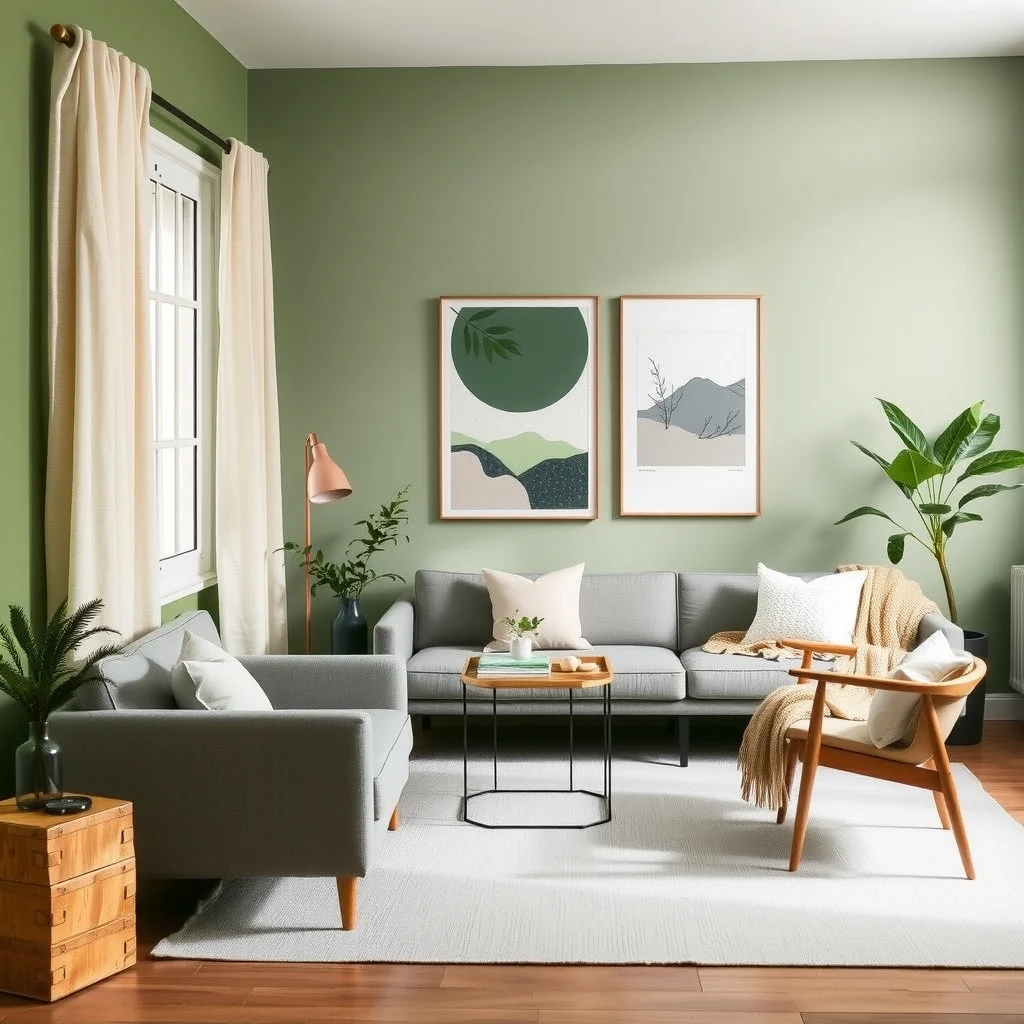
After the walls are set, introduce fabrics that support the green without competing. Soft linens, brushed cottons, and lightweight wools in ivory, warm gray, or light taupe create a layered look that feels inviting. A sofa upholstered in a warm gray provides a neutral platform for a muted‑green throw pillow or a hand‑woven blanket, allowing the color to act as an accent.
Natural‑fiber rugs—jute, sisal, or a flat‑weave wool in a neutral tone—add texture while defining seating areas. Avoid very dark textiles on large pieces, as they absorb light and can shrink the visual space. Instead, keep larger items in mid‑tone shades and reserve deeper hues for smaller accessories.
3. Incorporate Natural Materials for Texture
© 2026 AI Illustrator — Inspiration Only
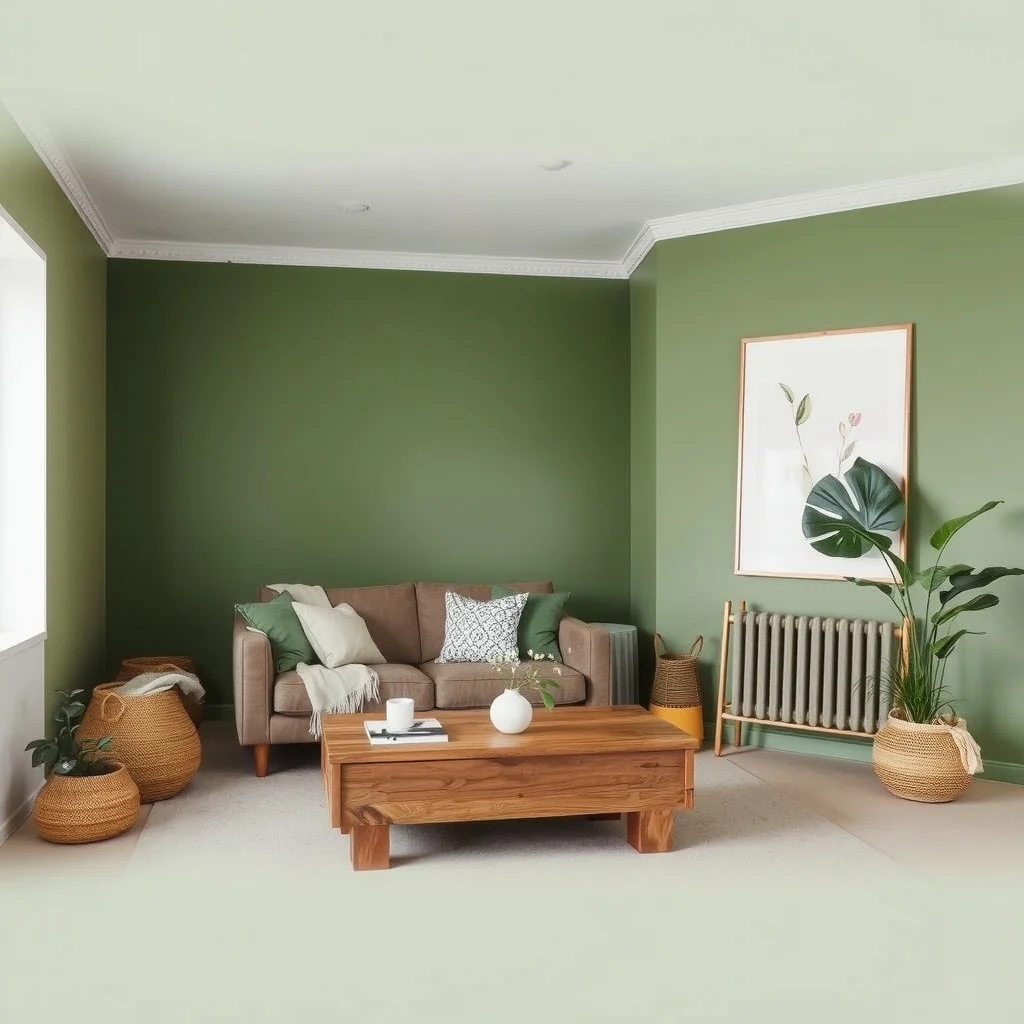
Texture enriches a calm interior without adding visual noise. Reclaimed oak coffee tables, walnut sideboards, or a brushed‑nickel metal frame bring organic grain patterns that contrast nicely with soft green walls. A simple ceramic pot in matte white or terracotta, paired with a low‑maintenance indoor plant such as a snake plant, reinforces the natural theme and improves air quality.
For wall décor, consider a linen‑wrapped canvas or a woven wall hanging in off‑white and beige. These pieces add depth without busy patterns. Choose wood finishes that are matte or satin rather than glossy, as high shine can reflect too much light and disturb the tranquil vibe.
4. Use Light to Highlight the Green Tones
© 2026 AI Illustrator — Inspiration Only
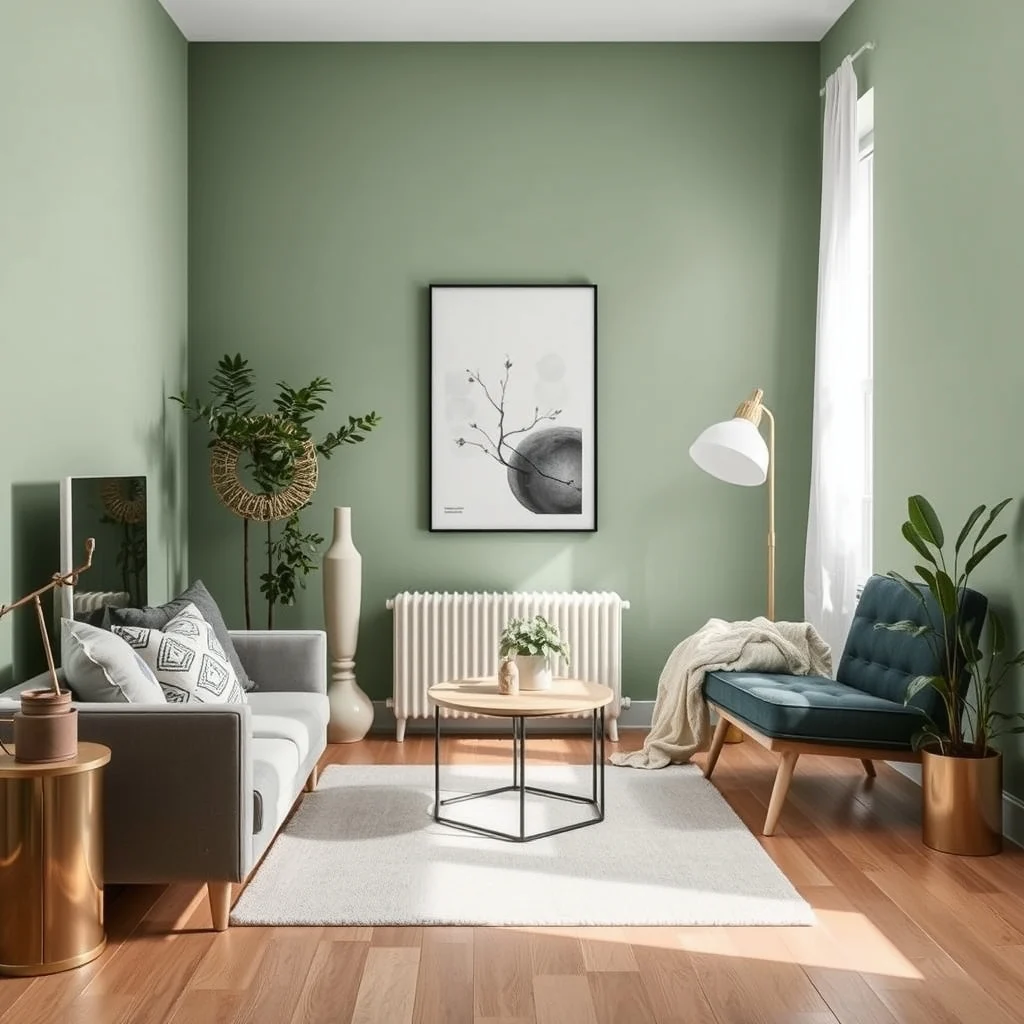
Lighting determines how muted green is perceived. Maximize daylight with sheer linen curtains that filter sunlight while preserving privacy. In the evening, combine a low‑profile recessed ceiling light with a floor lamp that has a soft fabric shade. Warm‑white LED bulbs (2700‑3000 K) enhance the green’s soothing qualities, while cool‑white bulbs can make the shade feel sterile.
Place a table lamp with a linen shade on a sideboard near a reading chair; the localized pool of light adds function without overwhelming the room’s softness. Dimmer switches allow you to adjust the intensity throughout the day, keeping the ambiance gentle from sunrise to nightfall.
5. Create Visual Balance with Furniture Placement
© 2026 AI Illustrator — Inspiration Only
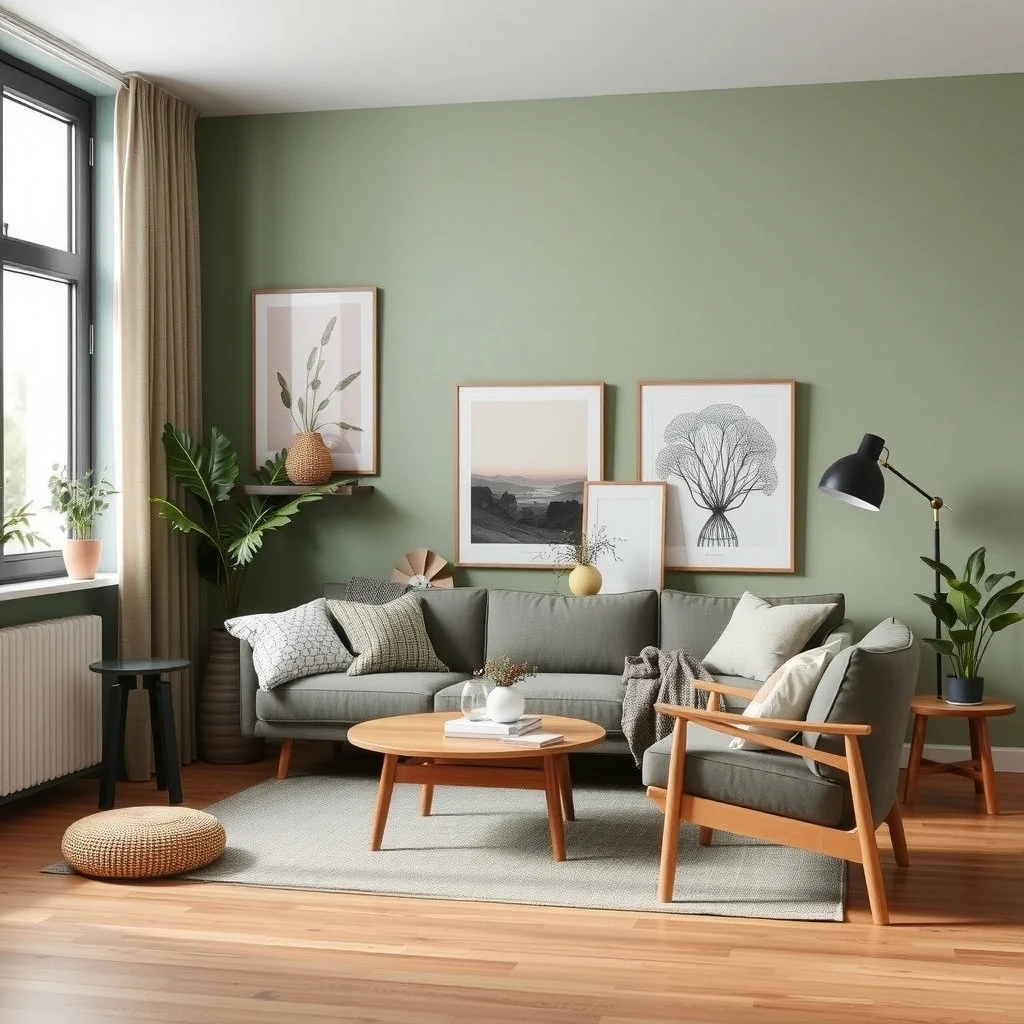
Arrange furniture to reinforce calm rather than create tension. Position larger pieces—sofa, media console, or bookshelf—against the muted‑green wall so the color serves as a backdrop. Neutral upholstery on these items keeps the eye from wandering.
If the floor plan allows, float a small accent chair a few feet away from the main seating and dress it with a muted‑green cushion. This subtle repetition of color creates harmony without crowding the room. Keep traffic pathways clear and avoid pushing furniture flush against walls, which can compress the space. In open‑plan layouts, a low, open‑shelf unit in natural wood can delineate zones without adding solid visual barriers.
6. Add Subtle Accents for Depth
© 2026 AI Illustrator — Inspiration Only
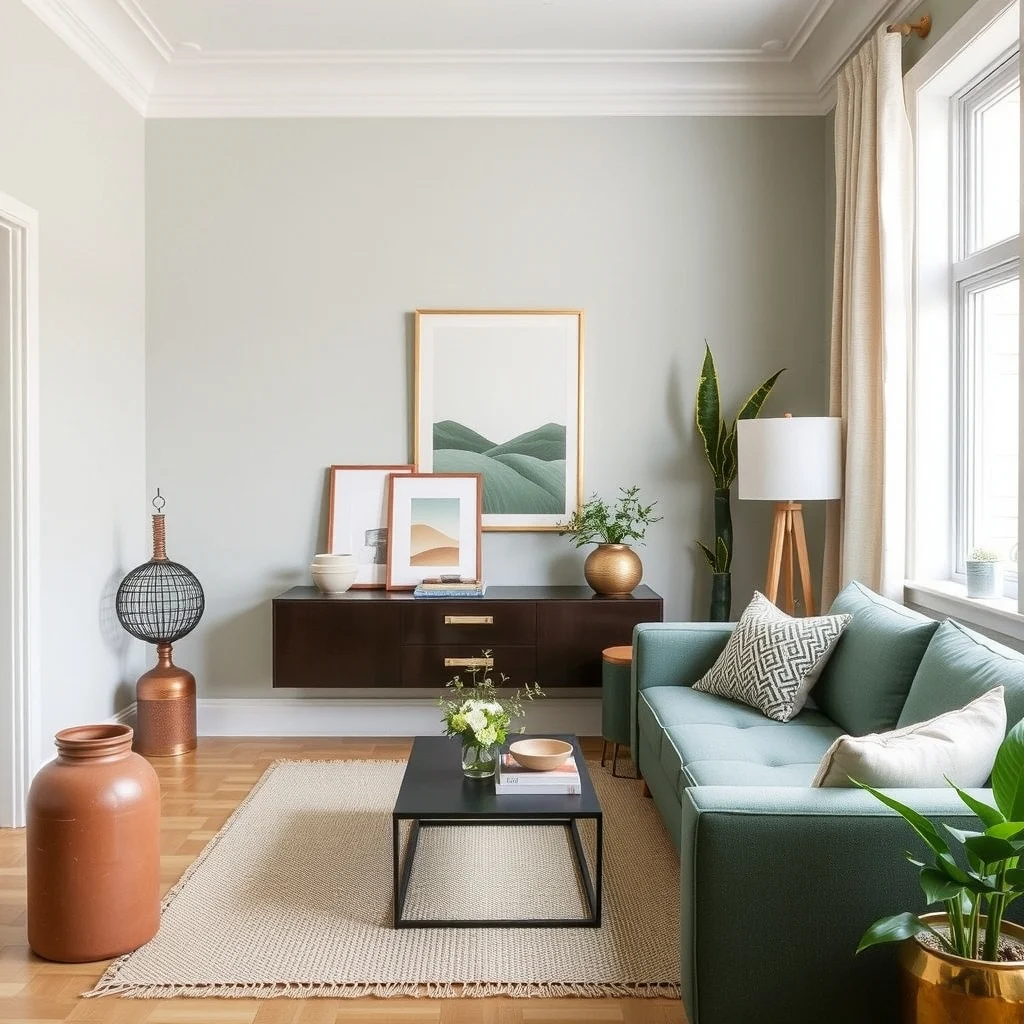
Accent pieces provide personality while preserving serenity. Choose a terracotta vase, a brushed‑brass table lamp, or hand‑crafted ceramic bowls in muted earth tones. Limit these items to a few well‑placed selections to avoid visual clutter.
Woven storage baskets in natural fibers can hold magazines or blankets, adding both function and a tactile layer that softens hard surfaces. When selecting artwork, opt for pieces that feature muted greens alongside soft neutrals or abstract forms—such as a charcoal line drawing on a cream background. Restraint ensures the space remains uncluttered and restful.
7. Maintain the Calm with Thoughtful Organization
© 2026 AI Illustrator — Inspiration Only
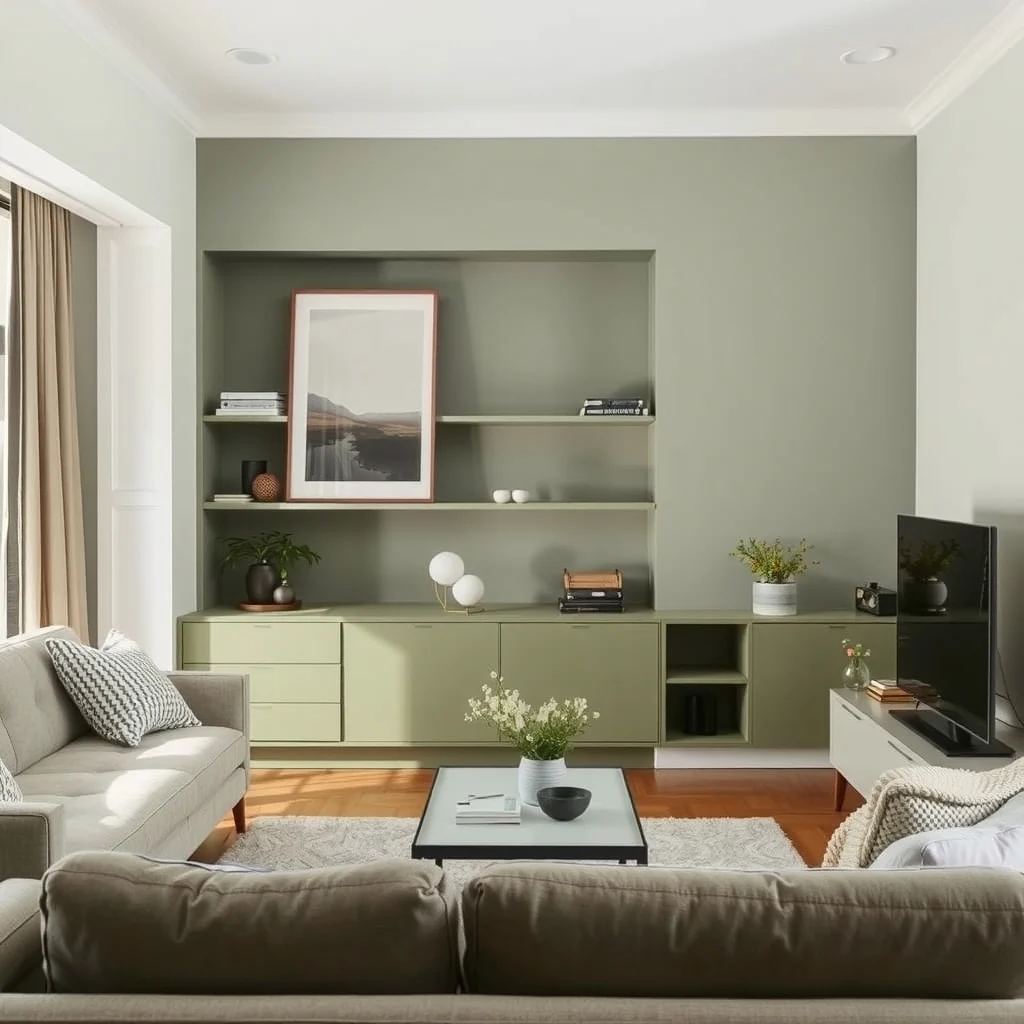
Order is essential for a calming atmosphere. Built‑in storage, like a shallow credenza with sliding doors, hides everyday items while preserving clean lines. Open shelving can display a curated selection of books and plants, but limit the number of objects to prevent visual noise.
Use decorative boxes in muted green or neutral tones to corral smaller items; they blend with the color scheme while adding organization. Periodically reassess the room’s contents—removing pieces that no longer serve a purpose keeps the space from feeling congested. For cleaning, a soft microfiber cloth and a mild, pH‑balanced cleaner will preserve the paint’s finish without streaks.
FAQ
© 2026 AI Illustrator — Inspiration Only
Can I use muted green in a small studio?
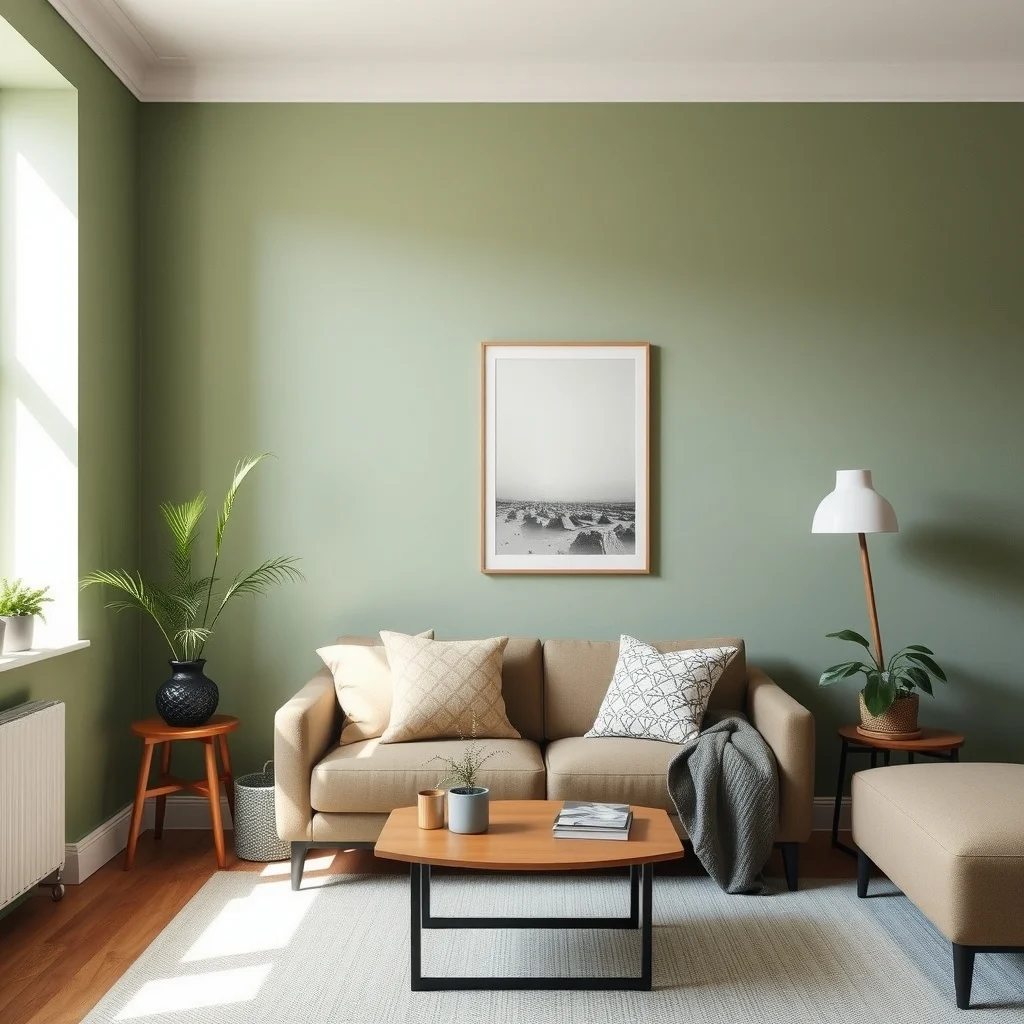
Yes, muted green works well in small studios because its low saturation keeps the space feeling open. Use the color on a single accent wall rather than all walls, and pair it with plenty of light‑colored furnishings to avoid a heavy appearance.
What paint finish works best for a muted green wall?
A matte or low‑sheen finish is ideal; it reduces glare and maintains the soft character of the hue. Avoid high‑gloss finishes, which can create unwanted reflections that distract from the calming effect.
How do I prevent the green from feeling too cold?
Introduce warm textures such as natural wood, woven baskets, and soft linens in warm neutrals. Warm lighting and a few earth‑tone accessories also balance the cooler undertones of green.
Is it okay to mix different shades of green?
Mixing shades can add depth, but keep the palette limited to two or three tones that share a similar muted quality. Too many variations can become visually chaotic and undermine the serene goal.
What flooring works best with muted green walls?
Light‑to‑medium wood flooring or natural fiber rugs complement muted green without competing for attention. These options reflect light and reinforce the organic feel of the color scheme.
Final Thoughts
© 2026 AI Illustrator — Inspiration Only
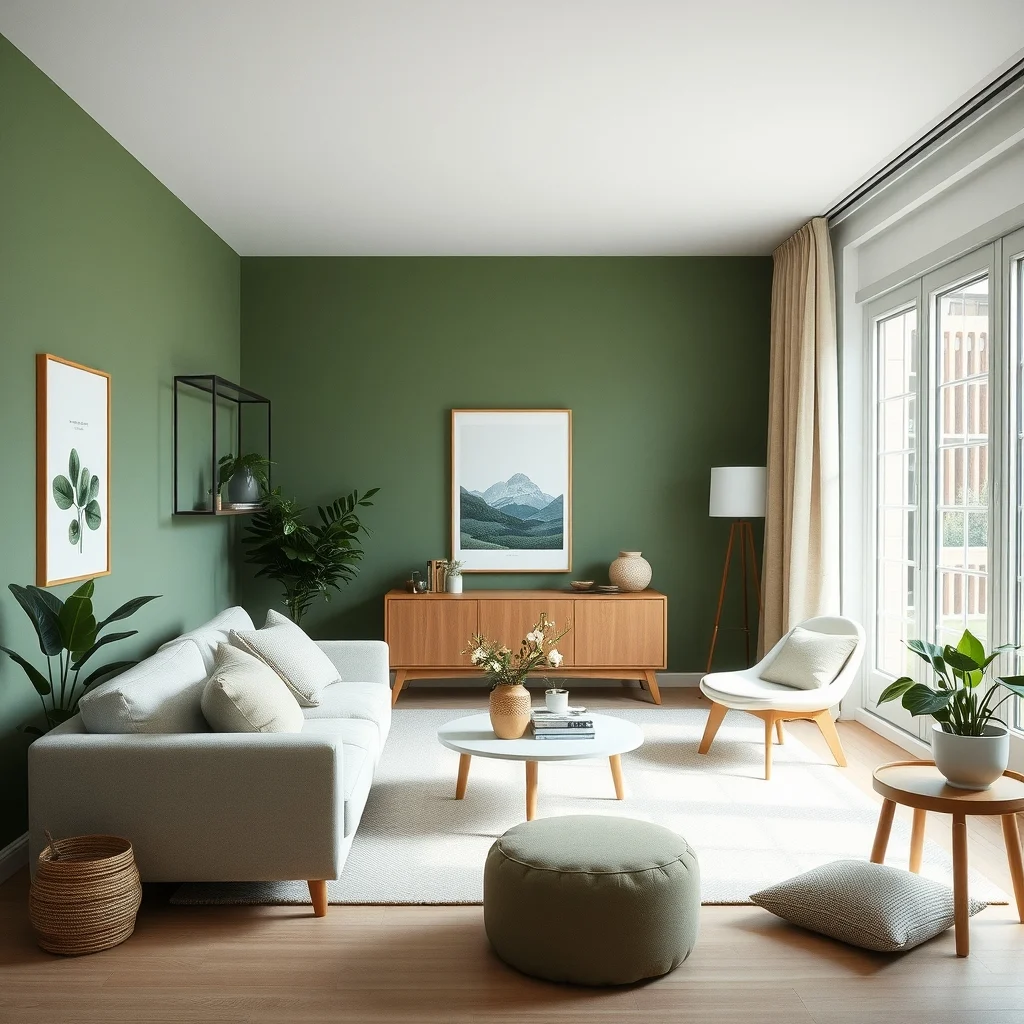
Muted green offers a quiet, nature‑inspired backdrop that can transform an apartment into a place of relaxation. By selecting the right shade, pairing it with neutral textiles, adding natural textures, and paying attention to light and organization, you create a cohesive environment that feels both spacious and comforting. Balance is the key; each element should support the calm without overwhelming the space. With thoughtful choices, the gentle hue becomes a lasting foundation for a serene home.