
Got a tiny space that feels more “crowded elevator” than “cozy oasis”? Same. The good news: you don’t need a gut renovation to stretch your square footage. With a few smart moves—think sightline magic, multi-tasking furniture, and light that behaves like a personal hype squad—you can make any room look and live larger. Let’s make those walls feel like they moved back a few feet.
1. Edit Like a Stylist, Not a Minimalist
© 2026 AI Illustrator — Inspiration Only
Clutter shrinks a room faster than a black turtleneck in a hot dryer. But this isn’t about living with one fork and a prayer—it’s about curating. Keep what you love and display it with intention. Hide the rest.
What’s Your Apartment Decor Style?
Answer these quick questions to discover your perfect decor vibe.
How To Curate Smart
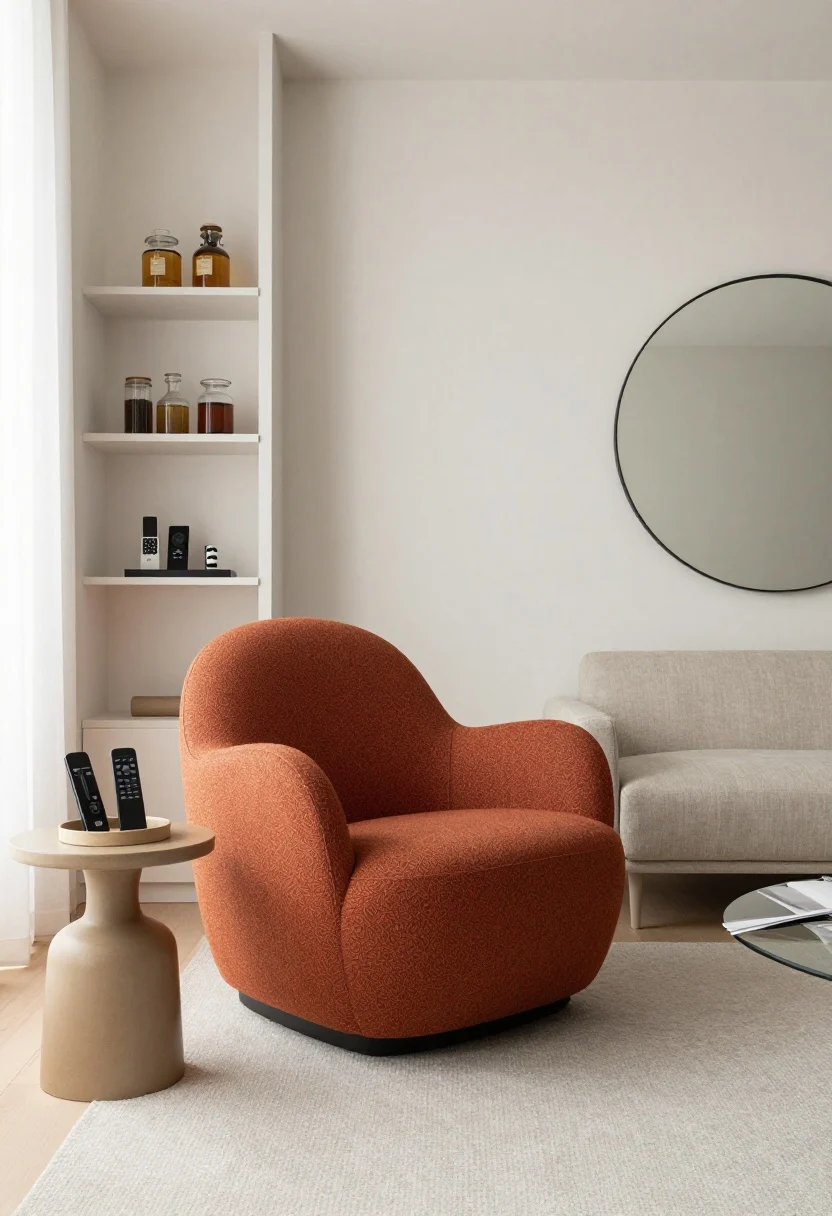
- One hero, three supporting acts: Pick a single standout piece (a sculptural chair, bold art) and keep everything else visually lighter so your eye has a clear focal point.
- Match shapes, vary sizes: Cohesive shapes (round side table + round mirror) feel calmer, but mix big and small for rhythm.
- Kill the visual noise: Decant pantry items, corral remotes in a tray, and tuck phone chargers into a cable box. Tiny wins, huge payoff.
FYI: negative space (those little breathing zones on surfaces and around furniture) is not empty; it’s your secret weapon. It tells the eye, “Keep moving—there’s more room here.”
2. Master the Light Layer Game
© 2026 AI Illustrator — Inspiration Only
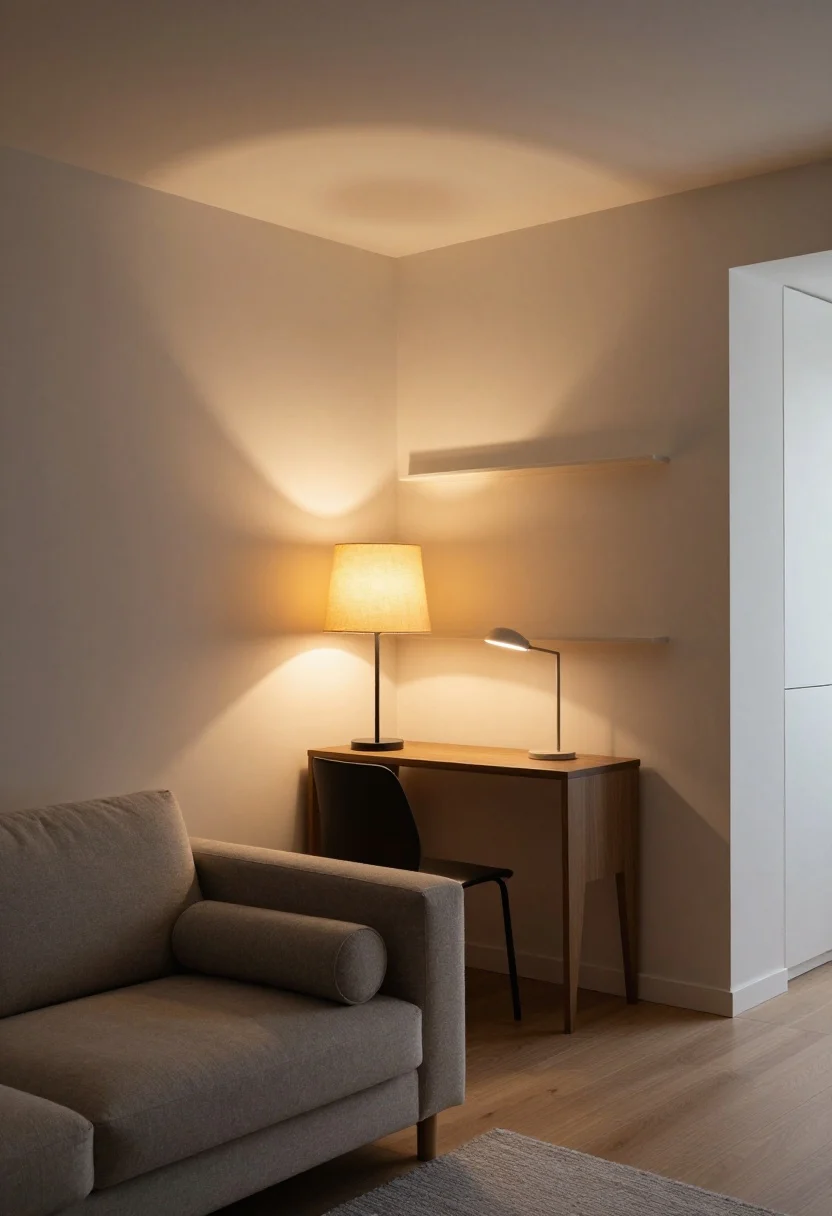
Overhead lights alone = doctor’s office vibes. Layered lighting = instant spaciousness. When light bounces around a room, corners recede and everything feels airier.
Build Three Light Layers
- Ambient: Soft, room-filling light. Use dimmable ceiling fixtures or plug-in pendants with warm bulbs (2700–3000K).
- Task: Floor lamps tucked behind a sofa arm, slim desk lamps, under-cabinet LEDs in the kitchen.
- Accent: Picture lights, LED strips on shelves, or a tiny spotlight on a plant to create depth.
Pro tip: Swap lampshades for sheer or linen and aim lighting at walls and ceilings, not just down. Bouncing light makes walls push out visually.
3. Lift Your Gaze: Vertical Tricks That Stretch Space
© 2026 AI Illustrator — Inspiration Only
When your square footage is limited, go vertical like a houseplant chasing sun. Drawing the eye up literally makes a room feel taller—no stilts required.
Height Helpers
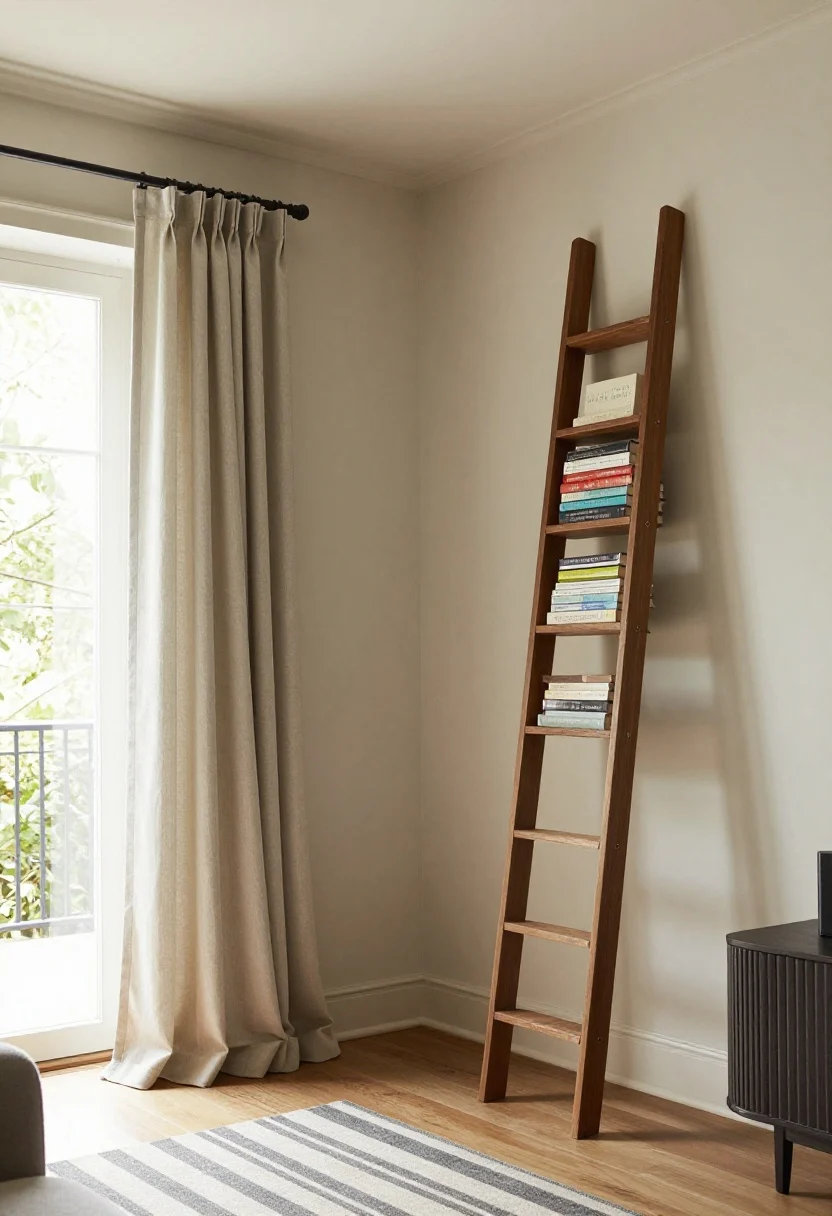
- Hang curtains high and wide: Mount rods 6–10 inches above the window and extend 8–12 inches past each side. Use floor-kissing panels so lines stay long.
- Use vertical stripes or fluted textures: A striped rug, beadboard, or a fluted credenza elongates everything.
- Stack storage upward: Tall bookcases, ladder shelves, or a wall grid with hooks pulls attention north and frees floor space.
Paint ceiling trim and the top 6–12 inches of the wall the same color as the ceiling to blur boundaries. It’s a subtle move that lifts the whole space.
4. Choose Furniture That Works Overtime (And Looks Light)
© 2026 AI Illustrator — Inspiration Only
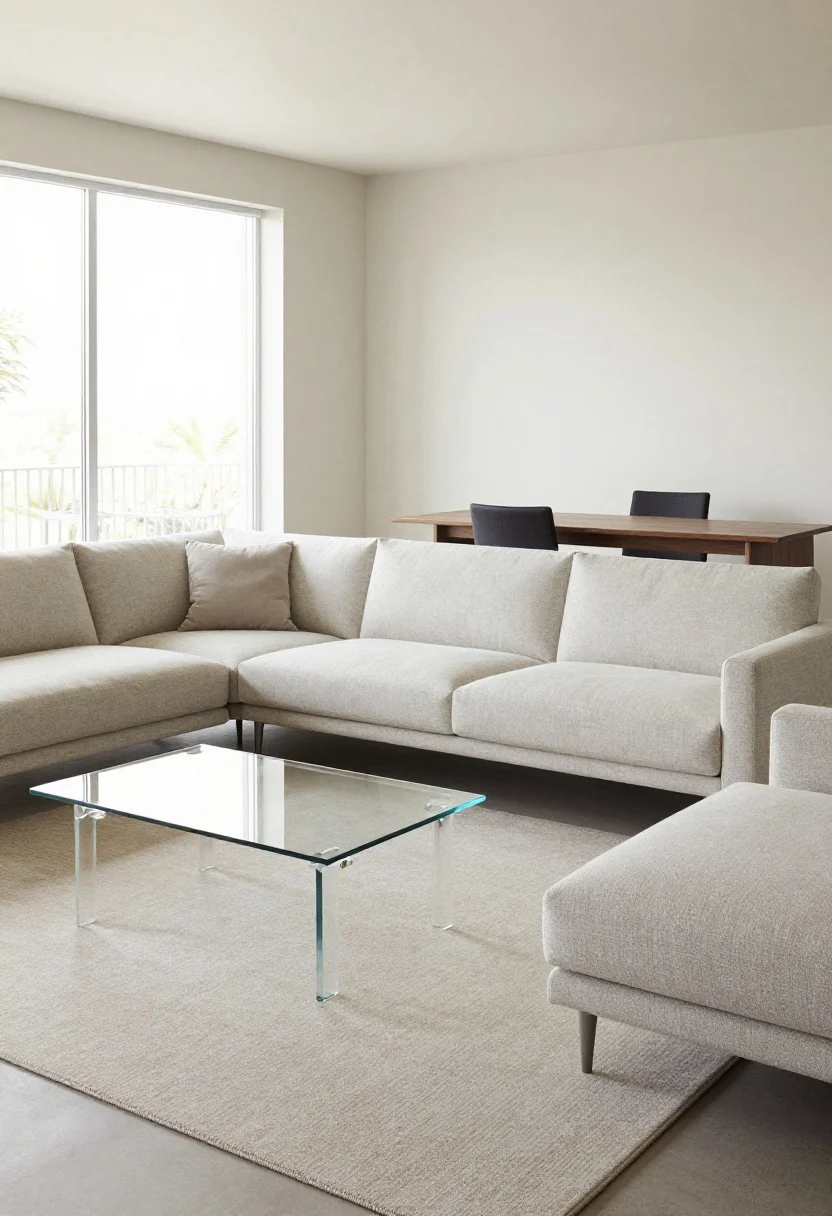
Clunky furniture is a space hog. Choose pieces with slim profiles, legs that show the floor, and hidden storage. Your room will breathe—and so will you.
Smart Buys That Expand Rooms
- Leggy silhouettes: Sofas and chairs on exposed legs feel lighter than skirted ones. Same with media consoles and nightstands.
- Lift-off tables: A glass or acrylic coffee table visually disappears. Nesting tables swap in for bulky side tables.
- Multipurpose magic: Storage ottoman, extendable dining table, a desk that doubles as a console, or a Murphy/sofa-bed hybrid.
- Right-size rugs: Go bigger than you think. A too-small rug chops the room; a large rug that sits under front sofa legs unifies zones.
IMO: If it doesn’t earn its keep—storage, flexibility, or wow factor—it’s not invited.
5. Color, Contrast, And The Mirror Illusion
© 2026 AI Illustrator — Inspiration Only
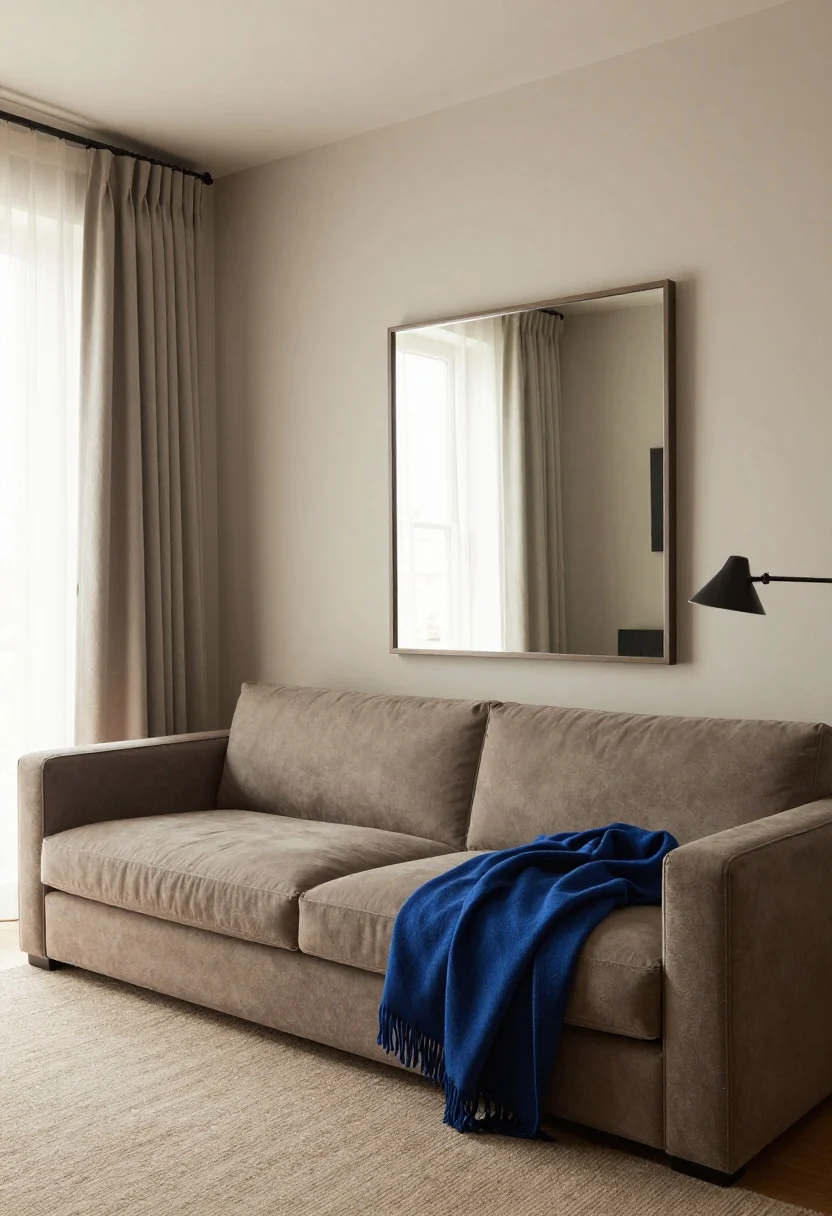
Color can compress or expand. Light, low-contrast palettes open rooms, but you don’t have to live in a beige cloud. Balance is key. And yes, mirrors are the original space influencer.
Palette That Pushes Walls Back
- Low-contrast layering: Stick to shades of one color family—think warm greige walls, taupe sofa, sand rug—so edges blur and everything flows.
- High-contrast accents: Use a single bold moment (ink-blue throw, black metal lamp) to ground the space without crowding it.
- Tone-match big pieces: Choose a sofa and curtains within two shades of the wall color for a seamless look.
Mirror Moves That Actually Work
- Across from a window: Place a large mirror to double the daylight. Frame choice matters—thin metal or frameless keeps it light.
- Panel play: Use mirrored closet doors or slim mirror tiles as a backsplash in a galley kitchen to stretch sightlines.
- Lean, don’t clutter: One tall mirror beats a gallery of small ones that just adds fizz.
Bonus: Choose eggshell or satin wall finish. It reflects just enough light to glow without glare.
6. Zone Like A Designer (Even In A Studio)
© 2026 AI Illustrator — Inspiration Only
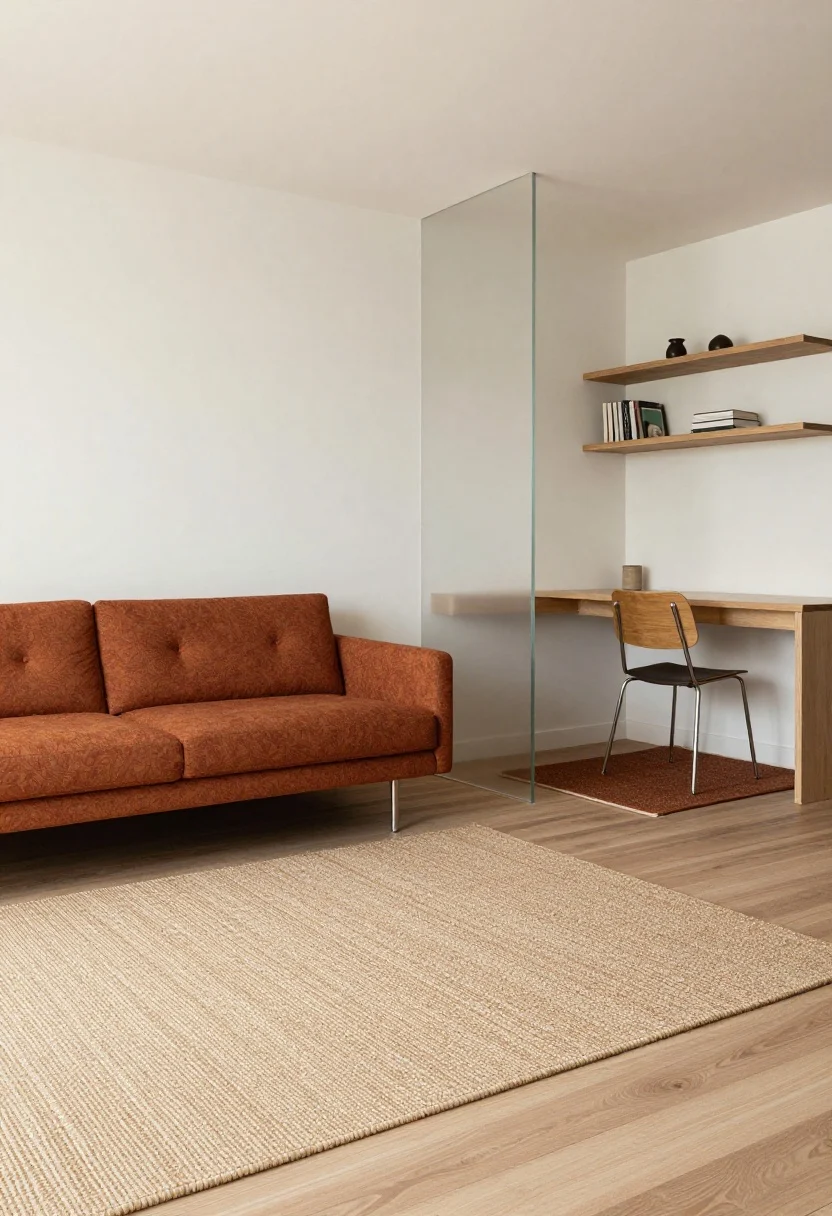
One-room living doesn’t mean one vibe. Zoning tells your brain where everything happens, which reduces visual chaos and makes rooms feel intentional—and bigger.
Create Distinct, Airy Zones
- Float furniture: Pull the sofa 6–12 inches from the wall and anchor with a rug. It makes the room feel deeper. Promise.
- Use see-through dividers: A slatted screen, open shelving, or glass partition separates zones without blocking light.
- Layer rugs smartly: Flatweave in the “living room,” low-pile runner for the “entry,” mat under the “desk.” Instant floor plan.
- Color map: Keep a cohesive base, then assign a micro-accent to each zone (sage in the sleep nook, rust at the table) so the eye navigates easily.
In tiny bedrooms, swap bulky nightstands for wall-mounted shelves or sconces. Clear floor = bigger feel.
7. Style Surfaces With Breathing Room
© 2026 AI Illustrator — Inspiration Only
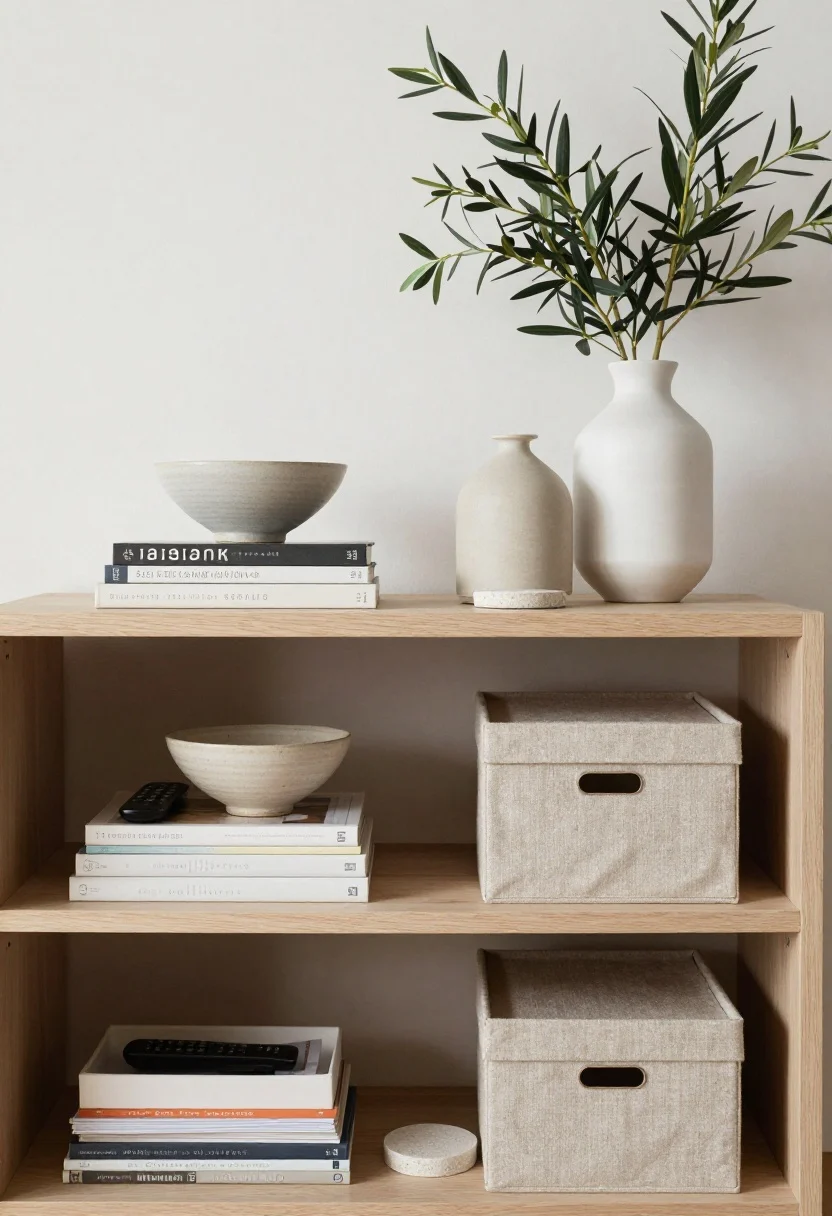
Open shelves and coffee tables can either look editorial or messy fast. The difference? Negative space, repetition, and height variation. Surface styling is the final 10% that reads like 60%.
Foolproof Styling Formula
- Rule of thirds: On a shelf, style two-thirds and leave one-third empty. On a coffee table, do a low stack (books), a medium object (bowl), and a taller piece (vase).
- Repeats calm the eye: Three similar textures—linen box, stone coaster, ceramic vase—look intentional, not busy.
- Contain the small stuff: Trays for remotes, lidded baskets for throws, magazine files for mail. Visual order = bigger vibe.
And yes, plants help—especially tall, narrow ones (olive tree, dracaena). They draw the eye up without hogging square footage.
Room-By-Room Micro Swaps
- Living room: Replace bulky side tables with wall-mounted swing-arm sconces and a narrow console behind the sofa.
- Kitchen: Magnetic knife strip, under-shelf baskets, and a single oversized art print instead of three small ones.
- Bedroom: Headboard with built-in shelves, under-bed drawers, and blackout linen curtains hung extra high.
- Bathroom: Over-toilet cabinet with glass doors, large-format mirror, and a slim ladder rack for towels.
Quick Buy List (Budget to Bougie)
- Lighting: Plug-in sconces, LED strip lights, slim arc floor lamp.
- Storage: Lift-top coffee table, ottoman with hidden compartment, nesting side tables.
- Style: Oversized mirror, linen-look curtains, textured pillows in a tight palette.
Final Takeaway: Space isn’t just measured in feet—it’s how your eye and body move through a room. When you edit fiercely, layer light, go vertical, pick agile furniture, keep color calm, zone with intention, and style with air, your small apartment stops feeling cramped and starts feeling curated. You’ve got this—now go push those walls back without lifting a hammer.