
You don’t need a shopping spree to make your place look like you hired an interior designer. You just need a little strategy, a tiny bit of muscle, and a willingness to pull everything off the shelves and try again. Ready for a zero-dollar glow-up? Let’s raid your own apartment and make it look intentional, elevated, and totally “you.”
1. Shop Your Home And Re-Style Everything
© 2025 AI Illustrator — Inspiration Only
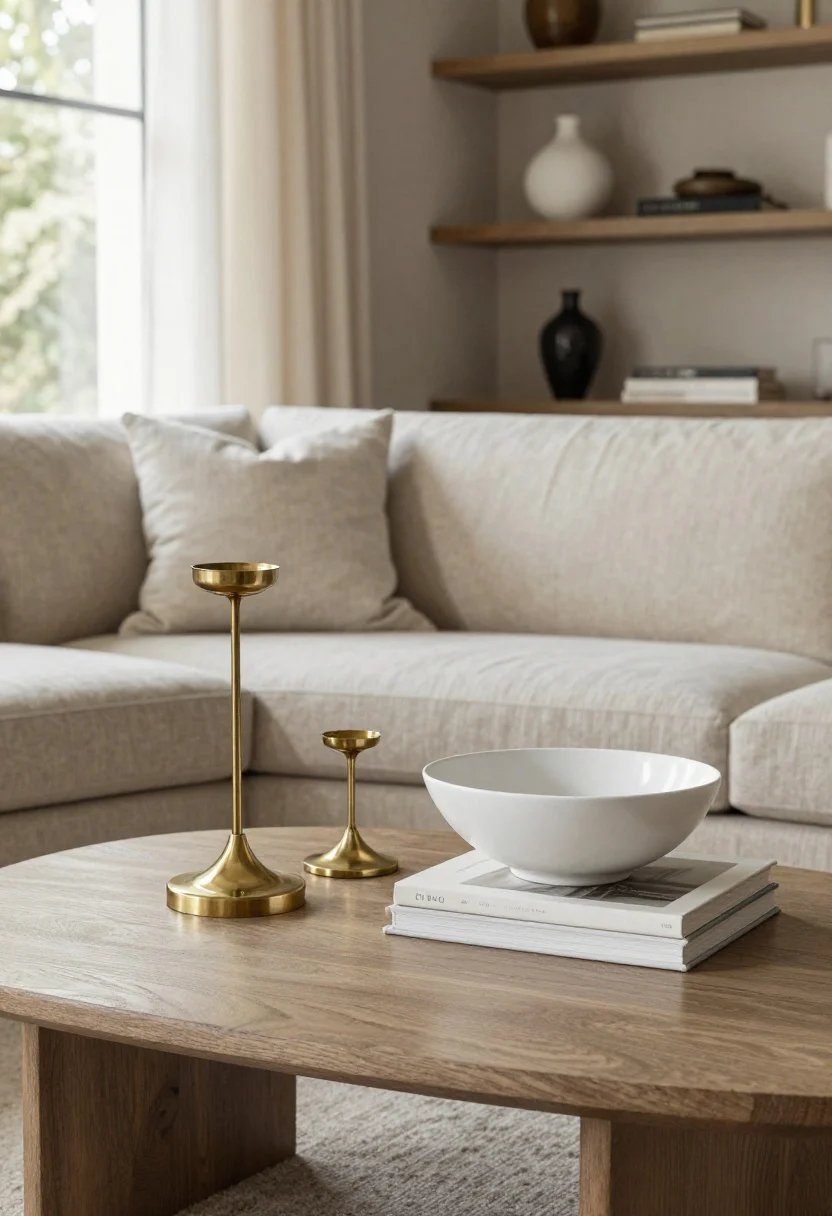
Before you move a single chair, “shop” your own space. Pull decor from different rooms, lay it out on the floor, and treat it like a mini store. You’ll see pieces in a fresh way when they’re out of their usual spots.
What’s Your Apartment Decor Style?
Answer these quick questions to discover your perfect decor vibe.
Then, restyle with purpose. Group items by color, height, or material. A brass candleholder from the bedroom, a ceramic bowl from the kitchen, and a hardcover book from the entry can suddenly become a chic coffee table moment.
- Pro tip: Build vignettes with the rule of threes—odd numbers look more natural.
- Mix textures: glass + wood + linen = chef’s kiss.
- Vary heights to avoid the “flat line” look on shelves and tables.
2. Declutter With Ruthless Intent (And Style What’s Left)
© 2025 AI Illustrator — Inspiration Only
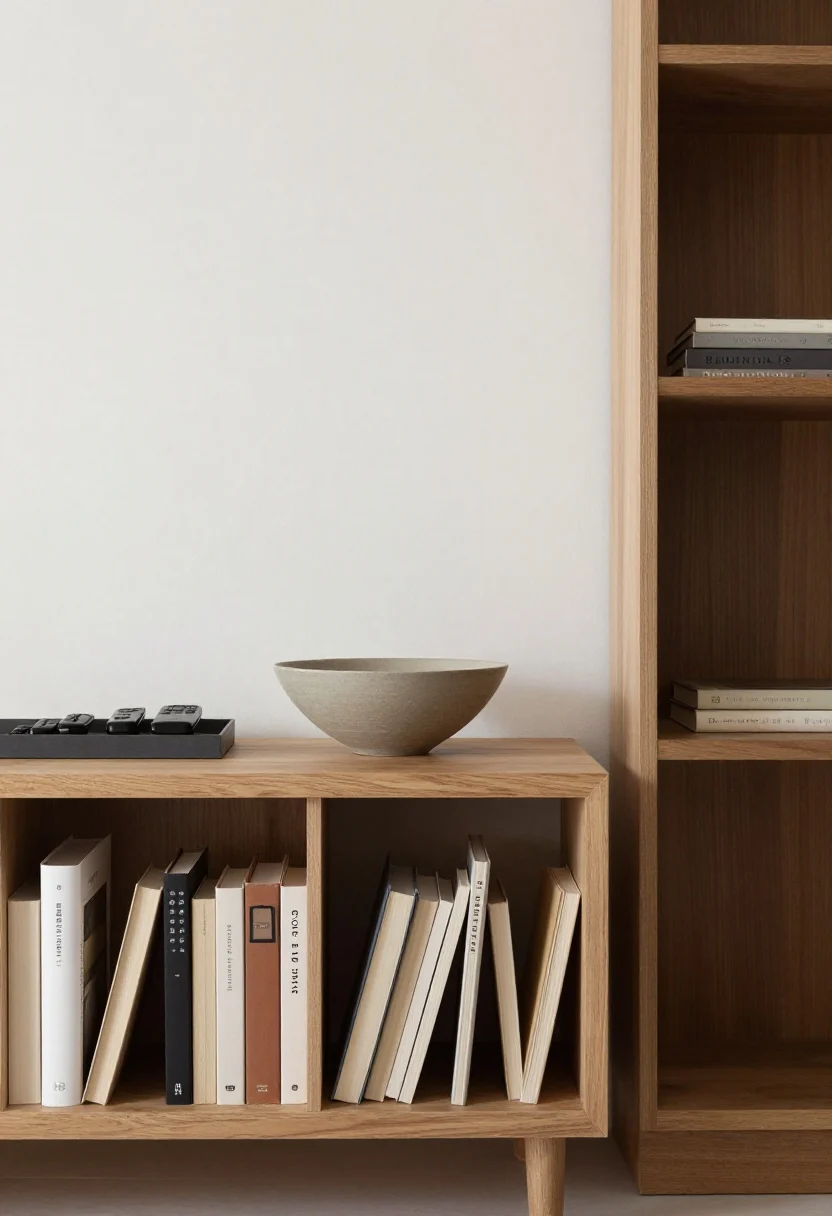
Zero-cost upgrades start with subtraction. Clear every surface, then only put back what earns its spot—aka it’s useful or beautiful. Everything else? Drawer, bin, closet, goodbye.
Clutter reads as visual noise. When you carve out clean space around a favorite object, it looks elevated—like you meant it. A single sculptural bowl on your dining table can do more than five tiny doodads.
- Five-minute reset: One catchall per room for random mail/keys/chargers.
- Corral remotes in a small box or tray (even a pretty lid works).
- Stand books upright, then stack 3-5 horizontally to break the line and style the shelf.
3. Reimagine Your Layout For Flow (Not Just Fit)
© 2025 AI Illustrator — Inspiration Only
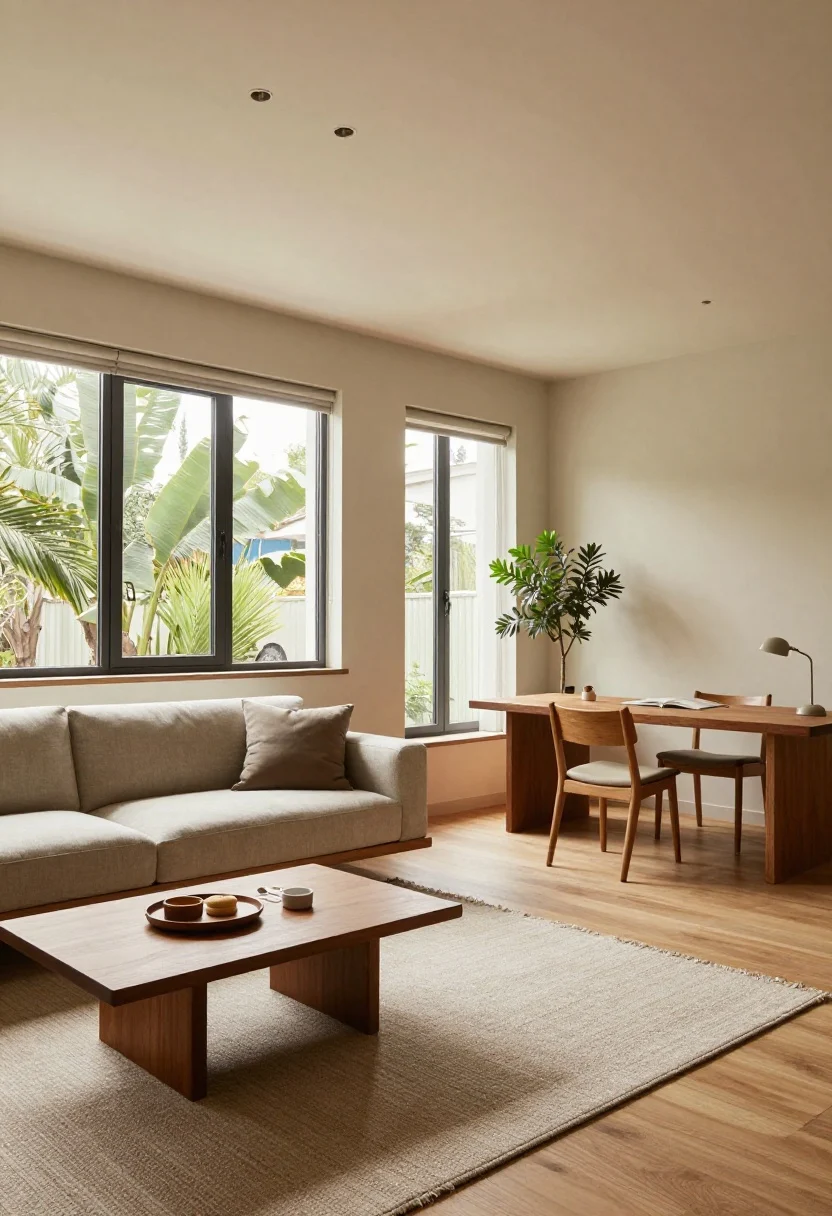
You’re not stuck with the builder’s plan. Try floating your sofa off the wall to create better conversation and airflow. Even a few inches can change how a room feels—more boutique hotel, less dorm.
Break big rooms into zones: lounge, work, dining. Use rugs, a chair pivoted at an angle, or even a plant to signal “this is a moment.”
- Anchor seating around a focal point: a window, art, or the coffee table.
- Make sure there’s a surface within arm’s reach of every seat.
- Leave a clear path—about 30-36 inches—for walking. Your shins will thank you.
4. Elevate With Symmetry (Or Break It On Purpose)
© 2025 AI Illustrator — Inspiration Only
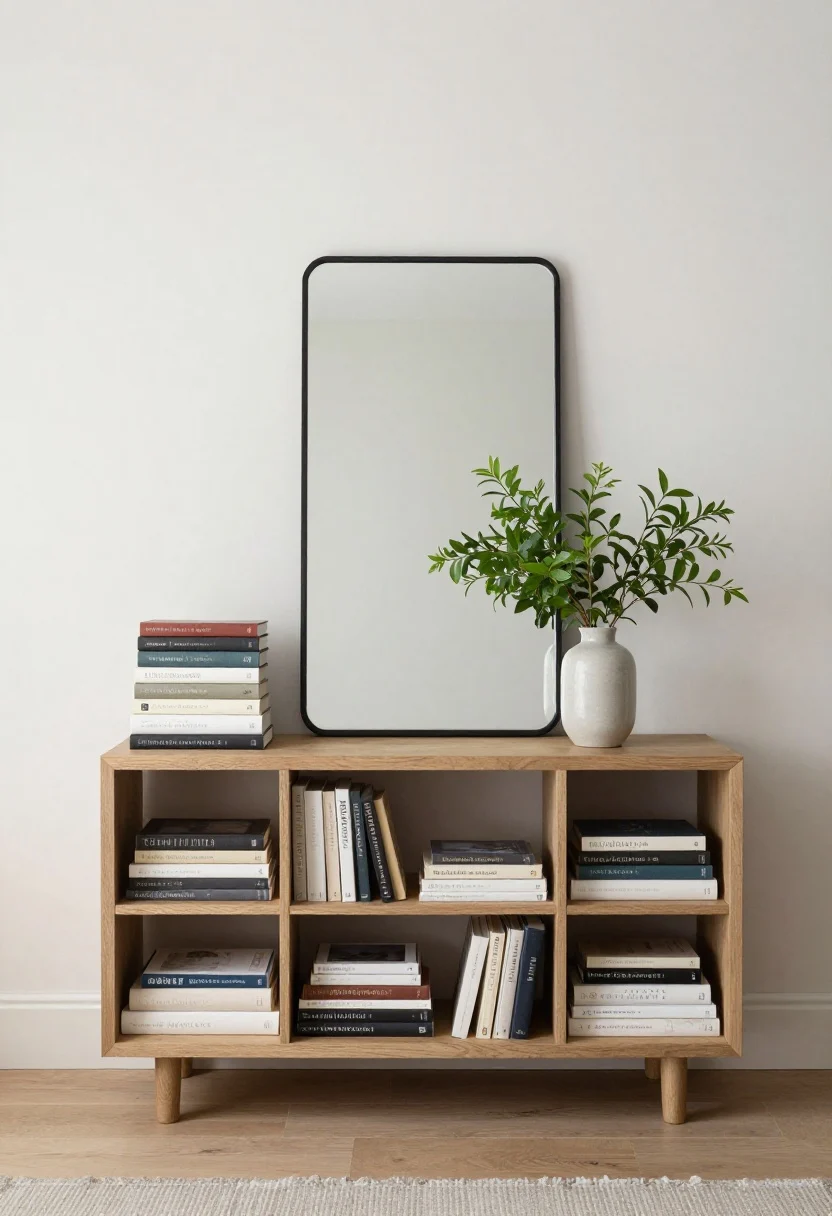
When in doubt, use symmetry to calm a space. Two matching lamps flanking a sofa, twin stacks of books on either side of a console, or balanced art hung evenly—it instantly looks polished.
But don’t get too perfect. Add one off-center element for energy: a bold object or a plant that tilts the vibe just enough. It’s the curated-not-sterile sweet spot, IMO.
- Entry trick: Mirror + tray + plant = balanced welcome zone.
- On shelves, mirror shapes side-to-side but swap materials for interest.
- Offset a centered art piece with a tall vase to avoid “hotel lobby” stiffness.
5. Steal Light Like A Pro
© 2025 AI Illustrator — Inspiration Only
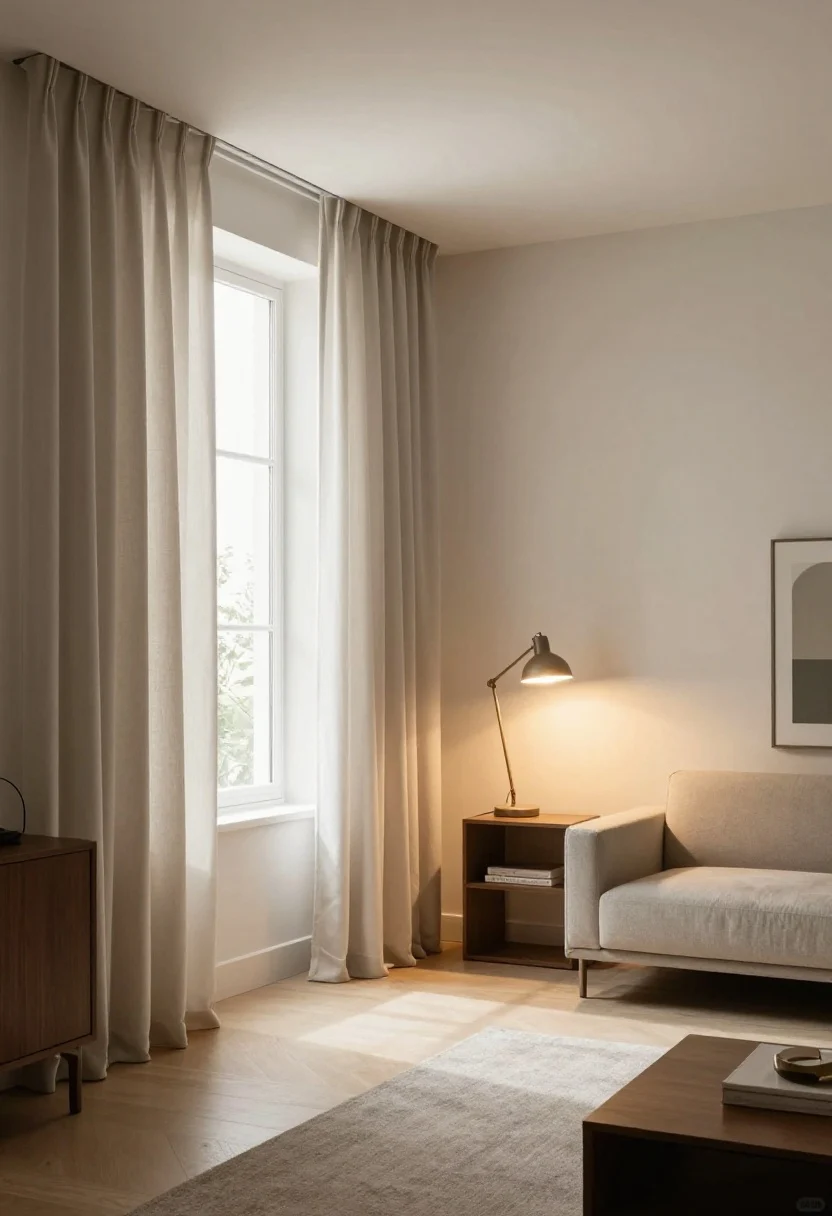
Light is free decor. Open your curtains fully (seriously, all the way). If they’re blocking the top of the window, “cheat” by hooking them higher so more light pours in. Daylight instantly makes everything feel bigger and cleaner.
At night, skip the overhead glare and layer light sources. You don’t need new lamps—just shuffle what you have. Bring a bedside lamp to the console or borrow a desk lamp for your living room.
- Reflect it: Move a mirror across from a window to bounce light deeper into the room.
- Use warm-toned bulbs you already own in common areas, cooler ones in task zones.
- Angle task lights toward walls to create a soft, ambient glow.
6. Edit Your Art Wall (And Hang It Right)
© 2025 AI Illustrator — Inspiration Only
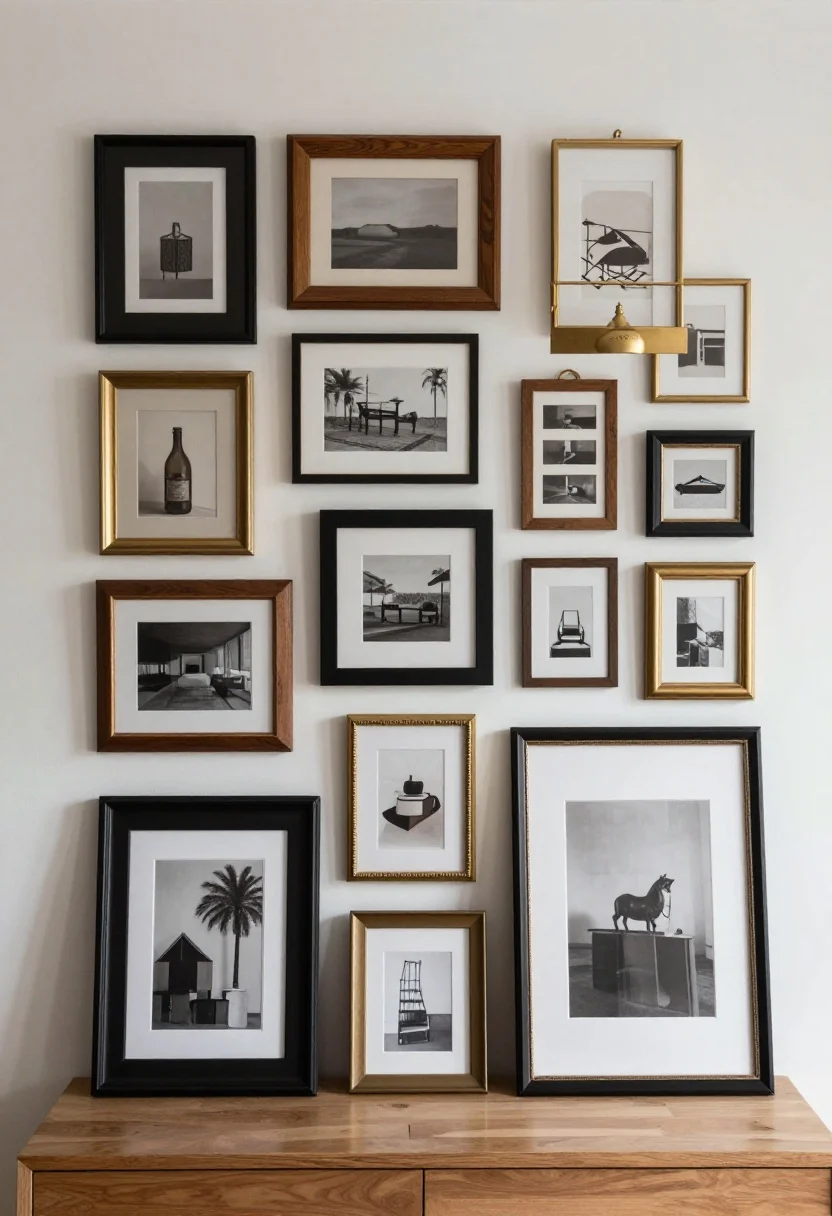
Art sitting too high? Classic mistake. Center artwork at about 57-60 inches from the floor (gallery standard). It connects the room to human scale and feels intentional.
If you’ve got a bunch of small frames, regroup them into a gallery grid or a salon-style cluster. Or go bold: lean a big frame on a console or floor for a low-effort, editorial vibe.
- Gallery hack: Lay frames on the floor first and snap a pic to test layouts.
- Keep 2-3 inches between frames for a clean, collected look.
- Reframe with what you own: swap prints between frames for fresh combos.
7. Style A Better Bed (Hotel Look, Zero Dollars)
© 2025 AI Illustrator — Inspiration Only
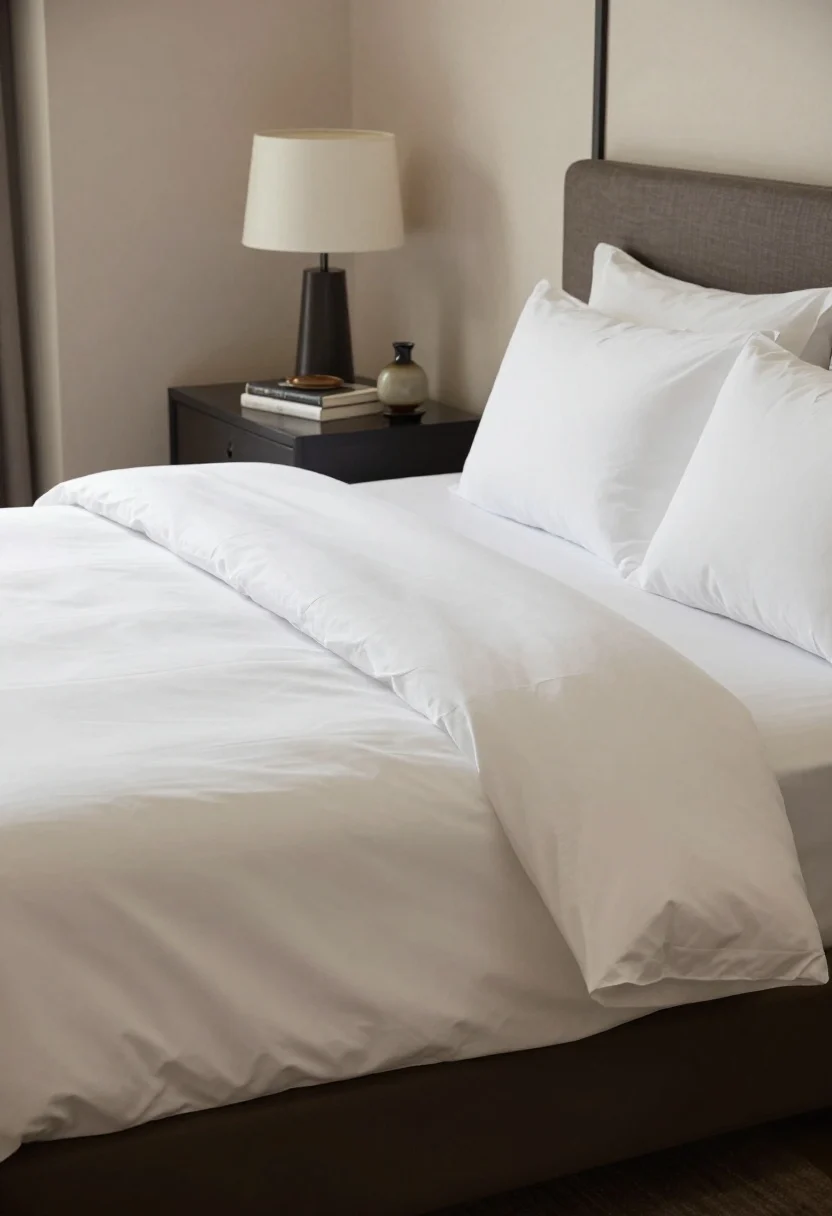
Your bed is your bedroom’s billboard. Smooth the duvet (yes, like a pancake), flap back the top third, and add one neat layer—maybe a throw from the living room footboard-style. If your pillows are sad, karate-chop the fluff back to life.
Matching lamps not in the budget? No problem. Balance the bedside tables with similar visual weight: one side gets a stack of books and a vase, the other a lamp and a dish. Symmetry-ish is still soothing.
- Fold trick: Expose a bit of sheet edge for that crisp boutique feel.
- Hide cords behind the nightstand—instant calm.
- Swap a bright throw for a neutral one (or vice versa) to reset the palette.
8. Curate Your Color Story
© 2025 AI Illustrator — Inspiration Only
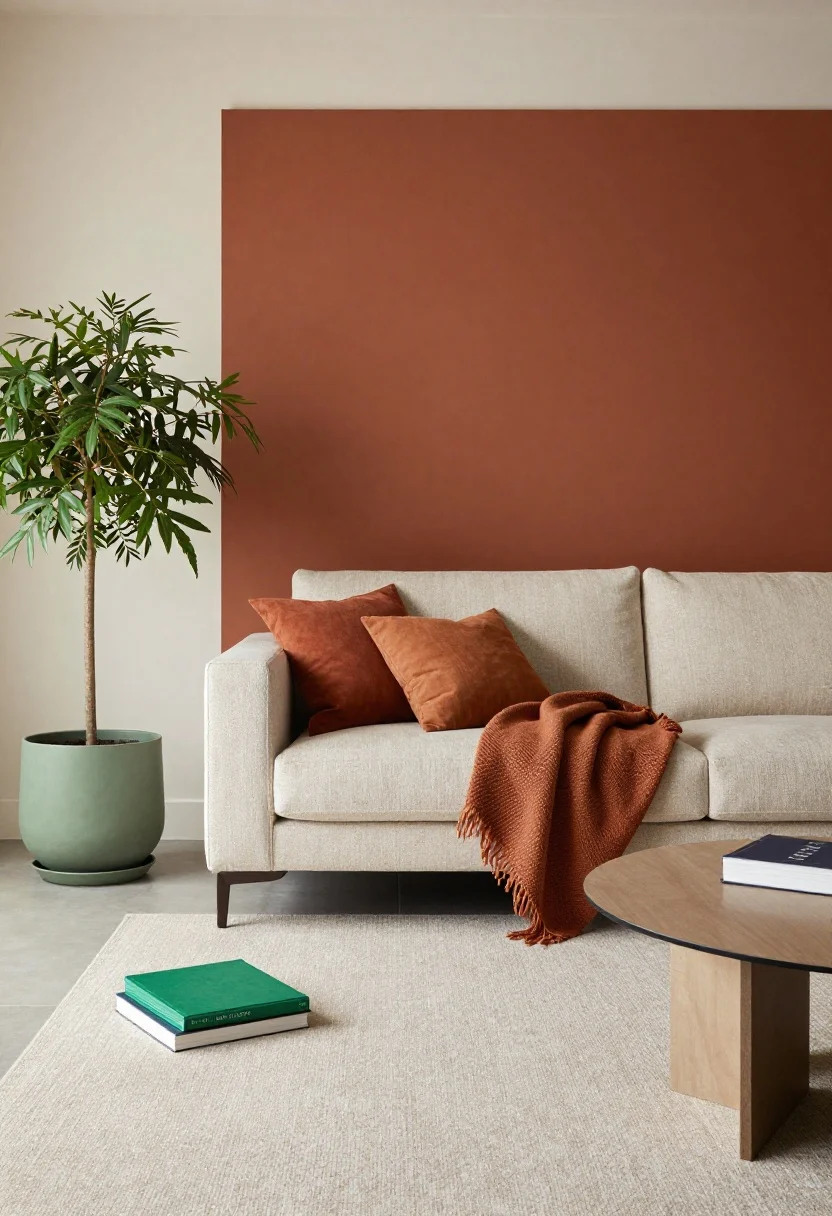
Pick a simple palette from what you already own: two main colors + one accent. Then edit surfaces to stay mostly within that range. It’s the fastest way to make random finds look curated.
Color repeats read as design decisions. If you’ve got a dusty green plant pot, echo it with a green book spine and a throw from the closet. Suddenly your room feels cohesive—no paint required.
- Neutral base + one warm tone (rust, camel) + one cool tone (navy, sage) = balanced.
- Group colorful items; scattered brights can feel messy.
- When in doubt, go tone-on-tone and let texture do the talking.
9. Make Textures Do The Heavy Lifting
© 2025 AI Illustrator — Inspiration Only
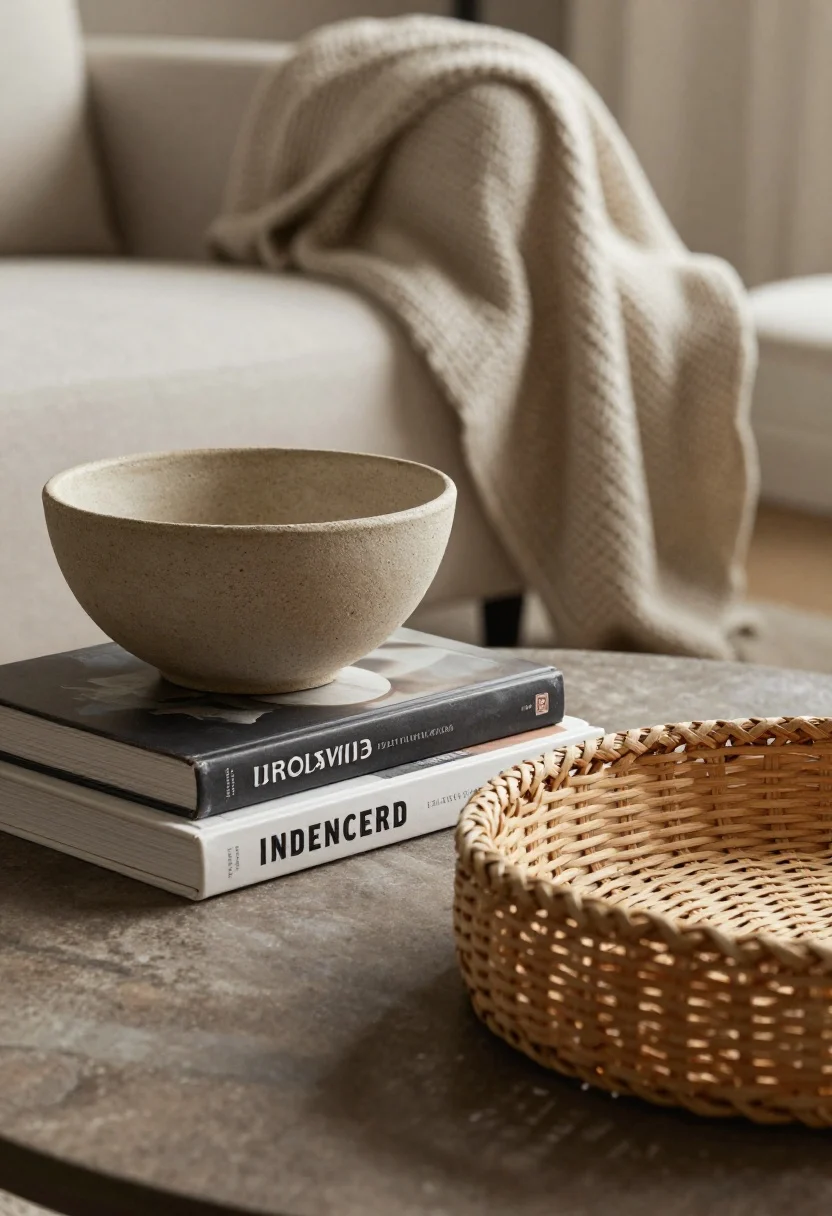
Texture is the quiet luxury of decor. Swap a shiny tray for a woven basket, layer a knit throw over a sleek chair, or stack a rough pottery bowl on glossy books. Your space will read as richer—no new buys needed.
Think contrast: soft next to hard, matte next to shiny, smooth next to nubby. It’s the design equivalent of seasoning—suddenly everything tastes better.
- Quick swaps: Move the jute rug to the entry and bring the flatweave to the living area.
- Style a “materials moment” on your coffee table: wood bead garland, ceramic bowl, glass candleholder.
- Layer a small sheepskin or folded blanket over a dining chair for texture and comfort.
10. Create Zones With What You Already Own
© 2025 AI Illustrator — Inspiration Only
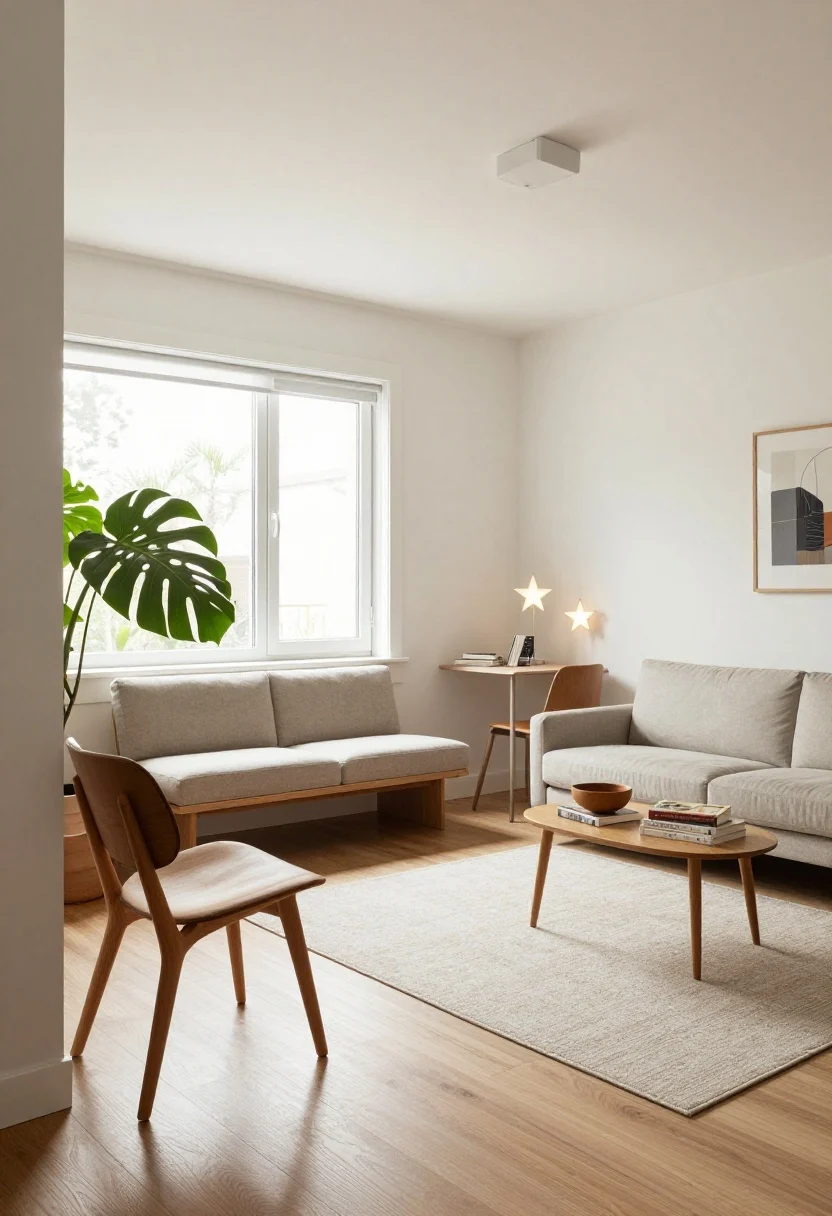
Open concept space feeling mushy? Divide and conquer. Use a chair turned 45 degrees, a plant, or even a trunk to signal where one zone ends and another begins.
Give each zone a star: a lamp in the reading nook, a bowl in the entry, a stack of cookbooks in the dining area. It stops your space from feeling like one big furniture party.
- Rug magic: Slide a rug to fully anchor a seating area—front legs on, back legs off.
- Use a console behind a sofa to create a “hallway” without walls.
- Turn a window corner into a micro-office with a small table and dining chair.
11. Style The Kitchen Like Open Shelving (Even If You Don’t Have It)
© 2025 AI Illustrator — Inspiration Only
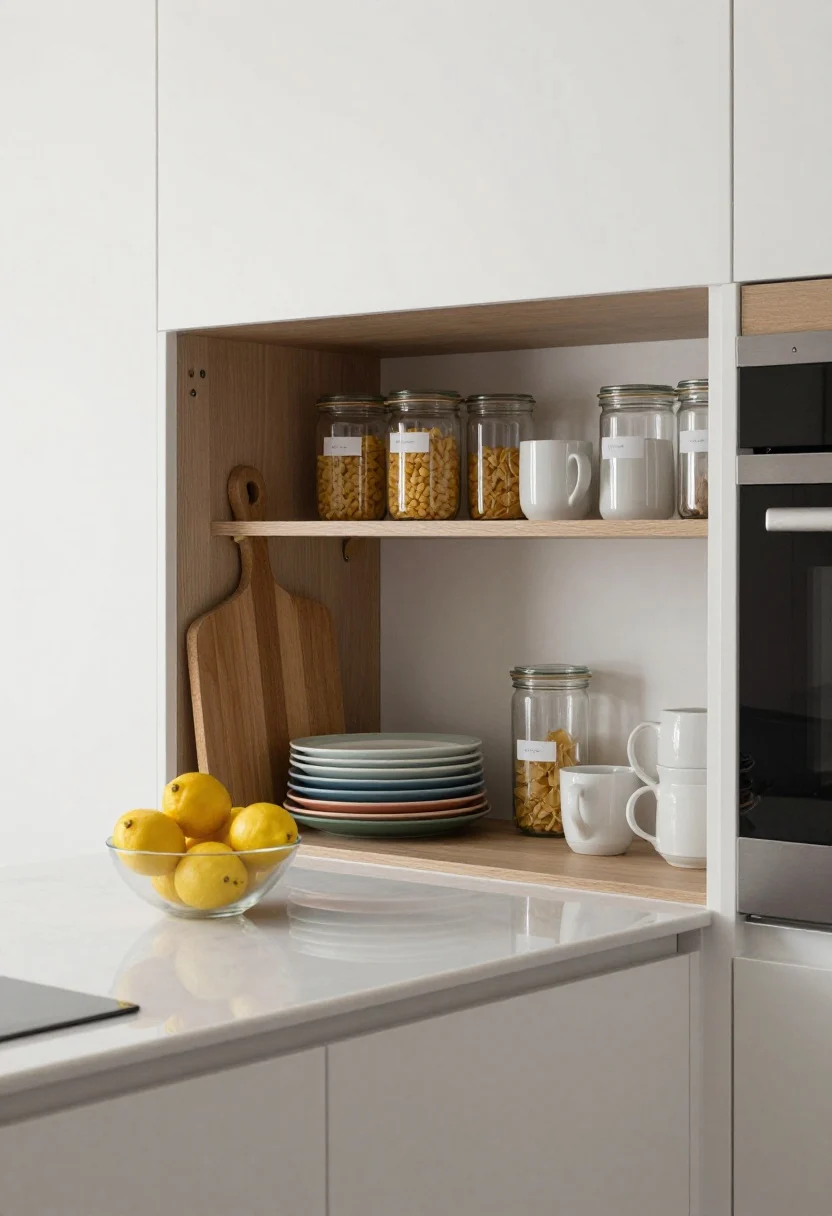
Kitchen clutter kills vibes. Clear counters except for a few pretty, functional items. Think a wooden cutting board leaned vertically, a bowl of lemons, and your nicest utensil crock. Everything else lives in cabinets or a basket.
Open your cabinets and rearrange front-facing items like you’re styling a store shelf. Plate stacks by color, mugs together, pantry staples decanted into any glass containers you already own (hello, old pasta jars).
- Triangle styling: Group tall-medium-small items together for balance.
- Turn labels inward to reduce visual noise.
- Give one drawer “drop zone” duties so the counter stays clear—FYI, game changer.
12. Add Life: Plants, Branches, And Fresh Air
© 2025 AI Illustrator — Inspiration Only
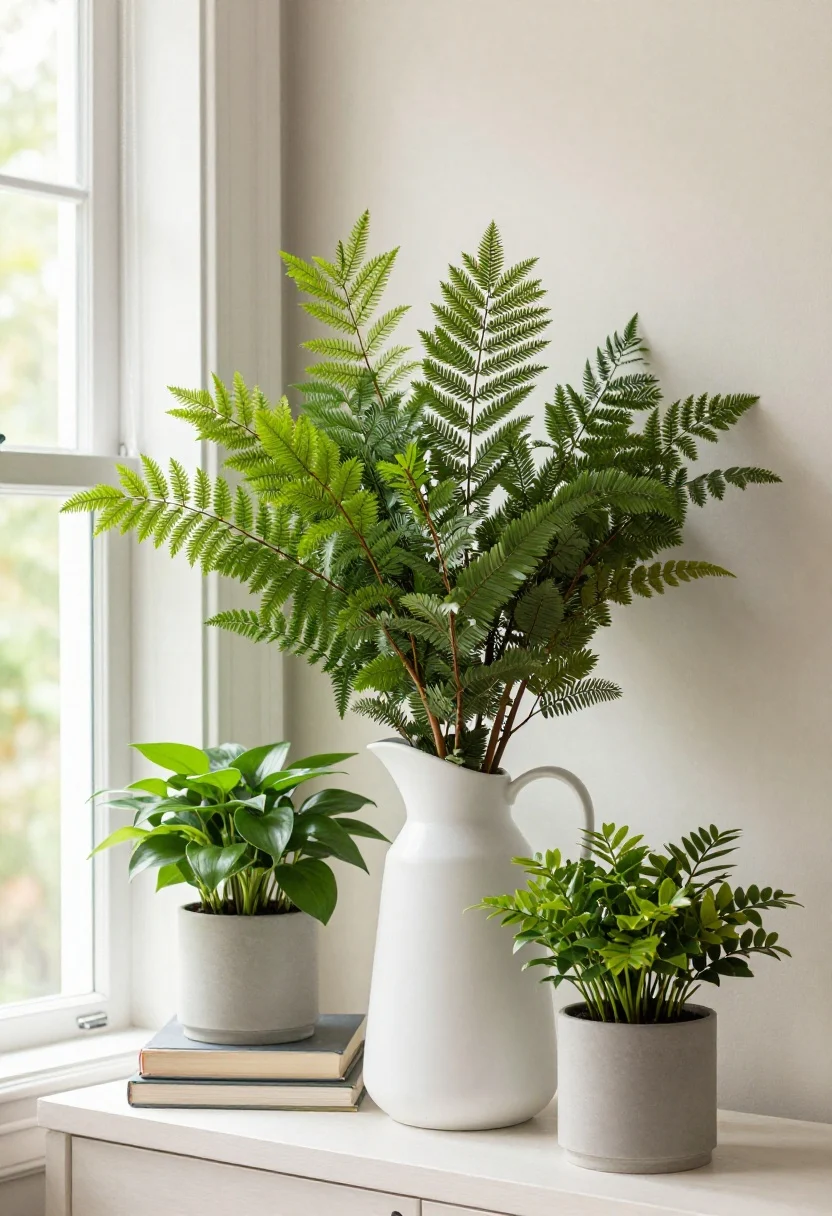
Plants do the most for free. If you’ve got one that’s struggling in a dark corner, relocate it to a bright spot and let it be the statement. Or snip a few branches from outside (responsibly) and drop them into a pitcher—instant sculpture.
Also: open the windows. Airing out a room resets the vibe and makes everything feel cleaner. Style-wise, it’s like a hard refresh.
- Scale matters: One tall branch bundle beats five tiny stems every time.
- Stage plants on stacks of books to vary heights.
- Group greenery in threes for a lush, layered look.
Bonus Styling Micro-Moves (Still Free!)
- Flip cushions to the fresher side; rotate rugs 180° to even out wear and revive patterns.
- Hide power strips in a shoe box with a slit—tuck it behind furniture.
- Fold towels hotel-style on an open shelf; hang one pretty one on the oven handle.
- Rename a corner: “coffee station,” “vinyl nook,” “reading zone.” It’ll guide how you style it.
How To Keep The Glow-Up Going
- Do a five-minute surface sweep every night—tray it or tuck it.
- Seasonal swap: trade throws, books, and small decor every few months to reset the vibe.
- Adopt a one-in, one-out rule for surfaces so they stay curated, not crowded.
The takeaway: You don’t need a new cart of stuff to upgrade your apartment—you need fresh eyes and a willingness to move things around. When you edit, restyle, and rethink what you already own, your home stops feeling “rented” and starts feeling designed. Now crank some music, roll up your sleeves, and give your space the zero-dollar makeover it deserves.