
Your studio is cute, but does it ever feel like your bed is third-wheeling you and your cereal bowl? Same. The good news: you can fake a “real” bedroom without knocking down walls or bribing your landlord. These nine moves carve out zones, control sightlines, and trick your brain into thinking you’ve got a legit one-bedroom. Let’s make your square footage work overtime.
1. Build “Walls” With Smart Room Dividers
© 2026 AI Illustrator — Inspiration Only
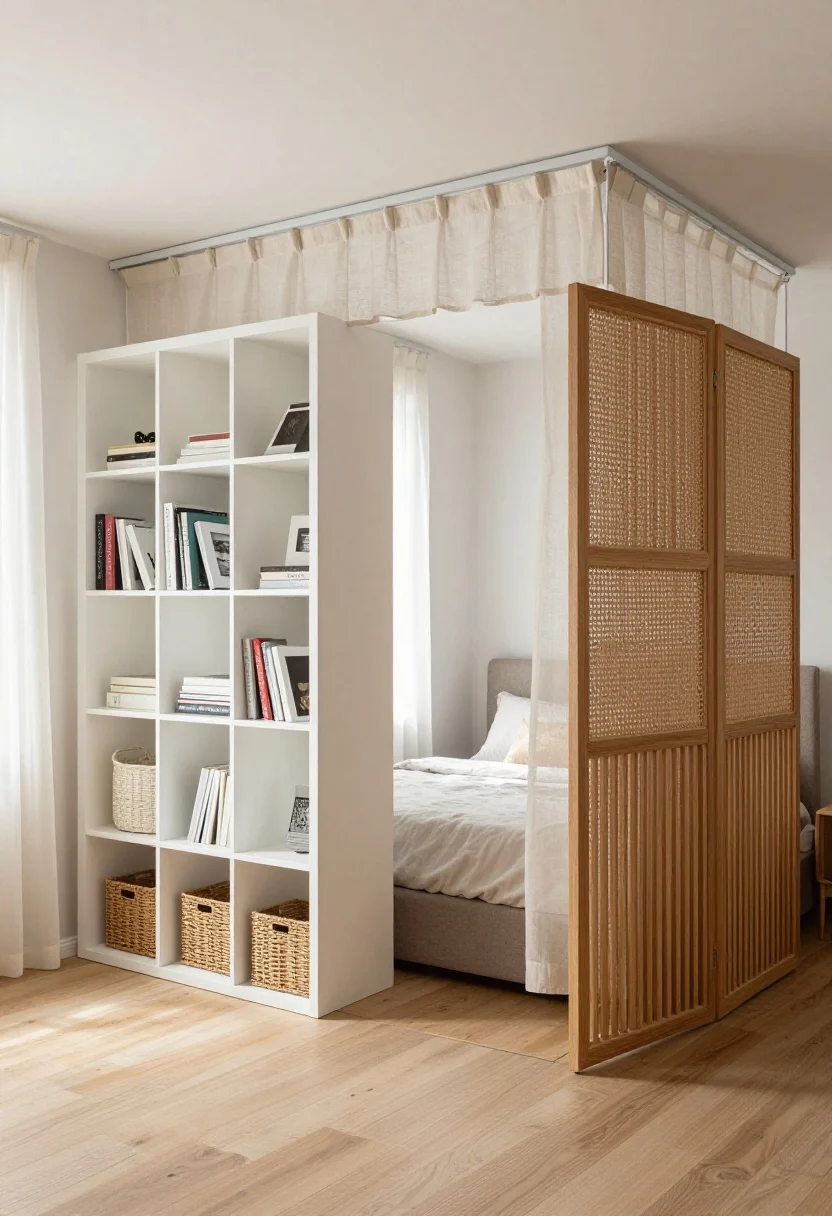
You don’t need drywall to define a bedroom. **Create visual boundaries** that signal “sleep zone” versus “living zone.” The trick is picking dividers that feel airy, not claustrophobic.
What’s Your Apartment Decor Style?
Answer these quick questions to discover your perfect decor vibe.
Great Divider Options
- Open shelving: IKEA KALLAX-style units let light through, display books, and separate space without boxing you in. Style both sides so it looks intentional from every angle.
- Slatted screens: Wood or metal slats look custom and allow airflow. Bonus: they feel like boutique hotel vibes.
- Track curtains: Ceiling-mounted sheers or linen panels sweep across for instant privacy. Pull them back during the day to reclaim space.
- Folding screens: Lightweight, flexible, and renter-proof. Go woven or rattan for texture.
Keep your divider about two-thirds to three-quarters of the ceiling height if possible. It hints at separation without making a dark cave. FYI: Avoid bulky bookcases backed against the bed—open sides feel breezier and keep light moving.
2. Zone With Rugs (Your Secret Floor Plan)
© 2026 AI Illustrator — Inspiration Only
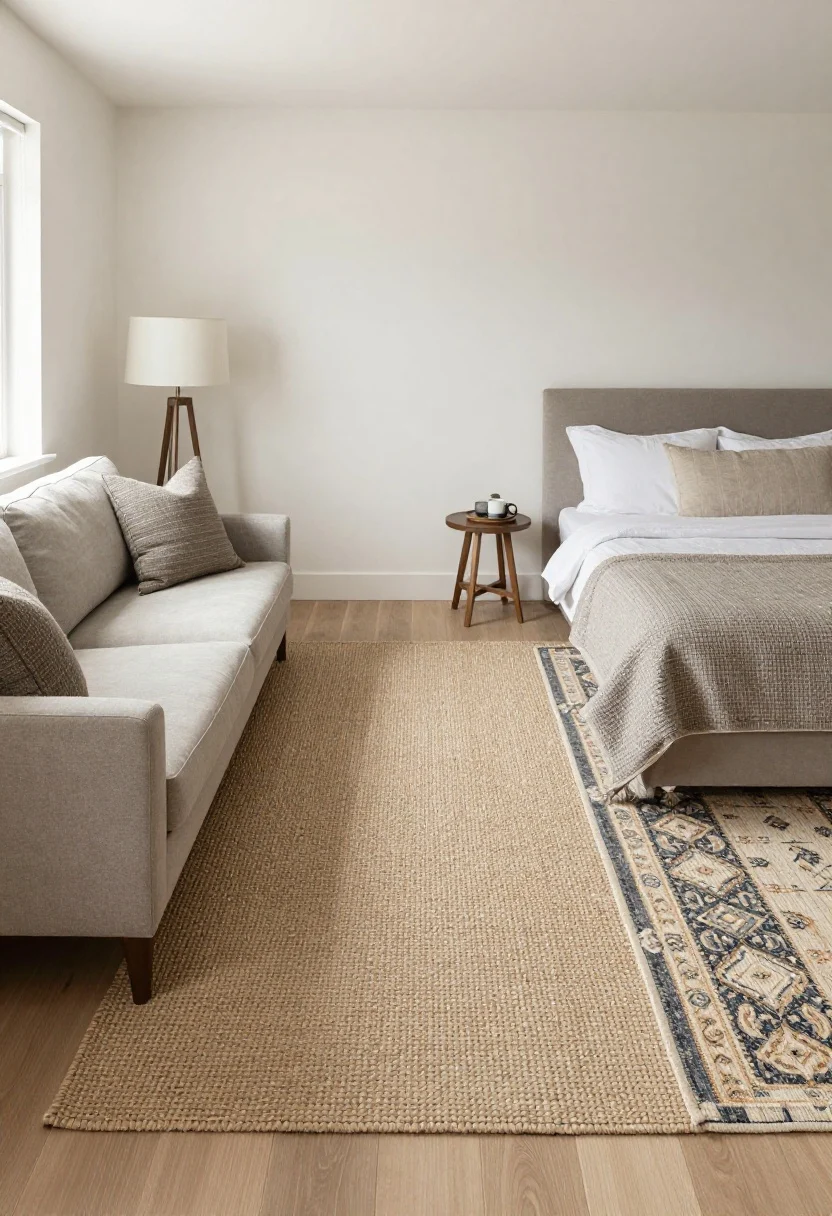
Rugs are basically interior design GPS. **Use different rugs to map zones**: one for living, one under the bed, maybe a runner for a “hall.”
How To Size And Layer
- Living area: Choose a rug big enough that front legs of the sofa and chairs rest on it. This anchors conversation.
- Bed area: A 5′ x 8′ or 6′ x 9′ under a full/queen creates a defined sleep island. Slide it two-thirds under the bed to elongate the room.
- Visual variety: Mix pattern + solid or woven + plush to cue different functions without clashing.
Pro move: Align the living rug with your TV wall and the bed rug perpendicular to it. Your eye reads two “rooms” instantly.
3. Loft Or Lift The Bed (And Hide The Life)
© 2026 AI Illustrator — Inspiration Only
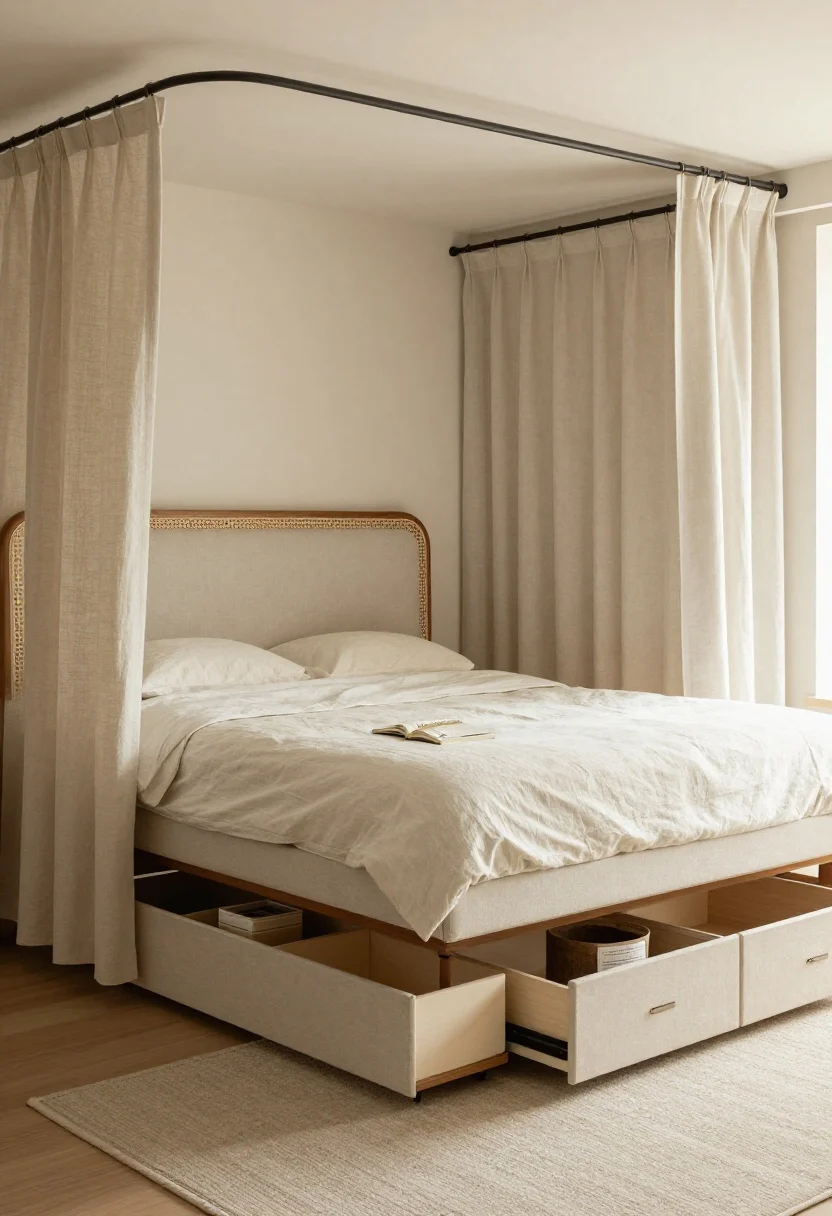
When square footage is tight, go vertical. **Elevate the bed or simplify the frame** so the footprint works double-time.
- Platform bed with drawers: Built-in storage keeps sweaters, linens, and half your life out of sight.
- Bed risers + rolling bins: Not glamorous, but when they’re concealed with a tailored bed skirt, no one knows.
- Lofted bed (if ceiling allows): Creates a legit lounge/desk zone underneath—hello, faux one-bedroom.
- Daybed or sofa-bed: If you rarely host overnight guests, a deep daybed with bolsters looks like a sofa by day, bed by night.
Choose a headboard that reads “bedroom,” like upholstered or caned, and place it behind a divider or curtain. The message is clear: sleeping quarters, do not disturb.
4. Create A Real Entry (Even If You Don’t Have One)
© 2026 AI Illustrator — Inspiration Only
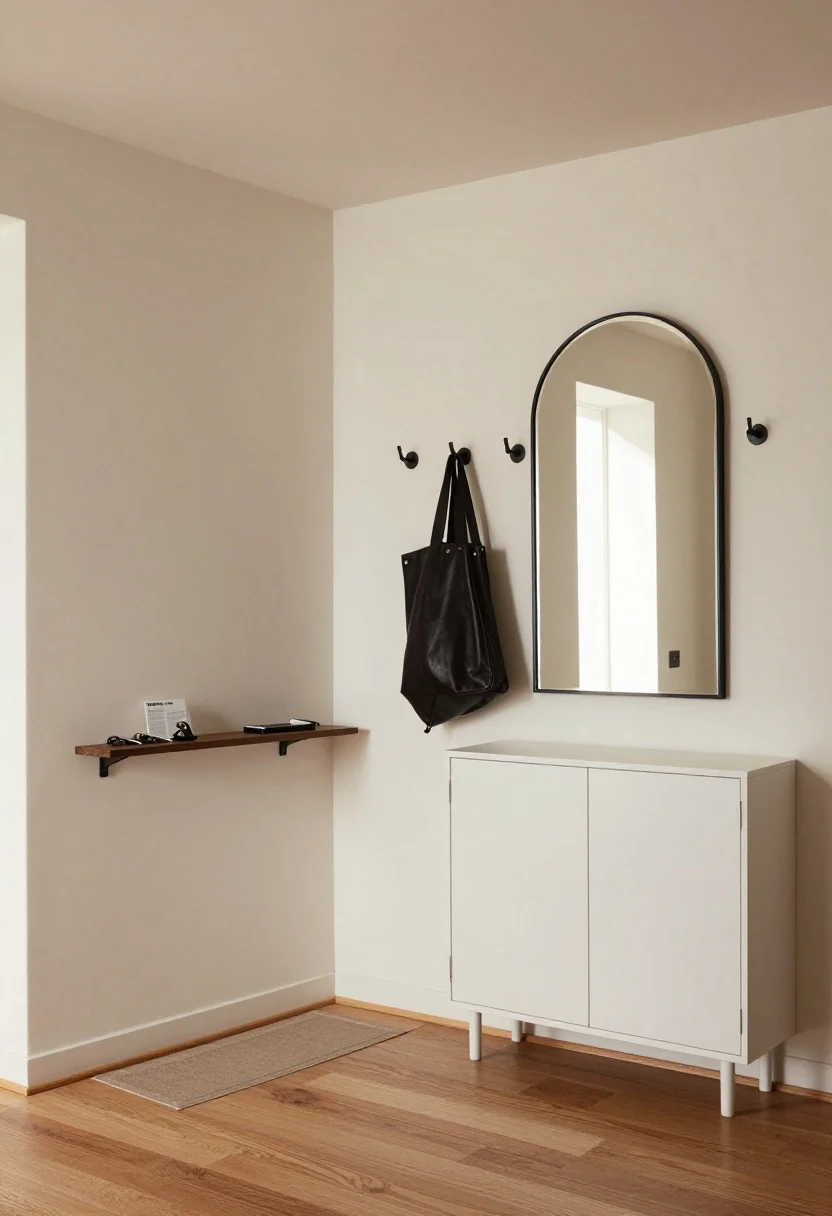
Studios often dump you straight into the living area. **Build a mini foyer** to establish arrival—and keep shoes from photobombing your sofa.
Entry Essentials
- Slim console or wall-mounted shelf: Drop keys, stash mail, look like you have your life together.
- Runner rug + hooks: A narrow runner guides the eye and sets a “hallway” vibe; hooks handle bags and coats.
- Mirror: A large mirror near the door bounces light and adds depth. Try an arched or round style for softness.
- Shoe cabinet: Those 7-inch-deep units are storage ninjas and keep clutter invisible.
Place your “entry” on the wall farthest from your bed to separate public and private zones. Small shift, big mental upgrade.
5. Use Lighting To Script Each Zone
© 2026 AI Illustrator — Inspiration Only
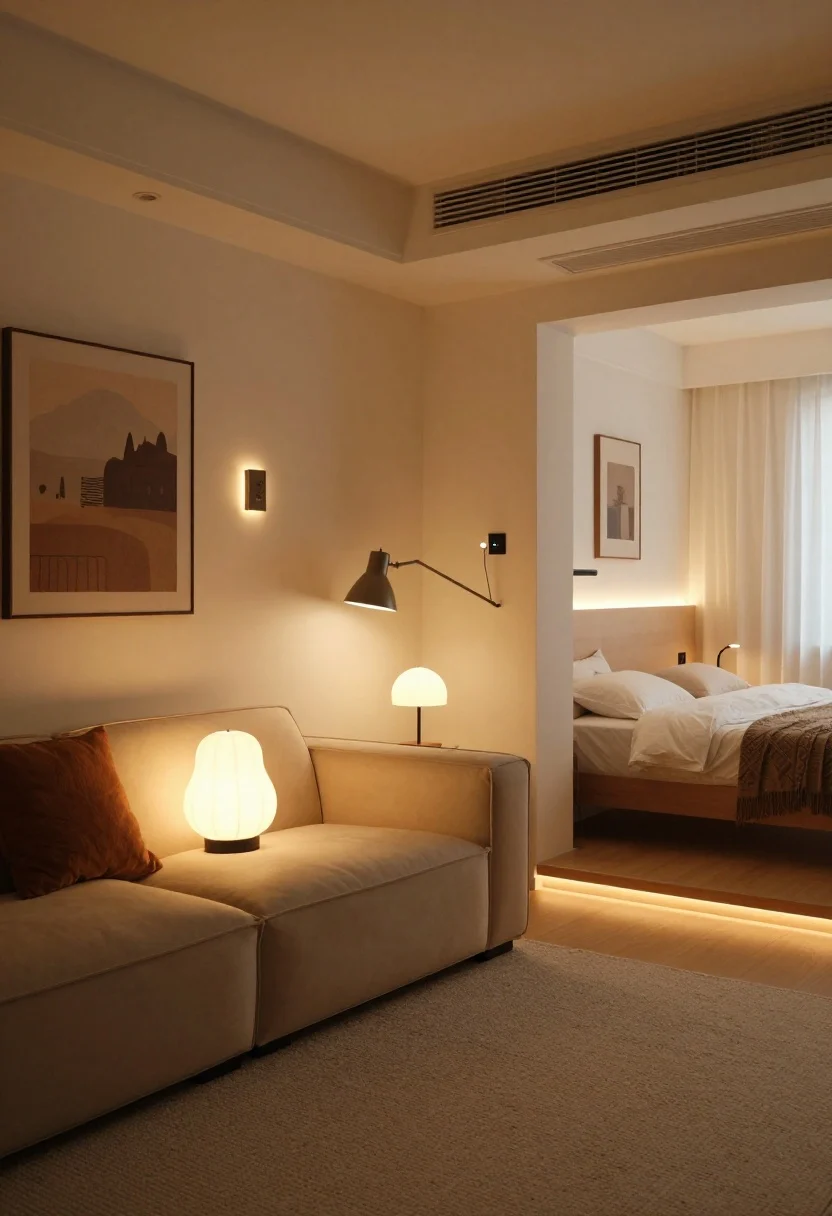
Overhead lights shout “warehouse.” **Layered lighting** whispers “intentional home” and makes spaces feel distinct.
- Ambient: Floor lamps or plug-in sconces “wash” walls and make living zones cozy.
- Task: A swing-arm lamp by the sofa, a desk lamp in your work nook, bedside lamps for reading.
- Accent: LED strips under shelves or along curtain rods give soft glow and focus.
Put living-area lamps on a smart plug and your bed lamps on a separate one. One voice command turns your “bedroom” off while the “living room” stays party-ready. IMO, dimmers are the cheapest luxury you’ll ever add.
6. Float Furniture And Respect Aisles
© 2026 AI Illustrator — Inspiration Only
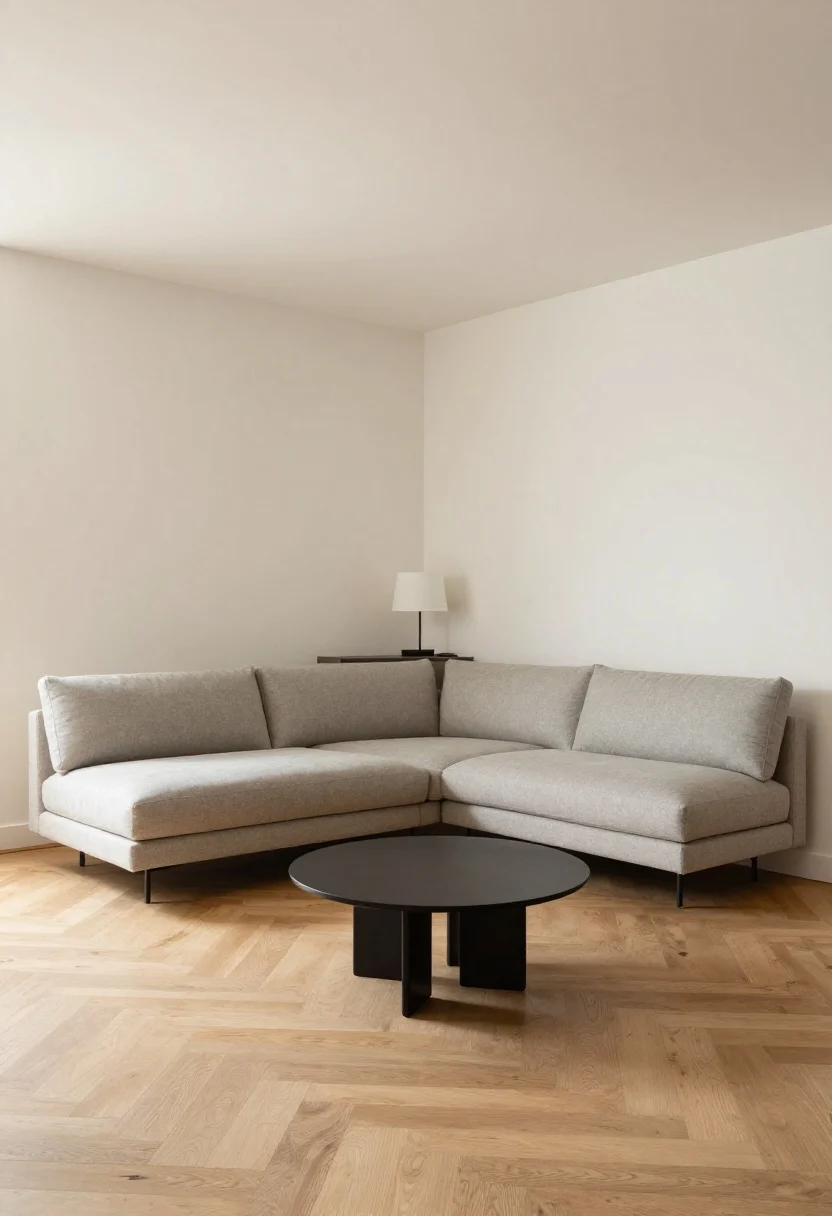
Pushing everything against walls can make a studio feel like a waiting room. **Float your sofa** or a narrow console to create pathways and define “rooms.”
Layout Tricks That Work
- Sofa as a soft divider: Place it with the back facing your bed. Add a slim console behind it for keys or a lamp, and voilà—two zones.
- Chairs > sectional (sometimes): Two small swivel chairs can be more flexible than one big sofa that bosses the room.
- Clear walkways: Leave at least 30–36 inches for main paths. Tiny changes = huge flow.
- Round pieces: A round coffee table or pedestal dining table nixes corner clutter and keeps paths smooth.
Don’t be afraid of negative space. That little air gap between furniture is what makes a studio feel intentional, not cramped.
7. Color-Code Your “Rooms”
© 2026 AI Illustrator — Inspiration Only
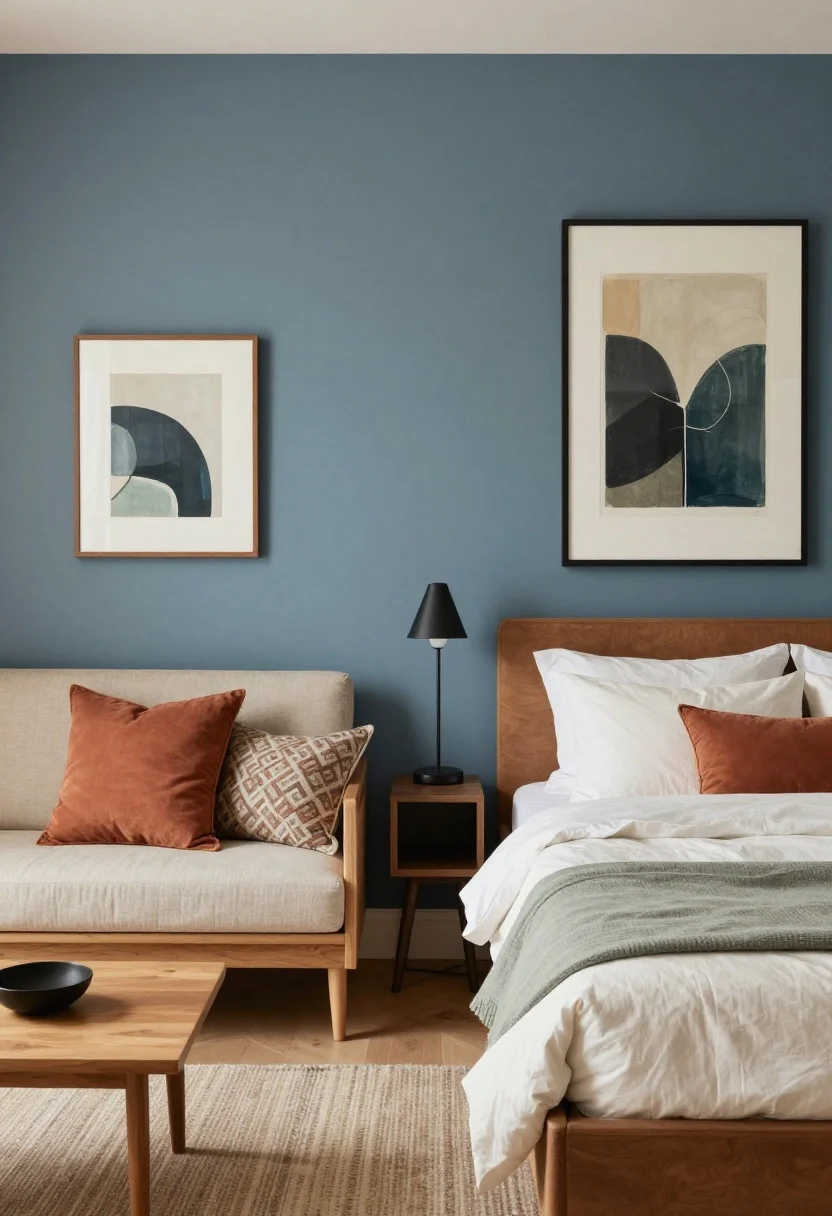
Color is free architecture. **Assign a palette to each zone** so your eye reads separation without a single nail hole.
- Bedroom palette: Keep it calm—creamy linens, sage or dusty blue accents, warm wood tones.
- Living palette: Add energy—terra-cotta pillows, patterned throw, a bold art moment.
- Link them: Repeat one neutral (black, beige, brass) across both so it still feels cohesive.
Use removable wallpaper or a large-scale art diptych behind the bed to create a “feature wall.” In studios, one strong statement beats five small ones. FYI: If you love color but fear chaos, try 60/30/10—60% neutral, 30% secondary color, 10% bold accent.
8. Go Vertical With Storage And Style
© 2026 AI Illustrator — Inspiration Only
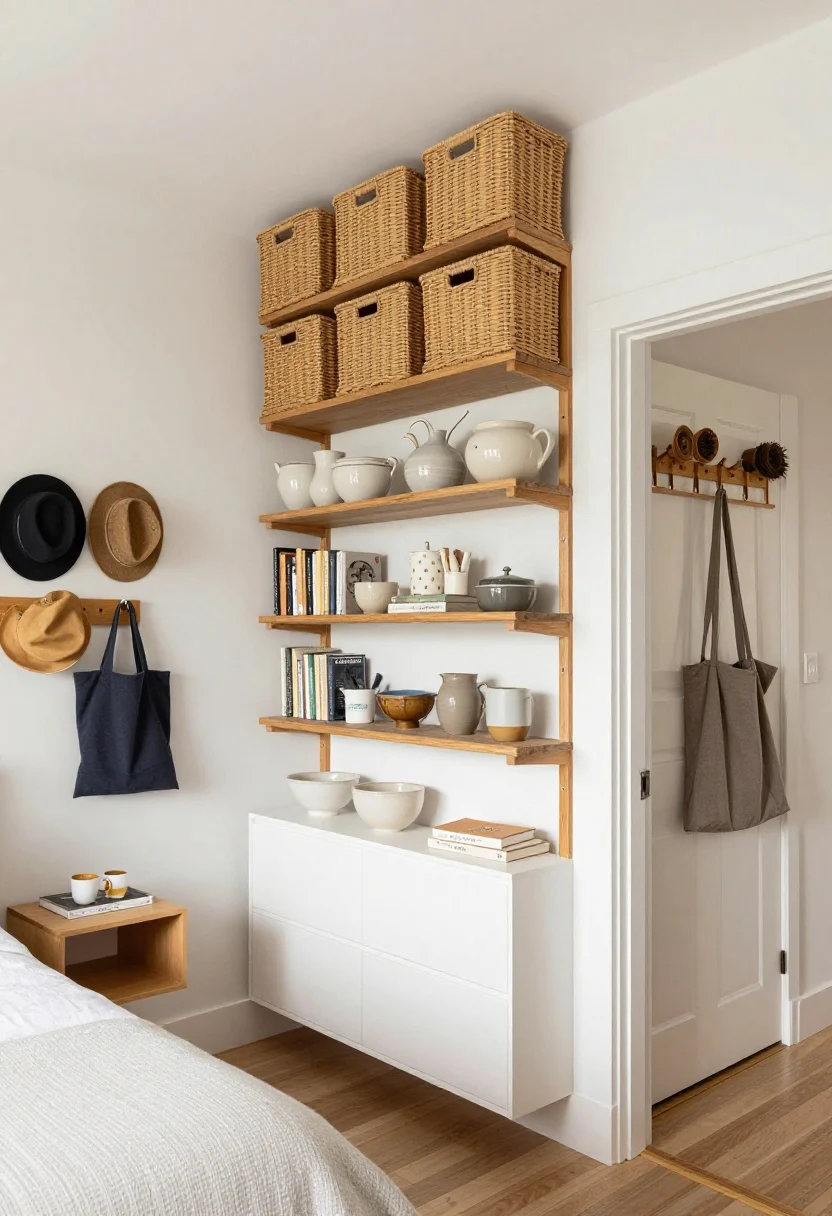
Walls are your square footage you haven’t spent yet. **Climb upward** to corral clutter and curate display, which keeps zones tidy (and your sanity intact).
Smart Vertical Moves
- Ceiling-high shelves: Use closed boxes on top for off-season items, open shelves at eye level for pretty things.
- Wall-mounted nightstands: Free up floor space and make the bed zone feel custom.
- Peg rails or picture ledges: Create mini galleries or hang bags/hats to clear surfaces.
- Over-door racks: Hide cleaning supplies, towels, or gym gear behind the bathroom door.
Choose a consistent storage style—rattan baskets, linen bins, or matte black boxes. When containers match, visual noise drops, and the place instantly reads as bigger and calmer.
9. Style Sightlines Like A Movie Set
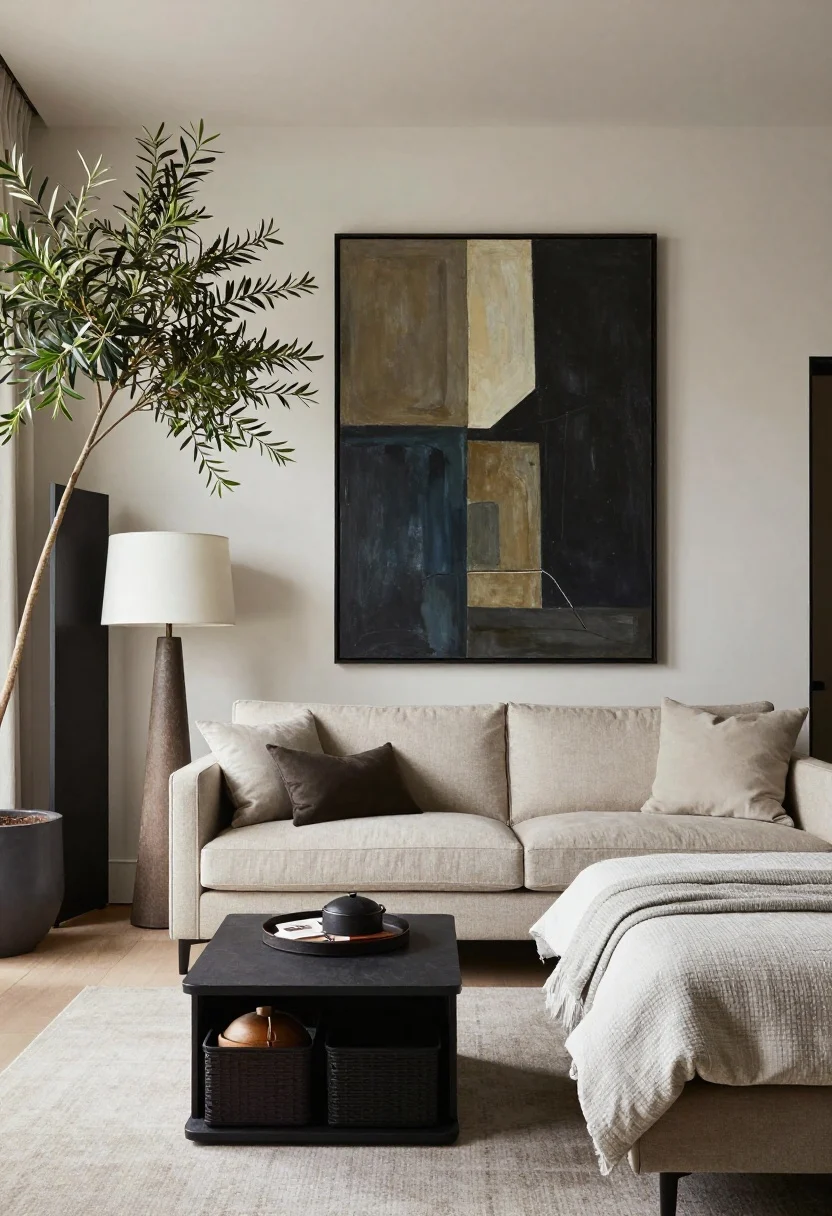
© 2026 AI Illustrator — Inspiration Only
What you see from the entry, sofa, and bed matters. **Edit the first view** so your studio delivers a “wow” instead of a reminder that your bed is five steps from your fridge.
Direct The Eye
- Create a focal point: Big art above the sofa, a statement mirror, or a sculptural floor lamp draws attention away from the bed.
- Hide the messy bits: Use lidded baskets for cords and remotes. A storage ottoman swallows throws and doubles as a coffee table.
- Bed camouflage: A neatly made bed with a **textured throw** and two big euro pillows looks intentional; a linen curtain pulled halfway adds “private suite” energy.
- Keep surfaces curated: 3-item rule per surface—one tall, one horizontal, one personal. Everything else, buh-bye.
If your bed is unavoidable from the door, angle a plant or a slim screen to partially obscure it. You’re not hiding; you’re teasing the room like a pro stylist.
Quick Shopping Cheats (Bonus Within The Bonus)
- Large plant: Fiddle leaf, olive tree, or tall snake plant to soften corners and screen views.
- Plug-in sconces: Look custom without electricians; mount near the bed or above art.
- Nesting tables: Pull out for guests, tuck in for everyday—space magic.
The Bottom Line: You’re not faking a one-bedroom—you’re designing zones that work the way a one-bedroom does. Define, layer, and edit. With smart dividers, strategic rugs, lifted storage, and sightline sorcery, your studio goes from “everything everywhere” to “wow, where did the bedroom go?” You’ve got this—and your cereal can finally eat in peace.